
NASA Considers Canaries for Strategic Atlantic Rescue Point
The NASA has identified the Canary Islands as a potential strategic point for rescuing astronauts in the Atlantic. A delegation from the US space agency visited the 112 Emergency and Security Coordination Centre (CECOES) in Tenerife on Monday to gain first-hand knowledge of its emergency response capabilities linked to the Artemis programme, through which the United States is pushing for a return to the Moon.
Preparing for a Potential Splashdown Scenario
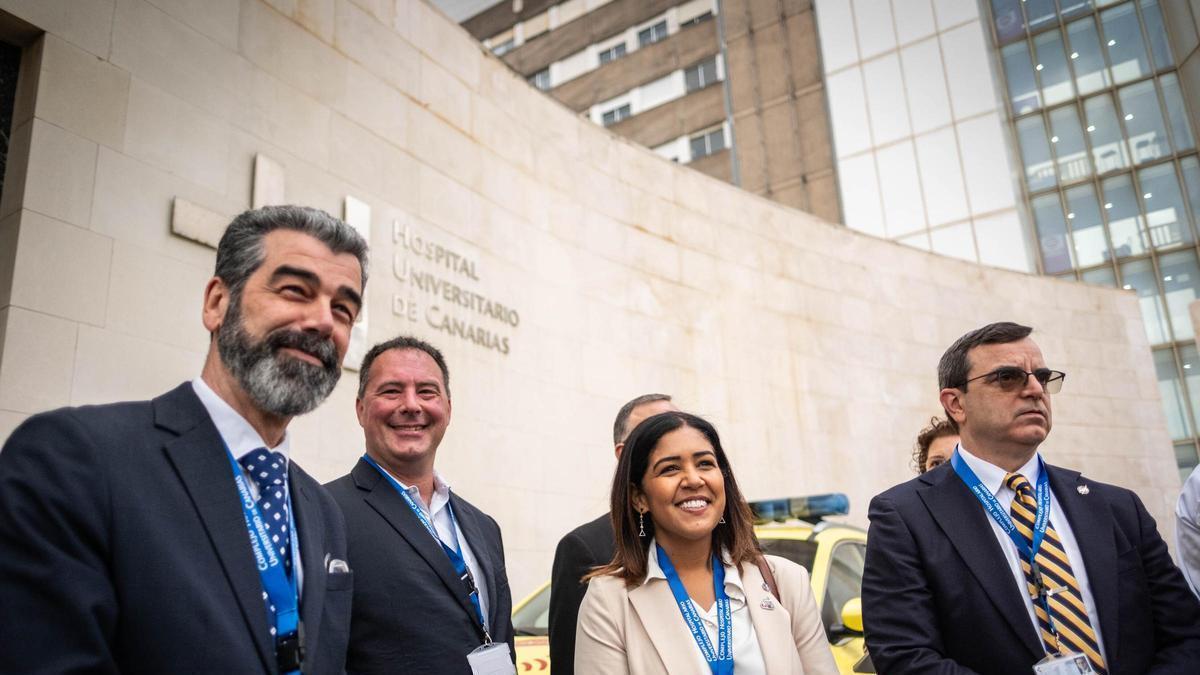
NASA’s interest focuses on a specific scenario: the possible splashdown of a space capsule between the coasts of the Canaries and Africa during future missions. Given this hypothesis, the agency is studying the operational capacity of the archipelago to coordinate a rapid and effective response that guarantees the safety and medical care of the crew. The visit was not limited to the 112 centre. On Monday, the American team also toured the facilities of the University Hospital of the Canary Islands (HUC), where they showed particular interest in the Imetisa hyperbaric chamber, as well as the Traumatology, Radiology and Critical Care Units.
Assessing Medical and Operational Readiness
The objective was to learn first-hand about the medical resources available for a potential rescue and assistance operation for astronauts. The visit included James D. Polk, NASA’s Director of Health and Medical Affairs; Sharmi Watkins, Deputy Medical Director of the Johnson Space Centre; Gary Beven, head of the Space Medicine Division at the same centre; and Travis Houser, head of the Medical Operations Contingency Coordination Group.
During the meeting, representatives of the Canary Islands Government showed the NASA medical team the technical and human resources of the autonomous emergency system, as well as the operation of the 112 control room. The meeting was attended by the Deputy Minister for Emergencies and Water, Marcos Lorenzo; the Director General of Emergencies, Fernando Figuereo; the Director of 112 Canarias, Moisés Sánchez; and the head of the operational control room in Tenerife, José María Yanes.
Coordination is Key for Crew and Maritime Safety
James Polk highlighted the agency’s interest in understanding the Canary Islands’ coordination capacity in such a situation. He explained that it is not only about protecting the crew of the spacecraft, but also about guaranteeing the safety of any ships that may be near the splashdown zone. For his part, Marcos Lorenzo highlighted the work of the Civil Protection and Emergency Response professionals, stressing that the different areas that make up the 112 Canarias control rooms offer a specialised, coordinated and integrated response to any incident.
Along the same lines, Fernando Figuereo emphasised the importance of coordination between administrations to act effectively in all phases of an emergency, from receiving the call to the final intervention of the rescue teams.
What’s happening in the Canaries – straight to your phone
News, weather alerts and practical updates – direct from the islands, in English. We live here and know what’s going on – before the international media catch up. Everything lands on our WhatsApp channel – no middlemen, no algorithm. Curated for families, expats and travelers.

Iberdrola plans Tenerife’s biggest battery storage plant

The wild canary that gave its name to the Canary Islands

Canary Islands sea hits second-hottest year on record

Legal bid to halt tree felling in Santa Cruz’s La Salud

Fiesta del Charco: A journey through La Aldea’s past

Corralejo dunes power line set for removal

ULPGC launches 14 research projects at Las Canteras

TMT will never be built, says Canary Islands astrophysics chief

Pedro Duque: Canarias is the “ultimate dream” for rockets
