
European funding the deciding factor for giant telescope on La Palma
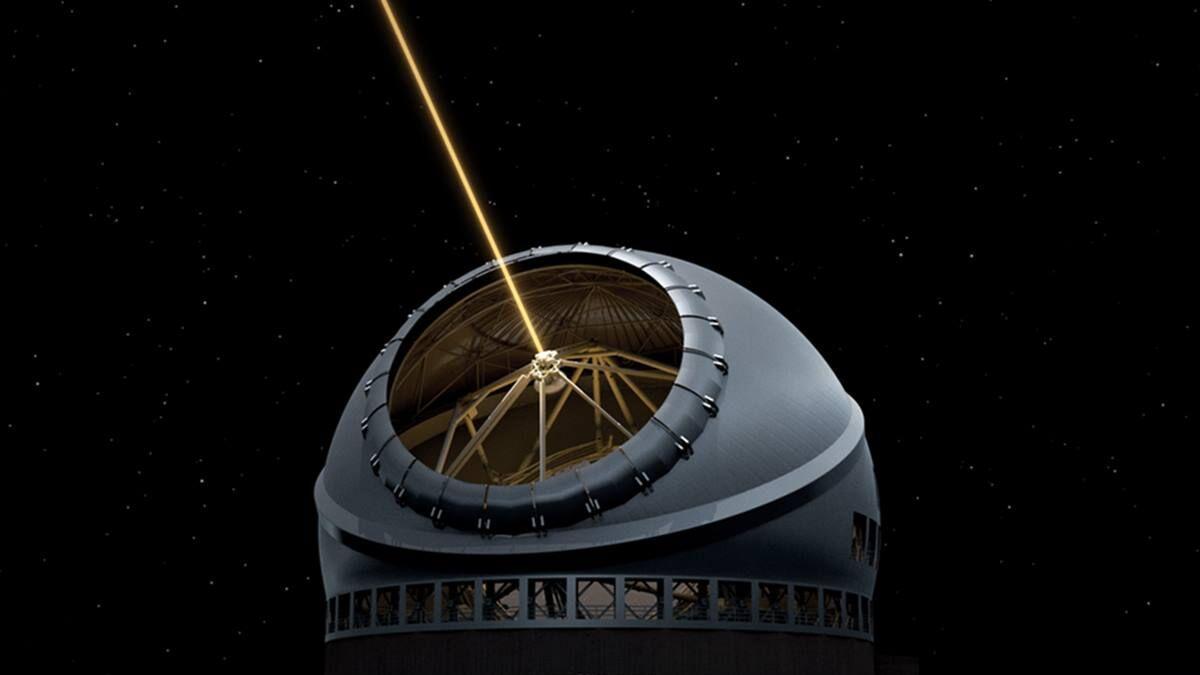
Whether the Thirty Meter Telescope (TMT) ultimately lands on the summit of La Palma hinges on one not insignificant detail: financial backing from Europe. With the €400 million already committed by Spain’s Ministry of Science, the installation still needs at least an additional €600 million to make construction on the island viable. The Canary Islands’ bid to host the astronomical giant, therefore, can only proceed if the European Investment Bank (EIB) approves this financing.
Decision expected this summer
The dispute that has loomed over international science for more than a decade could be settled this summer. It will be between June and July when the EIB releases its report concluding on economic support for the TMT. Whether or not the Canary Islands can continue its ambitious aspiration to host what is hailed as one of the most important telescopes of the next generation depends on whether the conclusions of that report are favourable.
Soaring costs and the €1 billion shortfall
It is worth remembering that the telescope’s cost has increased exponentially over the years. Although many of its components are already built, the project is estimated to be missing around €1 billion to move forward. In total, due to delays, construction costs are now estimated to have risen to $3 billion, according to project manager Fengchuan Liu, speaking to the Honolulu Civil Beat.
“If the European Investment Bank approves the financing for the TMT, then Spain will say: here is the full amount,” explained the director of the Instituto de Astrofísica de Canarias (IAC), Valentín Martínez Pillet, during a press conference. For Martínez Pillet, that will be the moment when “the TMT will have to make the decision to come, knowing it has the full funding to come to La Palma.” However, if the money does not materialise, the Canary Islands’ dream is over. “If it doesn’t approve it, there will be a funding shortfall for La Palma, and then it couldn’t be built on the island,” the astrophysics director stated, predicting that the final decision is therefore imminent.
EIB’s strategic role and recent visit
Initially, the European Investment Bank had announced its support for the project, primarily through the development of a strategic plan to try to convince the telescope’s promoters that La Palma, the “Beautiful Island,” is the best candidate to host this major scientific infrastructure. Specifically, the EIB’s advisory team (from the InvestEU Advisory Hub) will draw up this document, which includes identifying potential public and private investors who might be interested in developing one of the most important scientific infrastructures of the coming decades in Spain. However, Europe’s role must go further, as it must guarantee the money is there.
In this context, a delegation from the European Investment Bank visited La Palma just three weeks ago to gauge local support and see first-hand the site where the astronomical giant could be installed. “Those who came are the ones doing the work at the European Investment Bank, creating a financial model to assess the viability of this potential financing for the TMT in La Palma,” Martínez Pillet assured during that appearance. The final answer is expected between June and late July, a date that would coincide with the annual meeting of the IAC’s Governing Council.
What’s happening in the Canaries – straight to your phone
News, weather alerts and practical updates – direct from the islands, in English. We live here and know what’s going on – before the international media catch up. Everything lands on our WhatsApp channel – no middlemen, no algorithm. Curated for families, expats and travelers.

Canary Islands sea hits second-hottest year on record

Legal bid to halt tree felling in Santa Cruz’s La Salud

Fiesta del Charco: A journey through La Aldea’s past

Corralejo dunes power line set for removal

ULPGC launches 14 research projects at Las Canteras

TMT will never be built, says Canary Islands astrophysics chief

Pedro Duque: Canarias is the “ultimate dream” for rockets

Court blow to Tenerife motor circuit project
La Palma faces new volcanic risk planning deadline
