
Landmark step for clean energy transition
The Cabildo of Tenerife has cleared the way for introducing green hydrogen at the port of Granadilla, marking a decisive move towards the island’s decarbonisation goals. The agreement with the southern municipality of Granadilla de Abona, along with a favourable report from the Spanish government’s Directorate General for Coasts, has provided the necessary legal and administrative backing.
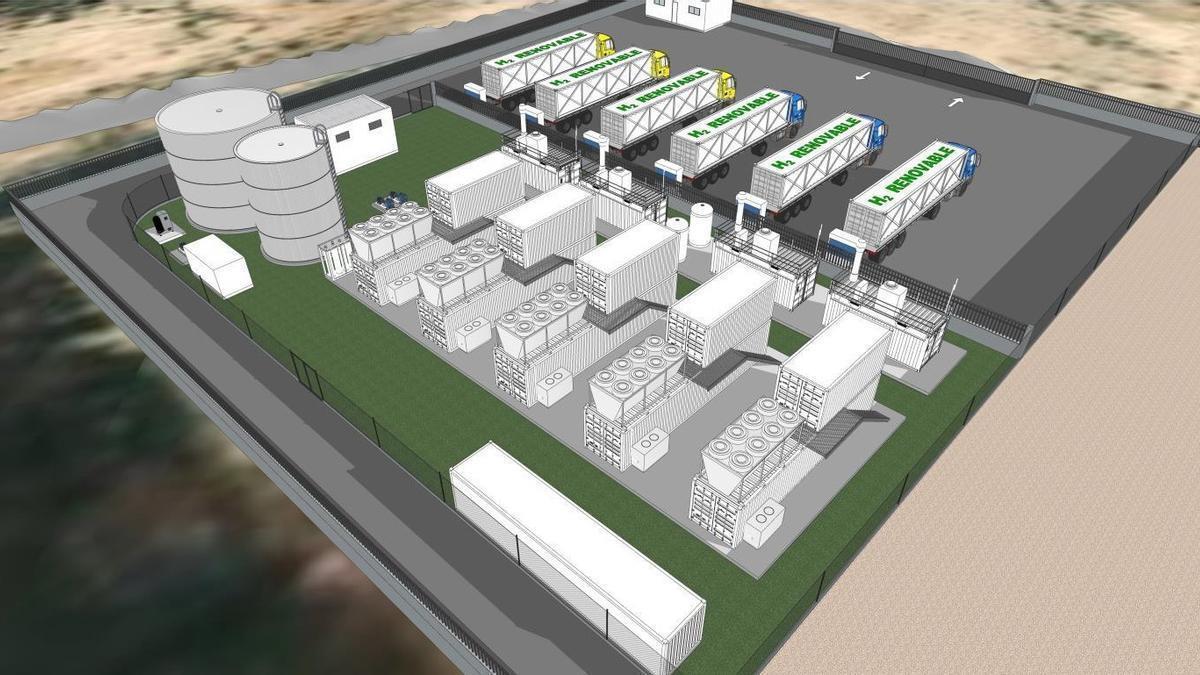
The process begins with the redevelopment of a plot owned by Disa in the Granadilla industrial estate. The island council is expected to approve the plan in a full session on 31 July. The land is earmarked for future facilities dedicated to the storage, production and distribution of renewable energy and transition fuels, including green hydrogen itself.
What is green hydrogen and why does it matter?
Green hydrogen is a combustible gas produced through electrolysis. This process uses electricity from clean sources such as wind or solar power to separate hydrogen from oxygen in water. It is considered a key alternative for decarbonising the economy during the transition period as clean energy sources are gradually integrated.
Currently, renewable energy supplies approximately 19.3% of the total electricity fed into Tenerife’s grid. Of this, wind power accounts for about 67.4%, with solar photovoltaic making up the remainder. The Canary Islands have set a strategic target to triple these figures, aiming for a 58% share of renewable energy penetration by 2030.
The Granadilla industrial estate: a future energy hub
The Disa plot in the Granadilla industrial estate is poised to become one of the island’s key energy hubs. The island’s governing council has approved a collaboration agreement with the local town hall and received a favourable report from the Directorate General for Coasts. These two administrative steps will allow for the coordinated execution of the Project of Island Interest, the first of its kind to complete its approval process in Tenerife.
The project covers a 275,014-square-metre plot owned by Disa, located downstream from the TF-1 motorway, adjacent to the Granadilla thermal power plant and the port area. The physical urbanisation works, which will include roads, pipelines, service networks and open spaces, will extend over approximately 277,000 square metres.
Faster progress with legal certainty
Island vice-president Lope Afonso said the agreement would allow the project to move forward more quickly and with greater legal certainty. “The energy transition requires planning and institutional cooperation,” he stated. The aim, he added, is to have prepared land available as soon as possible to house infrastructure capable of strengthening energy autonomy, supply security and decarbonisation targets.
The Project of Island Interest does not yet authorise specific installations. Instead, it plans and urbanises the land to accommodate general systems and facilities linked to the storage, production and distribution of renewable energy and conventional fuels during the transitional period. Official documentation indicates that the planning will make feasible, among other possibilities, a future green hydrogen plant, which will require its own environmental and administrative authorisation from the Government of the Canary Islands.
Streamlined planning and environmental checks
Island Director of Strategic Projects Alicia Leirachá highlighted that the file combines territorial planning, environmental assessment, urban management and the execution project in a single procedure. According to the Cabildo of Tenerife, this integration will allow construction work to begin more swiftly once final approval is granted.
In April, the Tenerife Environmental Assessment Commission issued a favourable strategic environmental declaration, conditional on the implementation of corrective measures and a monitoring programme. It also concluded that the urbanisation would not have significant effects requiring a full environmental impact assessment.
Environmental and territorial challenges
The area does, however, present environmental and territorial constraints. The documentation identifies remnants of vegetation typical of the Canary Islands’ basal zone, the presence of the protected beetle *Pimelia canariensis*, and hydraulic risks associated with the ravines of El Cobón, Tagoro and El Camello. The project will need to incorporate measures for protection, cleaning, restoration and flood control.
Energy security and the road ahead
The push for the project coincides with a wider debate over the security of the Canary Islands’ energy supply. The Cabildo has urged the Spanish government to declare new installations and storage parks included in the archipelago’s contingency plan as strategic assets, so they can be recognised as official reserves by the Strategic Reserves Corporation for Petroleum Products.
The strategy thus combines two horizons that will need to coexist over the coming years: securing current supply and preparing infrastructure to move towards less polluting sources. The Cabildo presents Granadilla as the territorial centrepiece where this transition can be realised, with space for conventional fuels, renewable energies, storage and new technologies such as green hydrogen.
This commitment, together with geothermal energy, the electrical cable connection to La Gomera and the development of the Güímar hydroelectric plant, promises to revolutionise the island’s energy grid and deliver a significant reduction in current pollution levels.
What’s happening in the Canaries – straight to your phone
News, weather alerts and practical updates – direct from the islands, in English. We live here and know what’s going on – before the international media catch up. Everything lands on our WhatsApp channel – no middlemen, no algorithm. Curated for families, expats and travelers.

Canary Islands sea hits second-hottest year on record

Legal bid to halt tree felling in Santa Cruz’s La Salud

Fiesta del Charco: A journey through La Aldea’s past

Corralejo dunes power line set for removal

ULPGC launches 14 research projects at Las Canteras

TMT will never be built, says Canary Islands astrophysics chief

Pedro Duque: Canarias is the “ultimate dream” for rockets

Court blow to Tenerife motor circuit project
La Palma faces new volcanic risk planning deadline
