
What to pack in an emergency backpack
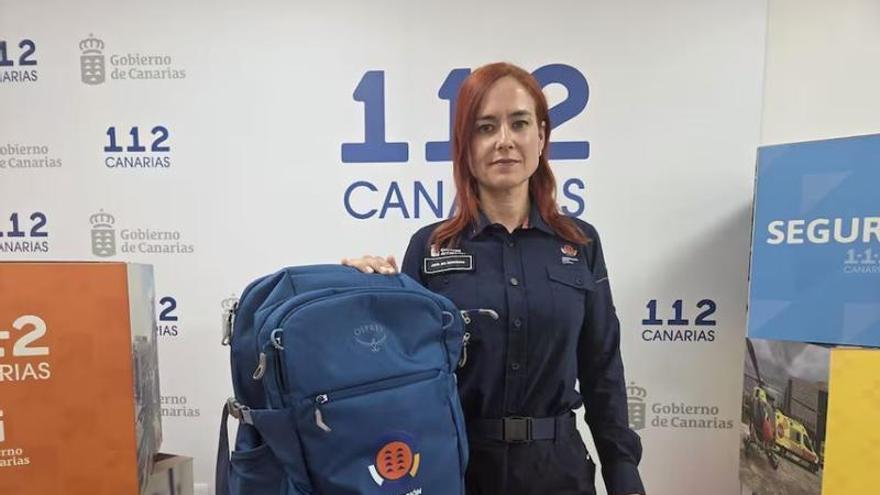
Personal documents, medication, cash, a battery-powered radio, water, non-perishable food, and pet supplies. These are just some of the items that should go into an emergency backpack in case you need to evacuate your home quickly. The Civil Protection authority of the Government of the Canary Islands has issued a series of recommendations so the public knows how to prepare this essential self-protection tool.
The regional head of Civil Protection, Montserrat Román, has explained in a video published on the website of the 112 Emergency and Security Coordination Centre what this backpack should contain and why it is worth having it ready before a dangerous situation arises. The message is part of a public awareness campaign under the slogan, ‘This summer, be prepared and don’t become a statistic’, which focuses on prevention and the importance of anticipating emergencies that may force you to leave home at short notice.
Why preparation matters
Civil Protection reminds us that difficult situations do not always give advance warning. In the Canary Islands, there have been episodes in recent years where homes have had to be evacuated due to wildfires, the volcanic eruption on La Palma, or adverse weather events. In all these cases, there is a common factor: the time available to leave the home is usually very limited.
That is why one of the simplest self-protection measures is to have a backpack ready with the essentials to get through the first few hours away from home. According to Montserrat Román, preparing this backpack takes just a few minutes and can make all the difference if you need to leave quickly or stay away for a while. The key is that it must be complete, checked regularly, and kept in an easily accessible place.
Start with the essentials
The backpack should begin with the most important items: personal identification, health card, and regular medication. These are essential for any evacuation, especially if someone needs medical treatment or must prove their identity at an emergency assistance point. Civil Protection also recommends including water and some non-perishable food for the first few hours, such as nuts or other items that are easy to carry and store. The aim is not to pack a larder but to have basic supplies while waiting for help or until you reach a safe place.
Other recommended items include personal hygiene products, a torch, a small first aid kit, a power bank for your mobile phone, a battery-powered radio, cash, and a change of clothes.
Tailor the backpack to your household
Civil Protection stresses that the emergency backpack should not be the same for every home. Each family has different needs and must adapt the contents to the people living in the house. If there are elderly people, babies, or people with special needs at home, it is necessary to include specific medication, hygiene products, suitable food, nappies, health documents, or any other essential items for the first few hours away from home.
Don’t forget your pets
The recommendation also extends to people with animals. “If you have pets, don’t leave them behind,” Montserrat Román reminds us. In that case, the emergency backpack or bag should include water, food, the animal’s documents, any necessary medication, a carrier, a lead, and other basic items for safe transport.
Store it right and check it regularly
Just as important as preparing the backpack is knowing where to keep it. Civil Protection advises storing it in an accessible place so that it can be located and grabbed quickly in the event of an evacuation. It is also necessary to check its contents periodically. Some products may expire, medication may change, clothes may no longer be suitable, or documents may need updating. An emergency backpack is only useful if its contents are in good condition and meet the family’s real needs.
What’s happening in the Canaries – straight to your phone
News, weather alerts and practical updates – direct from the islands, in English. We live here and know what’s going on – before the international media catch up. Everything lands on our WhatsApp channel – no middlemen, no algorithm. Curated for families, expats and travelers.

Canary Islands sea hits second-hottest year on record

Legal bid to halt tree felling in Santa Cruz’s La Salud

Fiesta del Charco: A journey through La Aldea’s past

Corralejo dunes power line set for removal

ULPGC launches 14 research projects at Las Canteras

TMT will never be built, says Canary Islands astrophysics chief

Pedro Duque: Canarias is the “ultimate dream” for rockets

Court blow to Tenerife motor circuit project
La Palma faces new volcanic risk planning deadline
