
Council of Ministers approves key measures for the Canary Islands
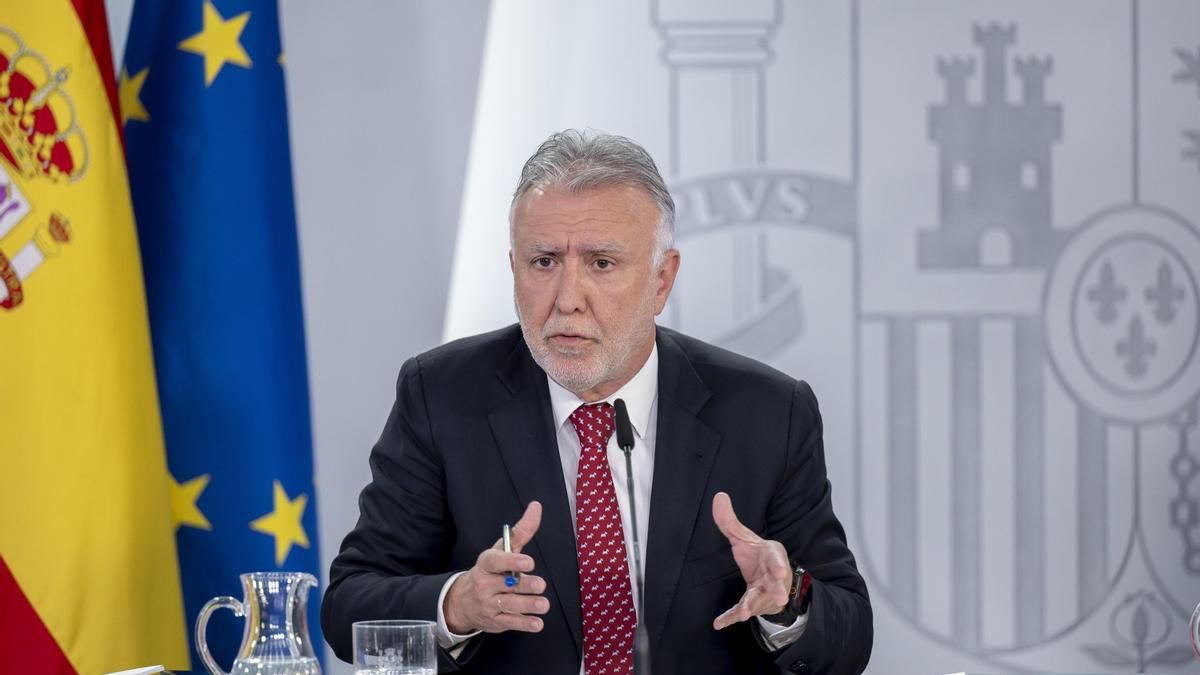
The Council of Ministers, meeting this Tuesday, has approved several measures concerning the Canary Islands. The Minister for Territorial Policy and Democratic Memory, Ángel Víctor Torres, announced the decisions, describing them as significant. In a video shared on his social media channels, he explained that the Council had authorised the operator for the future Güímar pumped-storage hydroelectric plant in Tenerife. According to Torres, this marks another step forward in the archipelago’s commitment to renewable energy.
More than €50 million for the Canary Islands
In addition to the energy project, the Council of Ministers approved an extra €44 million for the islands to fund dependency care. Similarly, it gave the green light to a further €4 million to finance the reception of unaccompanied migrant minors in the islands, and €8.5 million for desalinated water treatment. In total, the State will provide more than €50 million for various budget lines in the Canary Islands. Finally, Torres indicated that the Government of the Canary Islands has been authorised to use €300 million in short-term debt.
A €1 billion investment that will pay for itself in five years
The new plant is expected to begin operating halfway through the next decade and will promote the decarbonisation of the energy axis formed by Tenerife and La Gomera. This was explained by the Secretary of State for Energy, Joan Groizard, who stressed that with Tuesday’s agreement, the Spanish government is pressing ahead with the project. It will involve an investment of more than €1 billion and generate significant economic returns, as the future plant will save around €200 million per year in electricity generation. “In just over five years, that investment will be fully amortised and recovered, and this infrastructure has a useful life of decades and decades,” he asserted. “As well as being a profitable investment for the electricity system, it will be positive for consumers because it will allow us to incorporate more renewable energy and stop depending on fossil fuels, which have become extremely expensive again internationally,” he added.
A giant battery for Tenerife and La Gomera
Groizard stated that a third of Tenerife’s electricity demand could be covered by this pumped-storage system, which will store surplus energy generated by wind and solar farms in the form of water held in a high-altitude reservoir. This water is then transformed back into electricity when needed by releasing it onto turbines. The future Güímar plant will therefore operate in a similar way to the one already under construction in Gran Canaria, the Salto de Chira. “We are talking about between 200 and 220 megawatts of peak power and around 16 hours of storage. In other words, this is a mega-battery, a giant battery at the service of the system that will provide security of supply and allow greater integration of renewables for Tenerife and La Gomera,” he said.
Next steps: engineering, environmental assessment and pricing
The agreement reached this Tuesday activates the mandate given to Red Eléctrica to carry out the engineering work and submit it to the Canary Islands regional government, which will be responsible for the environmental assessment and the administrative processing of the project. In parallel, the government will define how and how much to pay for the electricity produced over the course of this year. “That €1 billion investment has to be translated into technical and economic parameters, and a regulation that will explain exactly how it is regulated, and that will be done over this year,” he said. In any case, he clarified that these are projects whose processing and construction will take around a decade, but by the middle of the next decade, Tenerife will already have its reversible pumped-storage plant, just as Gran Canaria will very soon.
What’s happening in the Canaries – straight to your phone
News, weather alerts and practical updates – direct from the islands, in English. We live here and know what’s going on – before the international media catch up. Everything lands on our WhatsApp channel – no middlemen, no algorithm. Curated for families, expats and travelers.

Canary Islands sea hits second-hottest year on record

Legal bid to halt tree felling in Santa Cruz’s La Salud

Fiesta del Charco: A journey through La Aldea’s past

Corralejo dunes power line set for removal

ULPGC launches 14 research projects at Las Canteras

TMT will never be built, says Canary Islands astrophysics chief

Pedro Duque: Canarias is the “ultimate dream” for rockets

Court blow to Tenerife motor circuit project
La Palma faces new volcanic risk planning deadline
