
Tenerife and ULL Explore New Aerospace Data Degree
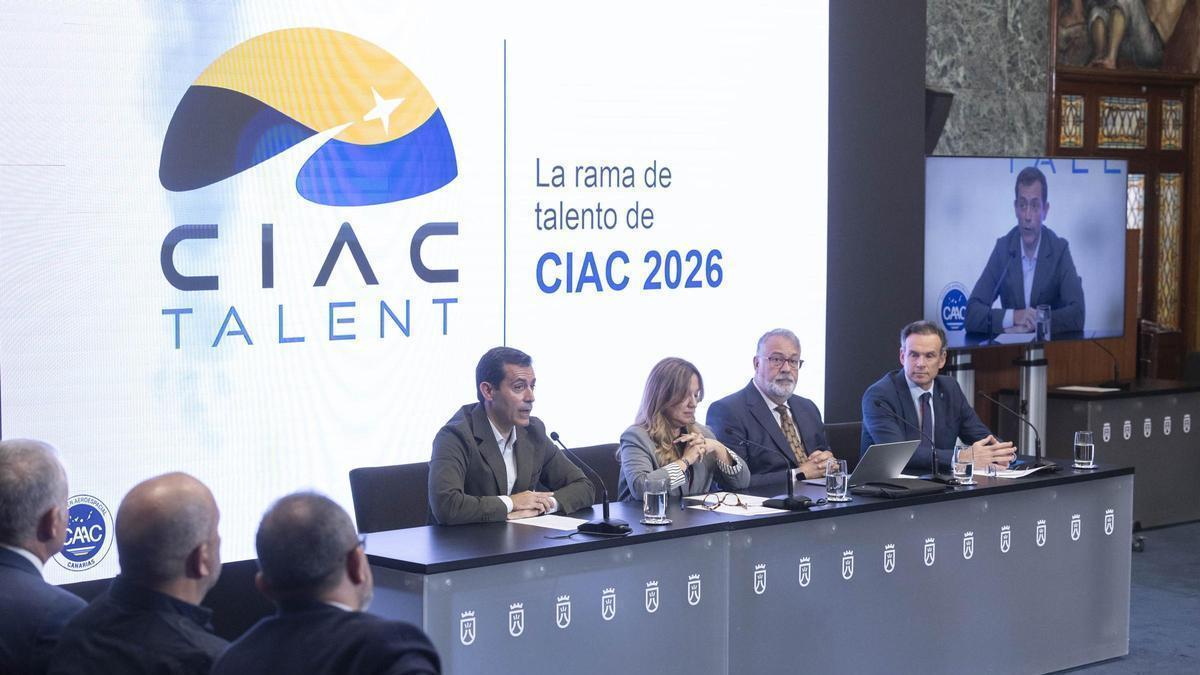
Tenerife’s Island Council (Cabildo) and the University of La Laguna (ULL) are studying the launch of a new degree in data management linked to the aerospace industry. This proposed course aims to bolster skilled employment in one of the most strategically promising sectors in the Canary Islands. The announcement was made by the island’s Councillor for Innovation, Juan José Martínez, during the presentation of the third International Aerospace Congress of the Canaries (CIAC 2026).
Building a Complete Value Chain
Councillor Martínez explained that this potential new degree could join the already-announced aerospace engineering programme at ULL. In his view, data management will be even more decisive than the more visible parts of the sector, such as satellites or antennas, as it is where a large part of the economic and technological value is generated. He insisted that Tenerife’s commitment to the aerospace industry “is not just about launching satellites,” but aims to encompass the entire value chain: from transmission and tracking to the analysis and exploitation of data.
Harnessing Data from the Canary Satellite Constellation
That process, he emphasised, will open the door to new professional profiles and specialised employment. In this context, he noted that the future Canary Islands satellite constellation will generate a vast amount of information that will need to be processed and analysed—a task where the supercomputers at the Institute of Technology and Renewable Energies (ITER) will be key. He also pointed out that specialists from different fields will be needed, such as geographers expert in positioning and terrestrial tracking.
Incubators and Major Financial Mobilisation
Furthermore, the Cabildo and the Canary Islands Government are working on developing a network of startup incubators, certified by the European Space Agency (ESA), in Tenerife, Gran Canaria, and Fuerteventura. The goal is to attract companies, talent, and innovation. Martínez also highlighted that the Cabildo has managed to mobilise 79 million euros in projects linked to the aerospace sector—a figure which, in his opinion, reflects the opportunity to consolidate this industry in Tenerife, as has happened with other strategic activities.
Leadership and Economic Return
The President of the Cabildo, Rosa Dávila, stated that the strategy is already yielding results, with new companies establishing themselves on the island and the growth of local firms like Canarysat, which is linked to the satellite constellation project. She also asserted that Tenerife currently leads aerospace development in Spain and underlined the high return on this investment. Among the ongoing projects is also a teleport, which will allow for the tracking of satellite constellations and will generate economic returns. Regarding the future Canary Islands constellation, the Cabildo estimates that exploiting the data could generate at least 18 million euros.
International Congress to Focus on Talent
The third International Aerospace Congress of the Canaries will incorporate new features such as CIAC Talent, a space focused on training and local talent, in addition to an exhibition and networking area. The event, to be held on 3 and 4 December at the ITER, will bring together companies like Hispasat, Airbus, Open Cosmos, Enaire, and Canarysat, along with institutions, universities, and research centres. Discussions will centre on areas such as aeronautics, space, drones, astrophysics, and training.
What’s happening in the Canaries – straight to your phone
News, weather alerts and practical updates – direct from the islands, in English. We live here and know what’s going on – before the international media catch up. Everything lands on our WhatsApp channel – no middlemen, no algorithm. Curated for families, expats and travelers.

Vivanta shuts all dental clinics including six in Tenerife

Civil Guard warns of digital skimming threat to online shoppers

Tenerife shifts FDCAN funds from roads to housing

PSOE warns Arrecife plan could ‘bury’ El Cable beach in concrete

Canary Islands faces loss of 20% of self-employed workers

Canary Islands to get 26 new substations by 2030

Canary Islands poverty rates stuck since pandemic

Court backs eviction over verbal room rental in Arona

Canary Islands pushes for 10-year residency rule for foreign buyers
