
Island Coalition Calls for Urgent Action
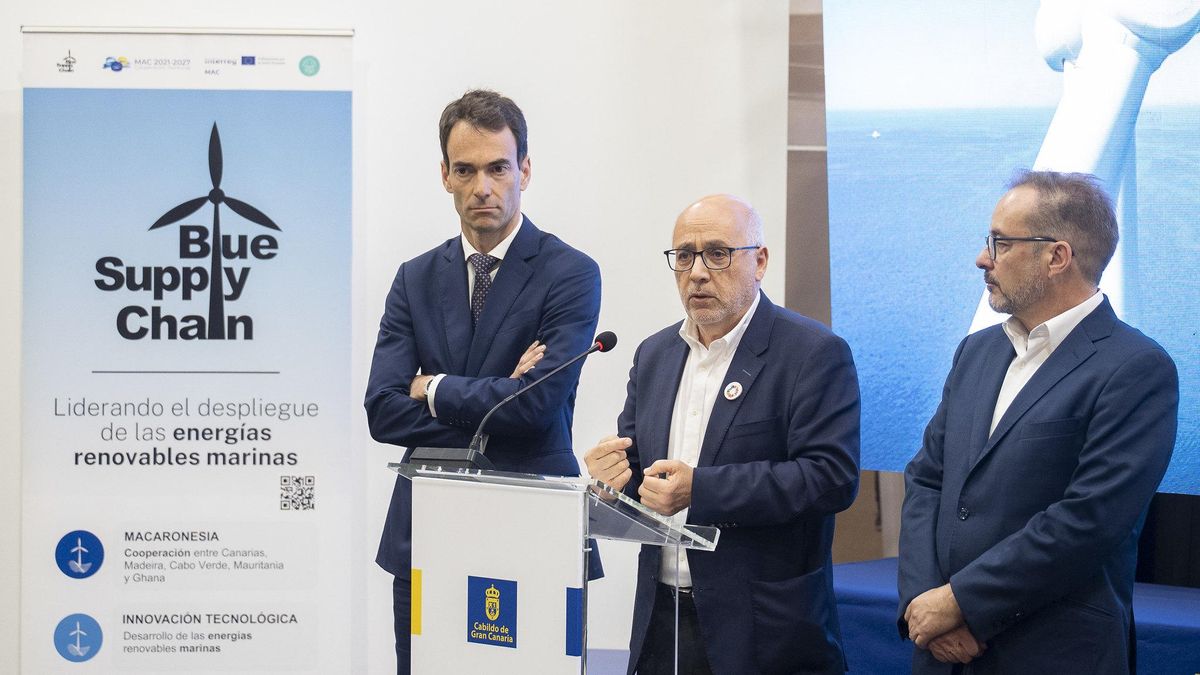
On Monday, the government of Gran Canaria, alongside major businesses and trade unions, formally requested that Spain’s Ministry for Ecological Transition and the Demographic Challenge urgently convene the country’s first offshore wind energy auction. The coalition proposes that this historic first step should materialise as a commercial pilot project in the waters around Gran Canaria.
A Strategic Tool for Energy and Economic Independence
In a statement, the Island Council explained that floating offshore wind is emerging as a key tool to simultaneously advance the reduction of energy dependency, economic diversification, and the creation of skilled jobs. Representatives from various sectors signed a letter addressed to the responsible minister, Sara Aagesen, demanding progress on the auction announcement, a clear timetable, and guarantees for the participation of local businesses in the supply chain.
The Council asserts that Gran Canaria has a defined roadmap through its Energy Transition Agenda, which recognises the need to incorporate technologies capable of bringing stability to an isolated energy system. This means offshore wind offers more constant generation, complementing other renewables like solar power.
Unprecedented Cross-Sector Support
The request was formalised during a joint appearance featuring representatives from the energy, maritime-port, business, scientific-technological, and fishing sectors, as well as public administrations. A total of 20 representative entities and companies participated, including the Canary Islands Confederation of Business Owners (CEOE), the Chamber of Commerce, and the UGT and CCOO trade unions. This demonstrates a shared position on an opportunity considered crucial for the island’s future.
Leadership Warns Against Delay
The President of the Gran Canaria Council, Antonio Morales Méndez, stressed that “Gran Canaria cannot afford to remain on the sidelines of an energy and industrial transformation already underway in Europe.” He warned that “delaying decisions would mean renouncing our chance to position ourselves in a global supply chain that is in full growth.”
Morales contextualised this push within the current international landscape, noting that “the situation of global instability, with conflicts like the war in Iran, places us in a scenario of insecurity with potential energy shocks that could have a direct impact on the world economy.” He argued that the Canary Islands must accelerate the construction of their own energy model, based on a renewable mix combining wind, photovoltaic, geothermal, and green hydrogen, alongside storage systems like hydro-pumped and batteries, where offshore wind plays a key strategic role.
Ideal Conditions and Ready Industry
The Councillor for the Environment, Climate, Energy and Knowledge, Raúl García Brink, insisted the island has ideal conditions to lead the initial deployment of floating offshore wind in Spain, thanks to its energy planning and its industrial, logistical, and scientific capabilities. He highlighted that “the key is not only to implement this technology, but to ensure its development leaves value on the island, integrating our companies into the entire industrial chain.”
Meanwhile, the President of the Maritime Cluster of the Canary Islands and of Astican shipyard, Germán Suárez Calvo, assured that Gran Canaria’s business sector is fully prepared for this industrial challenge. “We have been working for years, anticipating this opportunity, and today we can say our companies are in a position to execute projects linked to floating offshore wind, especially in areas like the island’s southeast,” he stated. Suárez Calvo emphasised the sector is “ready to make the leap, with consolidated industrial, logistical, and technical capabilities,” and appealed for progress on regulatory decisions: “We are ready for take-off; all that’s needed is for the central government to activate the power capacity tender to unleash all that potential already ready in the Canaries.”
Substantial Economic Potential
The Gran Canaria Council points out that available studies suggest a reference deployment of around 500 megawatts could generate billions of euros of economic impact in the Canaries, in addition to thousands of jobs linked to a new industry.
Academic Studies Reinforce Viability
In this context, the island government states that various academic analyses reinforce the viability of this bet in the archipelago. A recent study by Comillas Pontifical University (2025) concludes that floating offshore wind could be more competitive in the Canaries than on the Spanish mainland, despite its higher technological cost. According to this report, the Levelised Cost of Energy (LCOE) for this technology is between €80 and €120/MWh, above other mainland renewables like solar PV or onshore wind.
However, the Council notes the comparison changes substantially in the Canaries, where conventional generation costs with fossil fuels like fuel oil or diesel typically range between €120 and €200/MWh. This allows offshore wind to be competitive by replacing more expensive, externally dependent generation, especially in an isolated system like the islands’. This positions the Canaries as a territory where this technology can be economically viable in the short term.
Regulatory Progress and Pending Decisions
In recent years, Spain has advanced in defining the regulatory framework and approving Maritime Spatial Plans, in which Gran Canaria has actively participated. These plans have allowed development zones to be adapted to the island reality, including measures like siting installations approximately six kilometres from the coast to minimise visual impact.
Nevertheless, the Council believes the process must now move towards concrete decisions, as the absence of auctions is delaying the effective development of the sector in Spain compared to other European countries.
Part of a Broader Energy Model
The Council has framed this initiative within a broader energy model combining renewable generation, storage, and intelligent demand management. Infrastructure like the Chira hydro-pumped storage project, and its potential expansion with the Las Niñas dam, reinforce the viability of integrating new generation sources like offshore wind.
Furthermore, the island institution has defended the need to promote a new competitive tender that incorporates system flexibility and storage criteria, as well as establishing a specific remuneration framework for island territories. The Council acknowledged the recent public consultation opened by the Ministry as a step forward, but insisted that “the development of offshore wind requires concrete decisions, a defined timetable, and legal certainty for the sector.” In this sense, the island government has warned that “time is a determining factor in international competition, and that delaying deployment could mean the loss of industrial opportunities difficult to recover.”

Iberdrola plans Tenerife’s biggest battery storage plant

The wild canary that gave its name to the Canary Islands

Canary Islands sea hits second-hottest year on record

Legal bid to halt tree felling in Santa Cruz’s La Salud

Fiesta del Charco: A journey through La Aldea’s past

Corralejo dunes power line set for removal

ULPGC launches 14 research projects at Las Canteras

TMT will never be built, says Canary Islands astrophysics chief

Pedro Duque: Canarias is the “ultimate dream” for rockets
