Overwhelming call for change
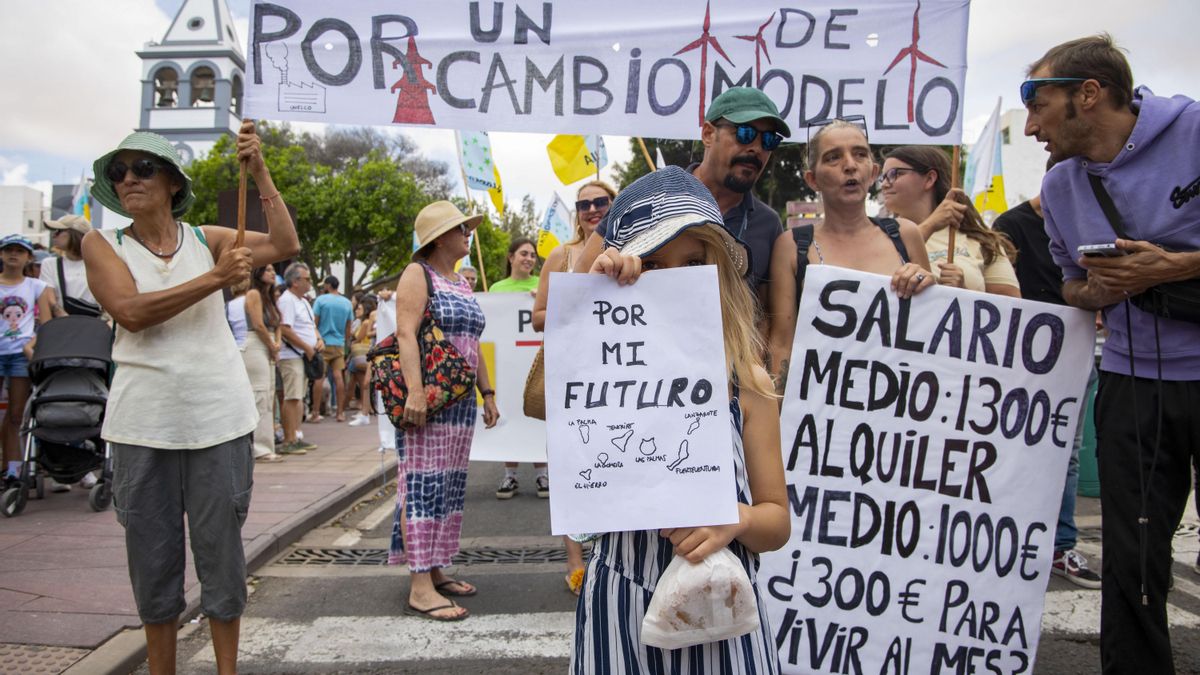
Nine out of ten people in the Canary Islands believe the region’s tourist model needs to change, according to a new study commissioned by the Fundación Canarina and produced by Estudios Sociales GEAS 7. Specifically, 52.1% of those surveyed backed a profound overhaul, while 36.9% limited their support to “partial adjustments”. The findings, obtained by Canarias Ahora, also show that 47.6% of the population believes mass tourism is closely or very closely linked to the environmental and social problems facing the islands, with access to housing identified as the main issue.
Study aims and methodology
The study set out to analyse how Canary Islands residents perceive the environment, the socio-economic model, and the sustainability challenges facing the archipelago. It also aims to produce a social diagnosis to serve “as a basis for guiding public policies and social action in environmental and territorial matters”. A total of 409 telephone interviews were conducted with residents across the islands. Within each island, the sample was balanced by sex (50% men, 50% women) and age (18-34, 35-54, and 55 or over). The confidence level of the study stands at 95.45%.
Support for limiting tourism growth
According to the diagnosis, 61.1% of respondents fully or largely agree with limiting tourism growth. Support for this measure is highest among the 35-54 age group (82.9%) and younger people (75%). The islands showing the strongest backing for restricting tourism development are Tenerife (67.8%), El Hierro (70%), and Fuerteventura (66.7%).
Institutions under fire
A significant portion of the population also views institutional attention to public opinion negatively. Two out of three people believe the authorities do not take social demands into account. Fuerteventura (57.1%) and Tenerife (49.3%) record the highest levels of disaffection in this regard. Conversely, only two out of ten people feel that institutions are driving changes in line with the Canary Islands’ environmental and social needs.
Quality of life in decline
For 70.4% of the population, quality of life in the Canary Islands has worsened over the last decade. Of this group, 75.8% are women. Respondents cited the price and availability of housing, the cost of living, overcrowding from tourism, and saturated infrastructure as the main factors behind this deterioration. Fuerteventura (85.7%) and Tenerife (77.6%) lead the perception of decline. In line with this, nearly half the population (45.2%) rank housing and rental costs as a top concern, placing it well ahead of the second biggest issue: tourism (27.6%).
Climate worries and lack of preparedness
Canary Islands residents also expressed concern over climate events such as heatwaves, droughts, and wildfires. Some 55.7% reported high or very high concern about the effects of climate change on the archipelago. By island, the most intense anxiety appears on La Palma, and by age group, among those over 55. On this front, 60.1% of the population believes the Canary Islands are not prepared to face the environmental and social challenges of the next decade, while 28.9% think they are partially prepared and just 3.7% say they are ready. The most critical perception is led by Fuerteventura (81%), La Gomera (70%), and Tenerife (62.5%).
Awareness vs action
The study’s conclusions point to a society with high environmental and territorial awareness and a strong emotional attachment to the land, particularly notable in the non-capital islands and among older people, coexisting with “a widespread perception of declining quality of life over the last decade”. At the same time, residents experience “profound unease” regarding the current development model and the institutional capacity to respond. The findings warn of a gap between awareness and action: “Despite high environmental concern, active participation in groups is low (2.4%)”, although 57% of the population acknowledges the influence of environmental discourse on their way of thinking.
Gender perspective
The study also records its main findings through a gender lens. On the one hand, women show a stronger attachment to and appreciation of heritage, as well as a greater demand for economic and environmental change. Some 86.3% of women consider profound changes necessary to guarantee sustainability, compared to 79.8% of men. Furthermore, 75.8% of women perceive that quality of life has worsened, versus 64.6% of men, with their discourse focusing on daily impacts such as job insecurity, social inequality, and access to housing. Women also show higher climate concern: 63% report high or very high worry about climate change, compared to 48% of men. “These patterns reinforce the need to systematically incorporate a gender perspective in the design of environmental and territorial public policies in the Canary Islands,” the report concludes.
Foundation’s warning
The Fundación Canarina stated in a press release that the study’s results reflect social concern and the “growing deterioration” of quality of life in the islands, which is “consistent with the repeated citizen protest actions organised across the entire archipelago in recent years”. “It is essential that the Canary Islands institutions take these challenges seriously, because the transition towards a more restrained model that respects resources, territory, and people is inevitable,” they stressed. For the foundation, “either it is tackled democratically, hand in hand with citizens, or it will come about imposed by nature’s own limits.”
What’s happening in the Canaries – straight to your phone
News, weather alerts and practical updates – direct from the islands, in English. We live here and know what’s going on – before the international media catch up. Everything lands on our WhatsApp channel – no middlemen, no algorithm. Curated for families, expats and travelers.

How to apply for public housing in the Canary Islands

Viral meningitis outbreak hits three children on El Hierro

Canary Islands tourism chief offers dialogue on residentialisation

Canary Islands office helps small councils ditch the peseta

Two tonnes of illegal tropical fruit seized at Tenerife port

Canary Islands approves new €1.6bn development fund

Mogán mayor says her €65,000 salary is too low

Abandoned cars in Canary Islands: hundreds left to rot
Work resumes on 27 affordable rental homes in Las Palmas