Essential repair work on major Las Palmas artery
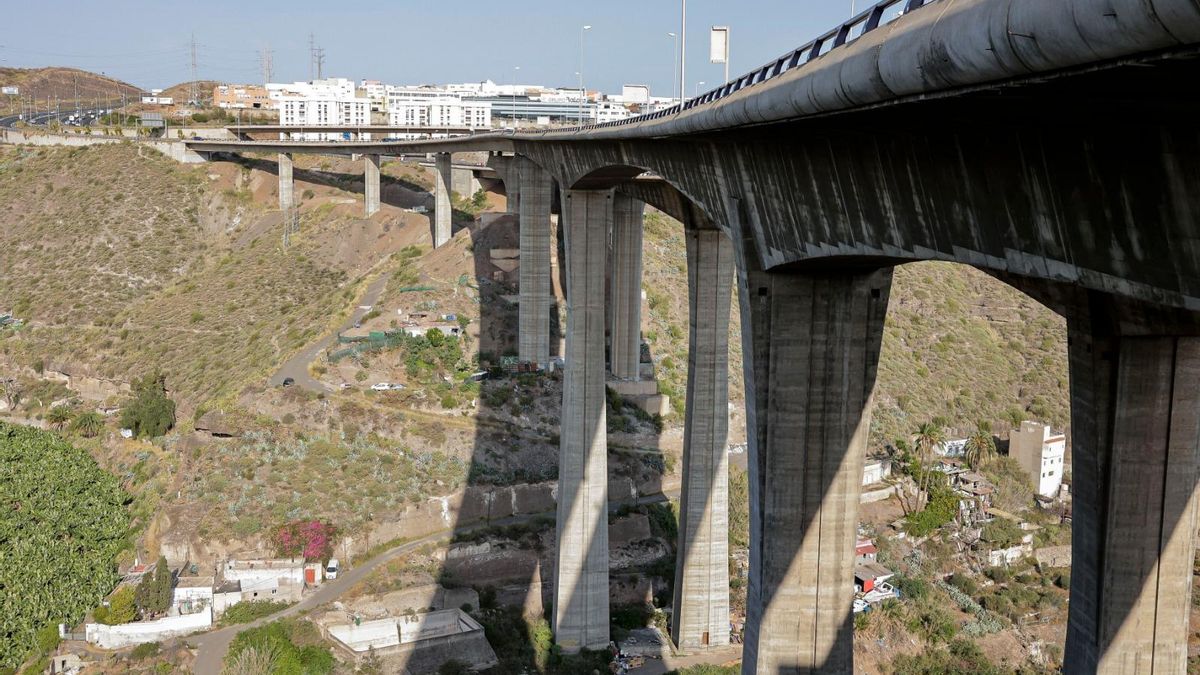
One of the busiest sections of the Las Palmas de Gran Canaria ring road, the Guiniguada viaduct, will close in stages for weeks this August for surface waterproofing work, the Vice-President of the Cabildo of Gran Canaria, Augusto Hidalgo, announced this Wednesday. The works, which are essential to guarantee the preservation and safety of the bridge, will begin on 2 August and will involve the complete closure of the ring road for one month — 15 days in the northbound direction and another 15 days in the southbound direction, he explained at a press conference. Hidalgo, who also serves as the island’s Minister for Public Works, stressed that the decision was made to carry out the works in August because it is the month with the lightest traffic, in an effort to cause the least possible disruption to the public.
Alternative routes and expected disruption
Consequently, the alternative routes to the viaduct will be busier than usual, particularly the Julio Luengo tunnel, for the duration of the works, Hidalgo warned. However, he assured that prior studies, supported by computer simulations to calculate the impact, show that the tunnel’s capacity will never be exceeded. Therefore, while delays similar to a weekday rush hour are expected, full-blown traffic jams are not anticipated. The inconvenience is unavoidable, he added, because the work is urgently needed to guarantee the safety of the viaduct’s structure.
Long-standing structural defect discovered
The vice-president recalled that the risk to the viaduct was discovered years ago, when it was found that a construction defect had caused the premature deterioration of the bridge’s internal prestressing tendons, which are essential for its stable support. A year ago, a first phase of work was completed to address the problems on the Guiniguada and eliminate the threat to those crossing the ravine via the ring road. This involved replacing these tendons and sealing them with a covering to protect them from potential damage caused by the weather. That covering was not applied when the viaduct was originally built, despite the fact that it should have been, Hidalgo emphasised. He added that the same issue occurred with the waterproofing of the viaduct’s surface, which was also not carried out as it should have been, creating another factor of structural deterioration risk.
Timing and cost of the project
For this reason, the Cabildo has scheduled the waterproofing for August. Once the bridge’s stability and safety were guaranteed by the tendon replacement, the decision was made to postpone the waterproofing to coincide with the resurfacing of the entire ring road, which is currently underway. In fact, the cost of the work on the bridge — around €2.2 million — has been included in the budget for the resurfacing contract, which covers a total of 11 kilometres of road and amounts to €18.7 million, Augusto Hidalgo specified.
Crews working double shifts to minimise disruption
The island’s vice-president insisted, however, that everything has been organised to do it as quickly as possible, “with the aim of trying to reduce the working time to a minimum and cause the least possible impact on citizens.” Specifically, “we are going to do it in double shifts and, moreover, afterwards, as sections are completed, we will asphalt them at night,” he explained.
What’s happening in the Canaries – straight to your phone
News, weather alerts and practical updates – direct from the islands, in English. We live here and know what’s going on – before the international media catch up. Everything lands on our WhatsApp channel – no middlemen, no algorithm. Curated for families, expats and travelers.

Work on TF-5 third lane between Guamasa and Los Rodeos to start in November

Canary Islands international air arrivals fall 1.3% in September

Helicopter evacuates US cruise passenger near Tenerife

El Hierro airport sees 3.6% rise in September passengers

Gran Canaria approves €509k works to shore up GC-200 slope

Canary Islands gets €47.5m for free public transport in 2026
Canary Islands airports see 0.9% fall in September passengers
El Rejo road in La Gomera to close for six hours on Tuesday

Man, 65, seriously injured in GC-1 crash in Agüimes