Compiled with the help of artificial intelligence, based on Spanish-language information. Source below the article.
Funding approved for congestion-busting study
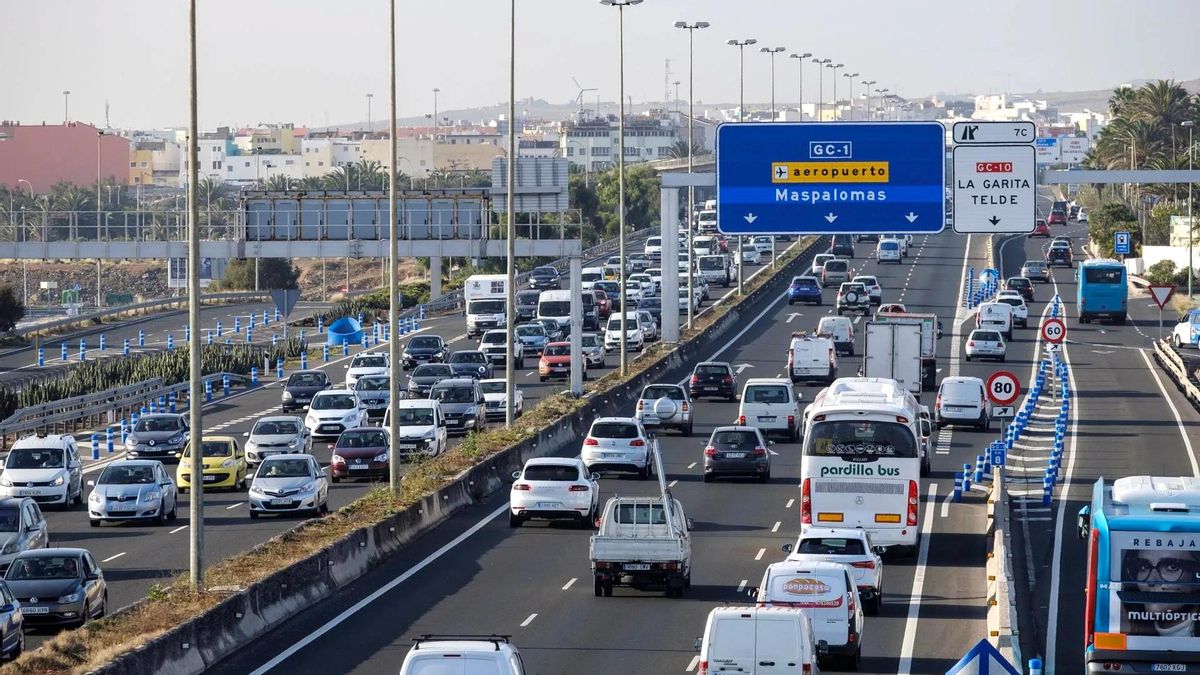
The Canary Islands Government’s Department of Public Works, Housing and Mobility has allocated €202,603.20 to investigate the feasibility of introducing BUS-VAO (high-occupancy vehicle) lanes on Gran Canaria’s GC-1 and GC-3, two of the island’s main access and connection routes. The study will examine the potential implementation of these lanes using intelligent transport systems on both the Southern Motorway (GC-1) and the Las Palmas de Gran Canaria Ring Road (GC-3).
The initiative aims to determine whether BUS-VAO lanes could help reduce traffic congestion and improve mobility across Gran Canaria, particularly on the stretches with the highest traffic volumes. The regional government hopes to optimise existing road infrastructure, encourage greater use of public transport and car-sharing, and improve traffic flow as part of its wider strategy towards more efficient and sustainable mobility.
Scope of the study
The department has stated that the objective of the study is to establish the technical, functional, economic, territorial and environmental viability of introducing BUS-VAO lanes, as well as to set out action priorities for the development of future construction projects. The Directorate General for Road Infrastructure, which is driving the initiative, has commissioned the public company INECO – part of the regional government – to provide technical assistance for the study.
“This study will allow us to make decisions with the utmost technical rigour on a measure that could contribute significantly to improving mobility in Gran Canaria,” the department said in a statement. “We want to analyse every possible alternative to optimise the capacity of existing infrastructure, support public transport and offer effective solutions that reduce congestion on the main approaches to the island’s capital,” added the Director General, Rosana Melián.
Key corridors under examination
The scope of the study covers the stretch of the GC-1 between kilometre point 3 and Gran Canaria Airport, and the GC-3 between its junction with the GC-1 and the University of Las Palmas de Gran Canaria. These two corridors carry high volumes of daily traffic and experience recurrent congestion episodes.
The project will be delivered in two phases. The first phase will involve collecting and analysing mobility and traffic data through specific traffic count campaigns, studying the public transport offer and gathering cartographic information. The second phase will include traffic modelling and simulation of different scenarios to assess how the road network would behave with the potential introduction of BUS-VAO lanes, identifying the most effective alternatives for improving capacity and traffic flow.
Socioeconomic assessment
The study will also incorporate a socioeconomic analysis evaluating factors such as time savings for users, reductions in polluting emissions, improvements in road safety and the costs associated with each alternative. This will help define which corridors offer the greatest technical, economic, social and environmental viability for the future implementation of BUS-VAO lanes, the department confirmed.
What’s happening in the Canaries – straight to your phone
News, weather alerts and practical updates – direct from the islands, in English. We live here and know what’s going on – before the international media catch up. Everything lands on our WhatsApp channel – no middlemen, no algorithm. Curated for families, expats and travelers.
Canary Islands international air arrivals fall 1.3% in September

Helicopter evacuates US cruise passenger near Tenerife
El Hierro airport sees 3.6% rise in September passengers
Gran Canaria approves €509k works to shore up GC-200 slope
Canary Islands gets €47.5m for free public transport in 2026
Canary Islands airports see 0.9% fall in September passengers
El Rejo road in La Gomera to close for six hours on Tuesday
Man, 65, seriously injured in GC-1 crash in Agüimes
Las Palmas traffic changes for emergency sewer works