
Gran Canaria spans 1,560 square kilometres off the northwestern coast of Africa, supporting a permanent population of roughly 860,000 residents. Locals call it a “miniature continent” because a 45-minute drive moves you from desert sand dunes at sea level to misty pine forests surrounding Pico de las Nieves at 1,949 metres altitude. The island presents two distinct environments: the heavily populated, historic capital of Las Palmas in the north and a sun-drenched resort strip along the southern coast.
This destination suits travellers who appreciate geographical contrast and outdoor flexibility. Visitors can spend mornings hiking mountain ravines and afternoons swimming along urban ocean reefs. It does not suit travellers seeking remote, undeveloped island escapes or uniform heat from coast to coast. Planning Gran Canaria holidays requires understanding how the central mountain massif dictates daily sunshine, wind exposure, and travel times across different municipalities.
When to go
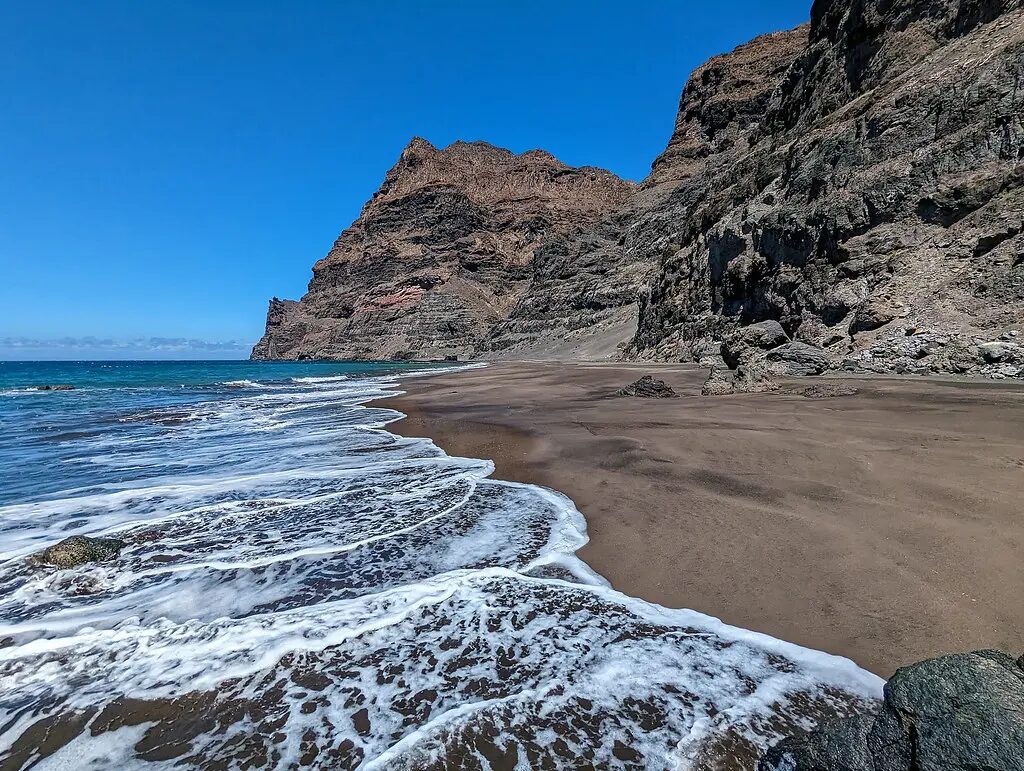
Weather conditions depend directly on the island’s microclimate divide. Cool, humid Northeast Trade Winds driven by the Azores Anticyclone push against northern mountain slopes between 500 and 1,500 metres elevation. During summer months from June to August, this creates a persistent cloud canopy over Las Palmas known locally as the “panza de burro” (donkey’s belly). This cloud blanket keeps summer capital temperatures comfortable at 22°C to 25°C. In contrast, southern resort areas like Playa del Ingles, Puerto Rico, and Puerto de Mogan remain sheltered by the mountains, receiving over 320 sunny days per year with summer temperatures between 27°C and 31°C.
Calima weather episodes occur when easterly winds transport Saharan sand dust over the archipelago. Most common between December and March as well as mid-summer, calima brings hazy yellow skies, reduced visibility, and sudden dry temperature increases of 5°C to 10°C over 2 to 5 days. Ocean water temperatures hit their lowest between January and April at 18°C to 19°C, rising to peak warmth of 22°C to 23°C from September to November. Peak accommodation pricing runs during the winter sun season from December to February and summer holiday months of July and August. Spring (April to June) and autumn (September to November) offer lower rates and optimal hiking conditions.
Gran Canaria weather
Microclimate variations mean Gran Canaria weather differs significantly between coastal towns. Before booking accommodation, check regional forecasts on our main island weather portal. If staying in the capital, monitor daily cloud cover via Las Palmas weather. For southern resort destinations, review Maspalomas weather, compare conditions with Playa del Ingles weather, or verify sheltered conditions using Puerto de Mogan weather.
Best beaches in Gran Canaria
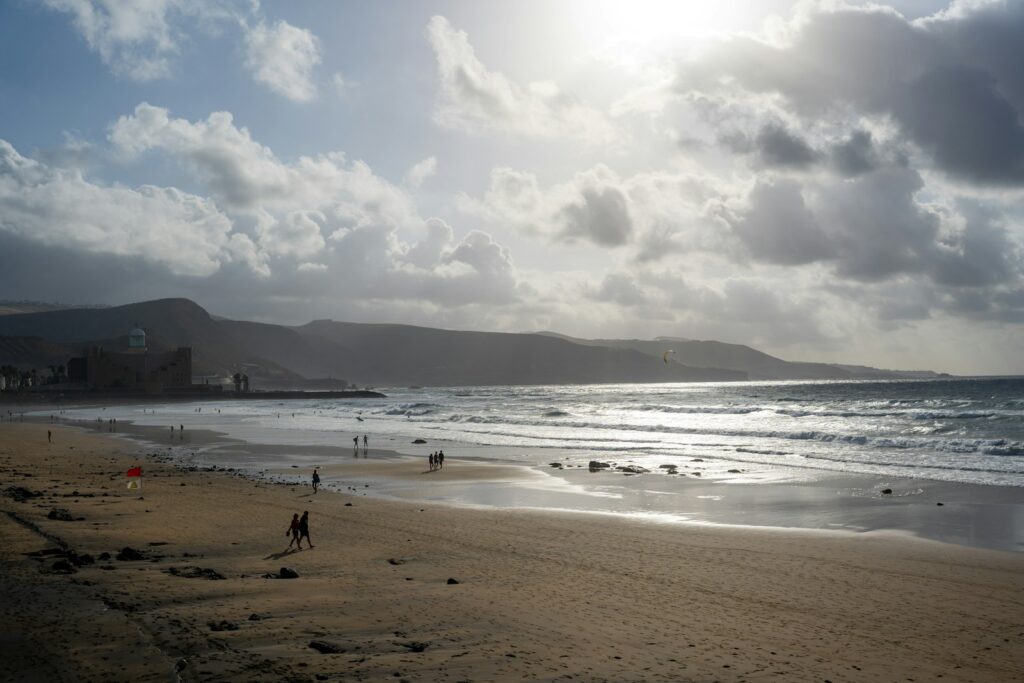
Coastal environments range from urban ocean barrier reefs to sheltered artificial bays and remote volcanic coves. Our guide to the best beaches in Gran Canaria compares every coast. In the north, Las Canteras beach features “La Barra”, a natural offshore volcanic sandstone reef that calms waves and forms a 3-kilometre natural swimming pool at low tide. Along the south coast, broad golden sands border Playa del Ingles beach adjacent to protected dunes. Calm, family-friendly swimming waters define Playa de Amadores and the golden waterfront at Playa de Mogan. Hikers seeking complete isolation can follow the steep ravine trail to reach Playa de Guigui on the undeveloped western coast.
Things to do in Gran Canaria
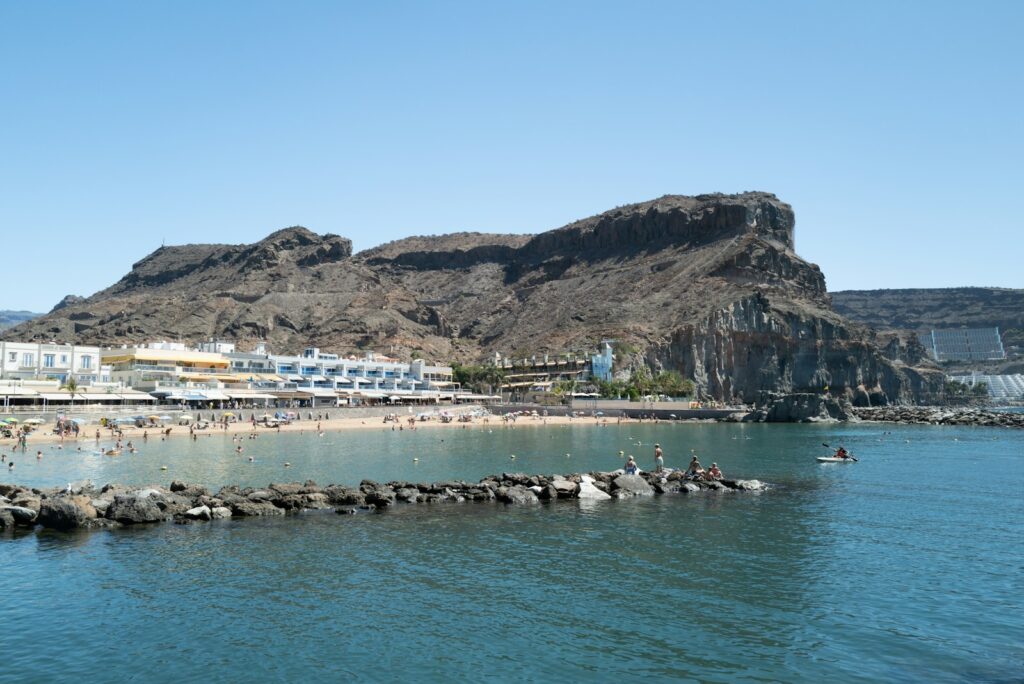
Planning the top things to do in Gran Canaria involves balancing natural reserves, mountain hikes, historic quarters, and coastal leisure park facilities across the island.
The Dunas de Maspalomas form a protected 400-hectare Special Nature Reserve. Access rules strictly require visitors to walk only within the 8 kilometres of designated trails marked by wooden posts. Walking off-path across the sand dunes, building stone windbreaks, or disturbing wildlife is illegal. Environmental wardens and local police enforce these rules using foot patrols and surveillance drones. Fines for stepping off marked trails start at €150 for minor infractions and reach up to €600,000 for severe ecological damage.
In the central highlands, the Roque Nublo trail (S-70) leads to the iconic volcanic monolith at 1,813 metres elevation. The moderate hike measures 3 kilometres round-trip with roughly 160 metres of elevation gain, taking 1 to 1.5 hours. As of July 2026, the trailhead parking lot at Degollada de la Goleta is permanently closed to private vehicles. Drivers must park at designated lots in Cruz de los Llanos (5 km away) or Tejeda town center and catch the dedicated shuttle bus or Global Line 18. Additionally, trail access between 09:00 and 17:00 daily requires a mandatory free advance QR reservation from reservasroquenublo.com.
Cultural towns provide authentic food and historic architecture. Teror hosts its famous Sunday market from 08:00 to 14:00 around the Basilica de Nuestra Senora del Pino, where vendors sell chorizo de Teror, a soft garlic-paprika pork sausage. In Las Palmas, the historic Vegueta quarter hosts Thursday Tapas Night from 19:00 to midnight along Calle Mendizabal, serving pinchos and small beers for €2.00 to €3.00. The nearby Casa de Colon museum opens daily from 10:00 to 18:00 (€4 entry). In Puerto de Mogan, known for its seawater canals and bougainvillea arches, the Friday market runs from 09:00 to 15:00; arrive before 10:00 to beat tour bus arrivals.
Family entertainment centers operate year-round in the south. Aqualand opens daily from 10:00 to 17:00 (~€35 adult entry) with major water slides and splash pools. Lago Taurito operates the island’s only saltwater water park. Holiday World opens amusement rides in the late afternoon from 17:00 alongside its 16-lane bowling alley and Nomad Gastro Market. In Puerto Rico, Angry Birds Activity Park offers outdoor ziplines and climbing structures from 10:00 to 18:00 daily.
Getting there and around
Gando Airport (LPA) sits on the east coast, 18 km south of Las Palmas and 30 km north of the main southern resorts. As of July 2026, the public intercity bus stop is located on the Departures curb (Level 1). Passengers arriving at Baggage Claim on the Ground floor must head up one level via lift or escalator and follow “Bus / Guaguas” signs outside.
Global blue intercity buses provide comprehensive island transport. Fares can be paid directly to drivers using contactless payment cards or cash (banknotes up to €20 accepted). Key routes include Line 60 running express to Las Palmas San Telmo (€2.30) and Santa Catalina (€2.95) every 30 minutes. Line 66 runs hourly to southern resorts down to Faro de Maspalomas (€4.05). Line 91 connects LPA airport hourly to Arguineguin, Puerto Rico (€5.45), and Puerto de Mogan (€6.80).
Renting a car is recommended for exploring interior mountain villages like Tejeda and mountain routes such as GC-60 and GC-200. Roads are fully paved and well-maintained but feature sharp hairpin curves and steep inclines. A standard 2WD rental vehicle provides sufficient power; 4WD is unnecessary. For inter-island travel to Tenerife, Fred. Olsen Express operates high-speed trimaran ferries from Puerto de las Nieves (Agaete) to Santa Cruz de Tenerife in 80 minutes (from ~€49 non-resident foot passenger fare, up to 8 daily sailings). Naviera Armas runs ferries from the Port of Las Palmas to Santa Cruz de Tenerife in 100 to 115 minutes (from ~€49).
Island news, updated daily
Our resident editorial team monitors daily transportation adjustments, trail access policy updates, and regional weather advisories. Recent examples include the Roque Nublo reservation system rollout and changes to holiday rental rules that affect where visitors can stay. Stay informed on municipal developments and local travel guidance by visiting our dedicated Gran Canaria news section.
We also run dedicated resort news pages: Maspalomas.
Frequently asked questions
The south coast receives over 320 days of annual sunshine, making it significantly sunnier than the cloudier northern slopes. Moist trade winds trap low cloud cover over Las Palmas, whereas the 1,949-metre central mountain range shelters southern resort areas. Book accommodation in the south if maximum sunshine is your main priority.
Yes, the island offers sheltered swimming beaches, clear public transport routes, and major theme parks for families. Shallow, breakwater-protected bays at Playa de Amadores and Puerto de Mogan provide safe swimming for young children, while local water parks and Holiday World deliver evening amusement rides. Select Puerto Rico or Mogan for calm ocean bays and walkable resort amenities.
7 to 10 days provides sufficient time to experience both coastal beach resorts and interior mountain regions. A one-week trip allows 3 days of beach relaxation, 2 days exploring Las Palmas and Teror, and 2 days hiking around Roque Nublo. Plan at least 10 days if you intend to take an inter-island ferry trip to Tenerife.
Gran Canaria features broader golden sand dune beaches and a larger historic capital city, whereas Tenerife offers higher volcanic mountain terrain dominated by Mount Teide. Both islands link directly via 80-minute fast ferries, enabling easy multi-island travel. Choose this island for varied beach resorts and accessible mountain drives.
No, public Global buses efficiently serve the airport and all major south coast resort towns without driving. However, renting a car is strongly recommended if you wish to explore mountain villages like Tejeda, central viewpoints, and western ravines independently. Use buses for direct coastal journeys and rent a car for 1-2 days in the highlands.
Latest from Gran Canaria

Civil Guard warns of digital skimming threat to online shoppers

Tourism overcrowding and its impact on Canary Islands healthcare

Monday: calima and 34C heat across the Islands

WOMEX 2026 closes in Gran Canaria as Tenerife named 2027 host

Canary Islands weather: Calima, storms and 34°C heat

The wild canary that gave its name to the Canary Islands

Sunday: calima and 30°C as alisio winds strengthen

Calima and 30C heat to hit the Canary Islands this Sunday

Canary Islands faces loss of 20% of self-employed workers
