
Expert Report Details Extensive Damage at Puertito de Adeje
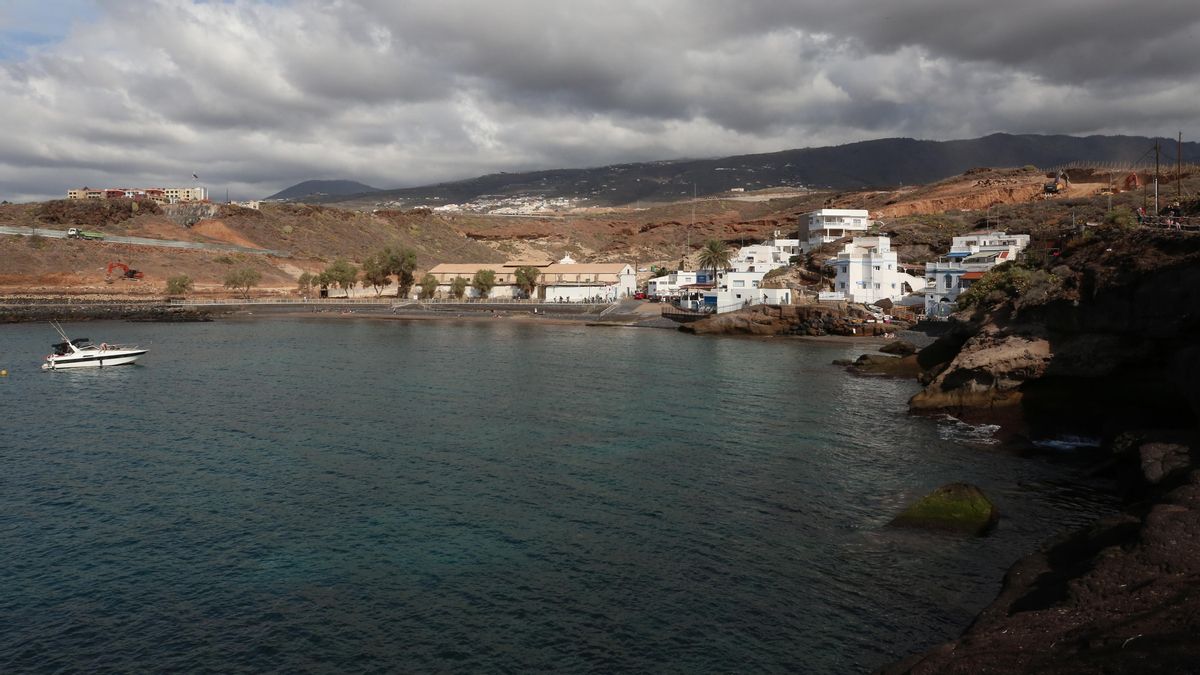
An expert report presented as part of the criminal proceedings against the controversial Cuna del Alma luxury tourism project estimates that two-thirds of the Puertito de Adeje area has already been affected by the development planned for the south of Tenerife. The document, submitted by the public prosecutor, the Puertito Libre Cultural Social Ecologist Association, was compiled by a multidisciplinary team of nine authors. Based on fieldwork, drone flights, interviews, and a review of satellite imagery and documents, it concludes that nearly 300,000 square metres of the project’s land—66.8% of the total 449,000 square metres—has been directly impacted by the works or is on plots that in their view breach regulations.
Canarias Ahora contacted the project’s promoter, Segunda Casa Adeje SL, for comment on the conclusions of this extensive 200-page report and to ask if they had filed a formal response. As of the publication date of this article, no reply had been received.
Loss of Farmland, Vegetation and Geological Heritage
The report states that earthworks at El Puertito de Adeje have created two large spoil heaps, one of 348,000 cubic metres and another of 115,000 cubic metres. It also notes the disappearance of 17.9 hectares of irrigated agricultural land used for growing bananas and tomatoes, with an estimated market value of between €1.5 and €2 million. The analysis further calculates the loss of 3.8 hectares of vegetation that captured 63 tonnes of carbon dioxide (CO2) annually. Once the urbanisation is complete, it adds, 8.2 hectares that sequestered 136 tonnes of CO2 will have vanished.
The ‘Place of Geological Interest’ (LIG) within the area, called ‘Ignimbrites and Pleistocene Plinian Fall Deposits of Puertito de Adeje’, is of special relevance for containing records of two major eruptions recorded in Tenerife. According to the analysis, it has lost 25.1% of its surface area (covering 18 hectares) due to excavations linked to the project. Future damage could reach 13.5 hectares, or 75.5% of the LIG. “This means that complete eruptive phases have been eliminated from this record, so their study will not be possible in the future when we will likely have far superior analytical techniques to those we have today,” lament the authors of the document.
Protected Habitats and Endangered Species at Risk
Puertito also includes a priority area for the reproduction, feeding, dispersal and concentration of threatened species. It is called ‘Llano del Camello’ and was declared as such in 2015. According to the expert report, 15.5 of its 265 hectares are already damaged, and the scope of the works will end up affecting 44.9 hectares, splitting the space in two with the construction of 3,600 tourist beds.
The report highlights that the works at Cuna del Alma have destroyed 21.2% of the hectares containing population clusters of the ‘viborina triste’ plant—a famously protected species that halted works for a year and a half and is now being relocated—amounting to nearly 3.5 hectares in total. It concludes that the project will ultimately eradicate 91% of its habitat in the area. The study’s signatories note that “there is no scientific evidence of a successful translocation of the ‘viborina triste'” and deduce that “its population in El Puertito is doomed to disappear.”
Furthermore, the ‘Community Interest Habitat’ (HIC) of scrubland and tabaibal found there “has been reduced by 25.4%, some 3.76 hectares, by works that have produced constant and irreparable damage,” the report continues. The entire urbanisation will consume about 8.19 hectares (55% of the total) of this HIC, it adds.
Archaeological Damage and Future Marine Threats
On heritage, the authors specify that of the 57 heritage assets found in the area, 13 have disappeared or suffered damage. These include aboriginal archaeological sites, ethnographic elements (such as terraced fields and water channels), and a traditional Canarian house. Eleven other assets are also at clear risk of disappearance due to a lack of heritage value studies, and 18 have an uncertain future because the proposal from the Tenerife Island Council to create a museum zone that includes them has not yet been approved.
The report does not focus solely on damage already confirmed. It also warns of what may be yet to come, particularly at sea. The document emphasises that visitors to the Cuna del Alma luxury villas will swim near the protected ‘Teno-Rasca Marine Strip’, increasing maritime traffic and thus multiplying the risk of collisions with juvenile green turtles and disturbing dolphins and tropical pilot whales.
It also indicates that the use of sand to modify the beach could affect two new habitats of community interest: sandbanks permanently covered by seawater and underwater caves, as well as seagrass meadows. The possible installation of a Wastewater Pumping Station near the beach means any breakdown or failure could lead to sewage flowing into the bay of El Puertito.
Further Criticisms and Local Impact
The report lists other significant issues: “Earthworks have generated clouds of dust without the area being watered to prevent it.” The fencing has completely enclosed the local population, leaving only a single exit for residents, tourists, and vehicles.
The analysis also mentions the project’s lack of an environmental assessment; the strategy of Adeje Town Council to authorise the translocation of the ‘viborina triste’ using the housing crisis as a pretext, despite the initiative not including any public housing; the expropriation of the Galindo family; and the fact that the former president of Adeje’s environmental body, Rosendo López, worked for the project’s promoter at the same time he held that official position.

Iberdrola plans Tenerife’s biggest battery storage plant

The wild canary that gave its name to the Canary Islands

Canary Islands sea hits second-hottest year on record

Legal bid to halt tree felling in Santa Cruz’s La Salud

Fiesta del Charco: A journey through La Aldea’s past

Corralejo dunes power line set for removal

ULPGC launches 14 research projects at Las Canteras

TMT will never be built, says Canary Islands astrophysics chief

Pedro Duque: Canarias is the “ultimate dream” for rockets
