
A Wet Winter Masks a Hotter Future
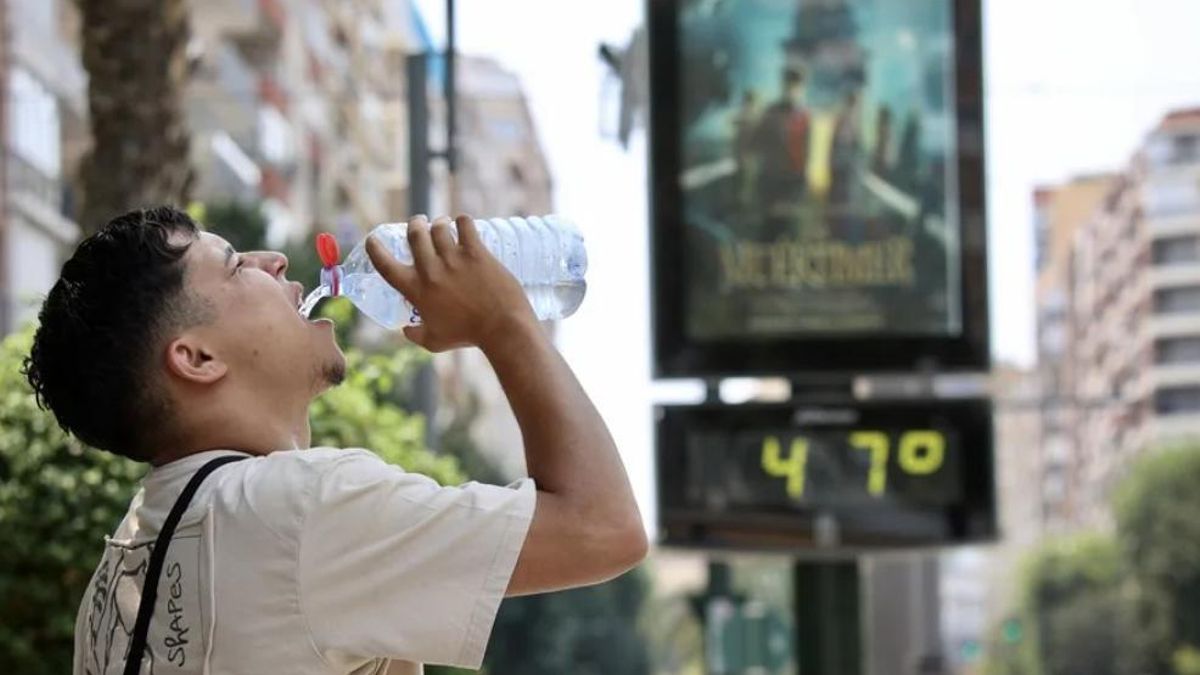
After a wet winter and a new Atlantic depression that has brought substantial rainfall to the Canaries, it would be normal not to think about heat and its consequences. But climate is a science of long-term trends. And what science tells us is that on a planet growing ever hotter due to fossil fuel use, heatwaves in the Islands could become longer-lasting, more frequent, and more intense. A new high-resolution study published in the scientific journal Regional Environmental Change has analysed island by island how these high-temperature events will evolve under every possible climate scenario: optimistic, involving a drastic and rapid reduction in polluting emissions by 2050; moderate, with barely any cuts until mid-century; adverse, where emissions would double by 2100; and pessimistic, with no climate policies at all.
Unprecedented Detail in Island Projections
The researchers used the period between 1981 and 2010 as a reference to make predictions for three time horizons: short-term (2021-2050), medium-term (2041-2070), and long-term (2071-2100). They compiled a vast amount of climate variables (temperature, precipitation, topography, vegetation) to predict the frequency, duration, and average and maximum intensity of heatwaves, which occur when very high temperatures are recorded for at least three consecutive days. They calculated these projections in small 100×100 metre grids, a resolution unprecedented in the Canaries that has captured the region’s diverse physical reality with precision.
“The Archipelago has a great variety of microclimates. We can be at Tenerife North Airport feeling cold while in the next municipality the climate is milder. This is largely due to the islands’ topography or the influence of currents, like the cooler, more humid trade winds. Forecasting how the climate will evolve in one territory or another therefore allows us to develop solutions or measures better adapted to its reality, avoiding large-scale proposals,” explains Susana Clavijo-Núñez, one of the study’s authors and a researcher in the Department of Agricultural and Natural Environment Engineering at the University of La Laguna (ULL).
Frequency and Duration Set to Soar
The results show that the Canaries recorded on average less than one heatwave per year between 1981 and 2010. In the future, there will undoubtedly be more. But everything will vary according to the island and the climate scenario. In the worst-case scenario, the islands could accumulate between six and seven episodes by the end of the century, with Fuerteventura the worst affected with an average of 7.3 per year. El Hierro would see the smallest increase in frequency, with 6 in total (which is also extremely high compared to the historical record). If greenhouse gas emissions were to halt completely by 2050, there would be between two and three heatwaves annually. The difference is more than notable.
The duration of these high-temperature events typically varies from 4.4 days in Fuerteventura to 5.5 in La Palma. However, the climate crisis could make them much more prolonged. On La Isla Bonita (La Palma), they could reach an average of 11.4 days between 2071 and 2100—double the current duration. In Gran Canaria, they would last 8.7 days. In Tenerife, 9.1. That is if climate change advances at a runaway pace. If not, if the opposite happens, there would be barely any changes: heatwaves of 5.1 days in La Gomera or 5.6 in Lanzarote.
Peak Temperatures and Island Vulnerabilities
The publication also notes that the average intensity of these phenomena will change very little over time. But there could be possible increases in the maximum temperature of each event. Analysing the long-term horizon again, El Hierro, which already records maximum peaks of 35.7 degrees Celsius during a heatwave, could reach 37.1. Gran Canaria would go from 34.5 degrees to 35.9 and Fuerteventura from 33 degrees to 34.3. That is if we enter the most pessimistic of all climate futures. Otherwise, there could even be decreases in La Gomera, which would go from the current 35 degrees to 34.6, or in Tenerife, from 33.6 degrees to 33.4.
Clavijo-Núñez details that the eastern islands, having less rugged terrain and being closer to Africa, are more susceptible to warm Saharan air and processes that can intensify the frequency of extreme events. “However, in relation to maximum intensity, it is in the western islands where more pronounced increases are seen.” The researcher adds that many factors could explain this difference, but one of the most important is topography. “La Palma, La Gomera, Tenerife and El Hierro are territories with a relief that interacts with atmospheric factors like thermal inversion, which can intensify temperature increases.”
Profound Impacts on Health and Habitat
“The difference between a reality for the end of the century in Fuerteventura, for example, with seven heatwaves a year, each lasting seven days, or one with barely three, of five days per event (both scenarios plausible on the island), can make a big difference in multiple areas: public health, the economy, or agriculture,” the research emphasises. “Our homes are also not prepared for something like this,” Clavijo-Núñez stresses. “Many of our houses were built before the first building regulations came into force, which included energy saving and efficiency issues. We have to understand that those homes do not have adaptive measures for climate change. If we start to endure a considerably higher number of heatwaves, that is going to have a serious impact on our health, on our development,” reflects the researcher, who also holds a doctorate from the University of Seville (US).
The increase in heatwaves could also endanger the survival of endemic species in the Archipelago, generating enormous stress for sensitive ecosystems and raising the danger of forest fires by combining heat with dry vegetation. The study also mentions impacts on the Canary Islands’ economic engine, tourism, due to reduced thermal comfort, and the reduction of agricultural yields on islands prone to drought or with limited access to irrigation.
Just last year, 140 people died from heat in the Canaries, the highest figure in the historical series, according to the daily mortality monitoring system (MoMo) of the National Epidemiology Centre of Madrid’s Carlos III Health Institute—a benchmark estimate in Spain made with statistical models based on excess deaths when temperatures soar.
The Call for Localised Adaptation
The study Clavijo-Núñez participated in serves to move away from global prescriptions and deploy localised solutions on each island so that that number stops growing. “Climate adaptation is closely related to nature-based solutions. Examples? The restoration of wetlands, urban drainage systems, soil conservation practices… We also need urban planning sensitive to impacts to prioritise areas that need more vegetation or climate shelters. And all these predictions are vital for moving towards sustainable and efficient water resource management. Our island context makes safeguarding that resource a real priority, and for that we need to know how the climate is going to evolve,” the expert concludes.
What’s happening in the Canaries – straight to your phone
News, weather alerts and practical updates – direct from the islands, in English. We live here and know what’s going on – before the international media catch up. Everything lands on our WhatsApp channel – no middlemen, no algorithm. Curated for families, expats and travelers.

Iberdrola plans Tenerife’s biggest battery storage plant

The wild canary that gave its name to the Canary Islands

Canary Islands sea hits second-hottest year on record

Legal bid to halt tree felling in Santa Cruz’s La Salud

Fiesta del Charco: A journey through La Aldea’s past

Corralejo dunes power line set for removal

ULPGC launches 14 research projects at Las Canteras

TMT will never be built, says Canary Islands astrophysics chief

Pedro Duque: Canarias is the “ultimate dream” for rockets
