Traffic campaign targets bank holiday drivers
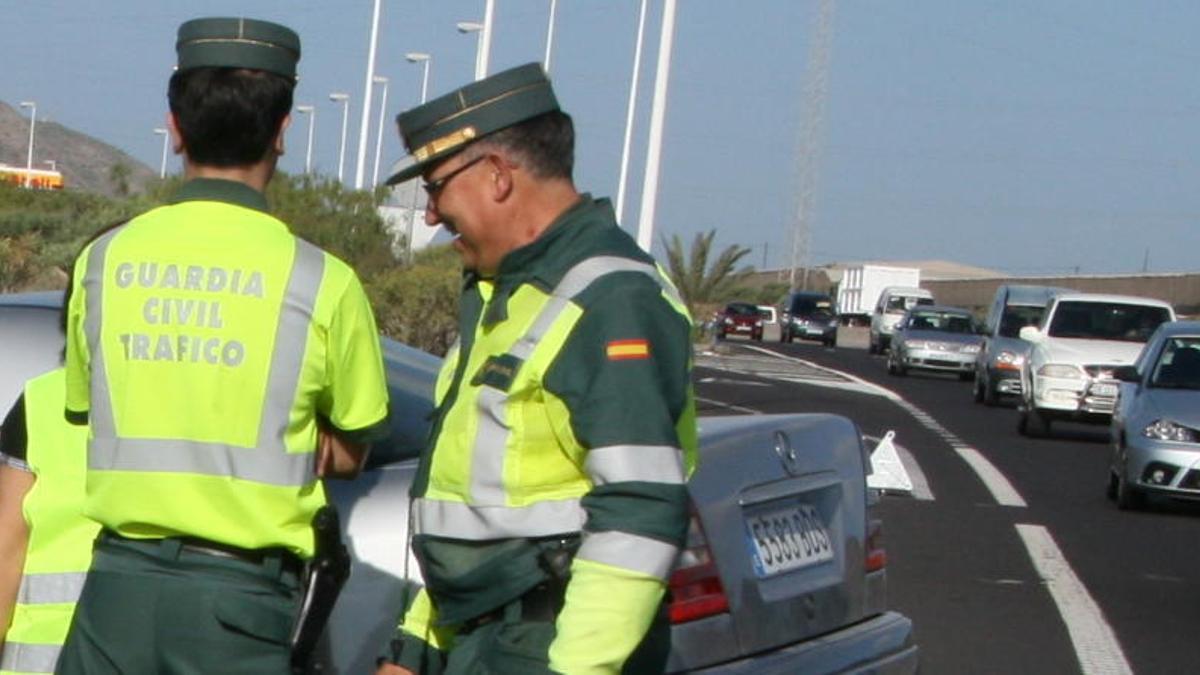
The Civil Guard’s Traffic division is responsible for ensuring safety and reducing accidents on the roads of the Canary Islands and the rest of Spain. To do this, they work alongside the Directorate-General for Traffic (DGT) to run surveillance campaigns at certain times of the year, checking that vehicles comply with the established regulations.
Weekends, particularly bank holiday periods, are when more than six million long-distance journeys are expected on the roads. During 2024, 214,825 drivers were penalised in the Canary Islands for breaking traffic rules. Of these, 6,231 tested positive for alcohol, compared to 6,698 in 2023, representing a 6.97% reduction in sanctions for driving under the influence of alcohol.
Alcohol present in 12% of accidents
In 2024, alcohol was present in 12% of all accidents and was a contributing factor in 28% of fatal traffic collisions, with 273 associated cases. The Civil Guard is reminding drivers who plan to enjoy the May bank holiday that responsibility behind the wheel is essential to ensure their days off are not ruined. They are appealing to drivers’ sense of responsibility during these festive days when traffic increases.
The only safe limit is zero
The DGT reminds motorists that “the maximum alcohol limit for novice and professional drivers is 0.15 mg/l in breath. For other drivers, it is 0.25 mg/l, and exceeding 0.60 mg/l is a criminal offence. For other drugs, any presence in the body is grounds for a penalty.” However, “the only truly safe limit is 0.0 g/l.”
Driving under the influence of alcohol or drugs is considered a very serious offence. Drivers who get behind the wheel in such a state face fines of between 500 and 1,000 euros and the loss of 4 to 6 points from their driving licence, depending on the offence committed. Traffic officers are urging drivers not to get behind the wheel if they have been drinking, warning that it is not only their own life at risk, but also the lives of other road users. Caution and responsibility are key to reducing accidents on the roads.
What’s happening in the Canaries – straight to your phone
News, weather alerts and practical updates – direct from the islands, in English. We live here and know what’s going on – before the international media catch up. Everything lands on our WhatsApp channel – no middlemen, no algorithm. Curated for families, expats and travelers.

Tenerife faces huge tourism expansion despite moratorium calls

El Bejeque in Las Canteras adds sea to its fire

Siam Park Gran Canaria must build its own desalination plant

Fuerteventura’s biggest resort to open on 1 November
Gran Canaria to teach tourism history in schools
Canary Islands see 0.3% rise in foreign tourists in August

Row over 368-bed hotel project in La Gomera

Spanish astronaut trains in Lanzarote for Moon mission

Tivoli La Caleta hosts first red tuna Kaitai in Canarias