Tourism powerhouse
The Canary Islands are a national powerhouse when it comes to tourism. That will surprise nobody. Nor will the fact that the archipelago’s economic engine employs the vast majority of its workers – bringing both benefits and drawbacks. What is eye-catching, however, is the sheer share these workers represent of the country’s entire hospitality workforce, particularly given that the region accounts for just 4.7 per cent of all employed people in Spain.
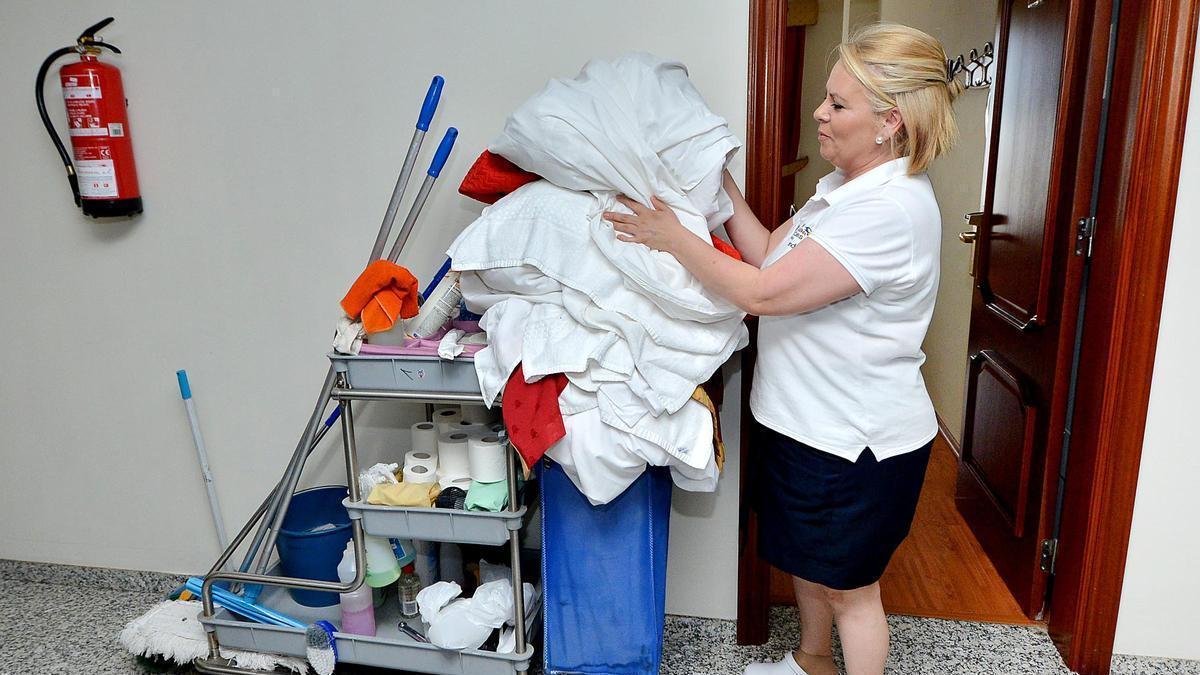
Despite that relatively small slice of the national workforce, when it comes to hospitality, the Canary Islands punches well above its weight. At the start of this year, one in every five people working in accommodation services across the whole of Spain was employed in the archipelago.
Winter peak boosts the figures
This is the finding of a recent study by Randstad, one of the world’s largest human resources firms, which analysed employment structures across Spain’s hospitality sector. The data covers the first quarter of the year – a significant detail, as the islands were in the middle of their winter high season, the period of greatest tourist activity. This contrasts with other Spanish destinations, which typically come to life in the summer.
This seasonal discrepancy is one of the key reasons the Canary Islands’ share of national employment reaches such heights. During the first three months of the year, 21.5 per cent of all accommodation workers in Spain were based in the archipelago – the highest percentage of any region in the country.
Top four for entire hospitality sector
If we widen the lens to look at the Canary Islands’ role across the entire hospitality sector – which the report defines as including food and drink services as well as accommodation – the archipelago still ranks among the top four regions. It comes in behind Catalonia, Madrid and the Valencian Community, with 10.5 per cent of all hospitality workers in Spain.
The truth is that the hospitality sector has been growing steadily in recent years, fuelled by the post-pandemic tourism boom in the islands. The industry has recorded record numbers in terms of visitor arrivals, tourism revenue and hotel profitability. Unsurprisingly, this has translated into jobs – at least in quantitative terms.
Nearly 20,000 new jobs in two years
The number of people registered with the Social Security system in the hospitality branch has risen from 156,034 in March 2023 to more than 175,000 in the same month this year – an increase of almost 20,000 workers. Hospitality has been one of the key drivers behind the record employment figures the archipelago has posted in recent years.
The data shows especially strong growth in the accommodation subsector, where employment rose by 7.6 per cent year-on-year, according to the Randstad report. Across Spain as a whole, when salaried employees working for the sector’s 189,381 companies are combined with self-employed workers, the hospitality industry employs 1.77 million people – nearly 8 per cent of the country’s total workforce.
Women drive accommodation job growth
The report goes further, analysing the characteristics of this employment. One of the most notable features of the hospitality labour market is the weight of female employment. Women account for 55.1 per cent of all workers in the sector, with a particularly strong presence in accommodation services. Over the past year, female employment in hotels and other tourist accommodation grew by 13.1 per cent – well above the increase recorded among men.
Younger workers and growing diversity
The sector is also showing signs of generational renewal. The number of workers aged between 25 and 34 has increased, narrowing the gap with the largest age group – those aged 45 to 54. In food and drink services, workers under 35 now account for nearly 41 per cent of employment.
Another growing trend is workforce diversity. Foreign workers and those with dual nationality now make up 40.8 per cent of hospitality employment in Spain. The situation is similar in the Canary Islands, a region that each year receives thousands of people from different parts of the world who end up working in the hospitality sector. This is an industry that has traditionally required a great deal of labour, much of it without the need for extensive qualifications to secure a job.
Labour reform leaves its mark
The labour reform has also left its mark. At a national level, according to the Randstad report, permanent contracts have gained significant ground. In the food and drink segment, they now account for an average of 54.9 per cent of all contracts signed in recent quarters.
What’s happening in the Canaries – straight to your phone
News, weather alerts and practical updates – direct from the islands, in English. We live here and know what’s going on – before the international media catch up. Everything lands on our WhatsApp channel – no middlemen, no algorithm. Curated for families, expats and travelers.

Tenerife’s Char Fuego y Brasas named 13th best steak restaurant in Europe

Gran Hotel Taoro: a foodie destination in Puerto de la Cruz

Canary Islands hotel prices rise 4.11% in September

Icod de los Vinos launches twelve self-guided routes
Four new openings shaking up Las Palmas dining scene

Tenerife faces huge tourism expansion despite moratorium calls

El Bejeque in Las Canteras adds sea to its fire

Siam Park Gran Canaria must build its own desalination plant

Fuerteventura’s biggest resort to open on 1 November