Pioneering a circular tourism model in Tenerife
Tenerife is making significant progress in adopting more circular and sustainable tourism models through the Circular Tourism Communities project, an initiative led and coordinated by Ashotel and Asaga Canarias-Asaja. The scheme aims to connect the accommodation sector with primary industries, focusing on bio-waste management, composting, and the consumption of locally sourced products.
Over the past few months, the project has rolled out a comprehensive training programme in circular tourism economics, coordinated by Grupo Innovaris, targeting hotel professionals and others involved in the tourism value chain. The initiative has successfully trained 161 professionals, combining online learning, in-person workshops, technical visits, practical audits, and digital support resources. The ultimate goal is to embed circularity into the daily operations of tourism establishments.
Hotels leading the way
The Circular Tourism Communities project, which already involves more than 30 hotels in Adeje, San Miguel, and Arona, addresses a particularly pressing challenge for an island territory like Tenerife: the proper management of organic waste generated by tourism. When bio-waste is not correctly separated and processed, it represents a loss of resources and creates environmental impacts. However, with proper management, this waste can be turned into high-quality compost, helping to regenerate soils and fostering a stronger connection between tourism, agriculture, and the local landscape.
A key element of the programme has been the active participation of hotel companies committed to implementing circular economy principles in their establishments. These hotels have worked on improving the separation of bio-waste at source, reducing food waste, reviewing internal processes, and identifying new opportunities to connect with local primary producers. They have not simply been recipients of training but have acted as key agents in validating the model under real hotel operating conditions. Their involvement demonstrates that circular tourism can be integrated into the daily management of kitchens, buffets, purchasing, waste, gardening, maintenance, and relations with local suppliers.
A practical four-module programme
The programme has included establishments linked to the various Circular Tourism Communities promoted in Tenerife, alongside hotels that have been audited and have participated in practical workshops, technical visits, and awareness-raising activities. Their collaboration has helped advance a demonstrative model connecting the accommodation sector with bio-waste recovery, compost production, soil regeneration, and the consumption of local produce.
The programme was structured across four modules designed to translate circular economy principles into daily hotel practice. The first module focused on the efficient and safe use of compost produced from organic waste generated in hotels. The second targeted kitchen, purchasing, and catering teams, aiming to improve food management, reduce waste, and promote the recovery of surplus where viable. The third module addressed circular auditing in tourism establishments, training internal teams to identify opportunities for improvement in waste management, resource use, and operational processes. Finally, the fourth module encouraged the purchase of locally sourced products, reinforcing the link between hotels, local producers, and the primary sector.
This approach helps close the loop of the Circular Tourism Communities model: hotel bio-waste is transformed into compost, the compost improves agricultural soils, and the produce grown on the land can return to hotels through local supply chains.
Blended learning and real-world application
The programme combined distance learning with practical in-person activities. Through the training platform, participants accessed teaching materials, self-assessments, best practice manuals, awareness-raising videos, control sheets, and interactive gamification resources. This methodology allowed the content to be directly applied to the workplace, helping teams make improvements in the internal management of bio-waste, the reduction of food waste, separation at source, and relationships with local product suppliers.
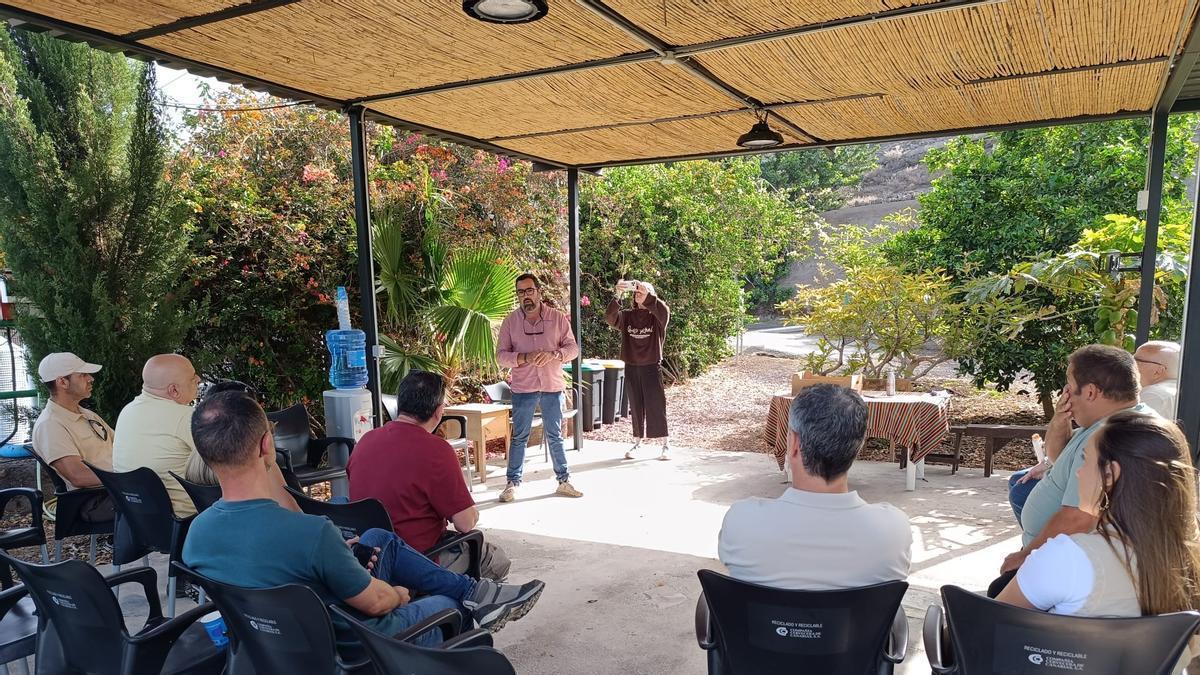
In addition, the project included technical visits to composting and waste management facilities, practical workshops on food utilisation, real audits in tourism establishments, and gastronomic sessions focused on using local products and recovering food. A highlight among the in-person activities was a visit on 27 May 2026 to Finca Serviagroc, where participants could see the composting process first-hand, learn about the recovery of organic matter, and understand how it is subsequently applied to the soil. These activities facilitated direct contact with real-world solutions, the exchange of experiences between professionals, and the identification of measures that can be implemented in daily operations.
Positive results and growing commitment
The programme has received positive feedback from participants, particularly for its practical approach and the opportunity to learn about real experiences in bio-waste management, composting, food waste reduction, and local gastronomy. Key performance figures include a total of 161 participants across the various training modules and workshops, and 14 hotels audited against waste management and circularity criteria. These results reflect the growing commitment of the accommodation sector to transitioning towards more circular models, with hotel companies incorporating training, diagnosis, and operational improvements as part of their environmental responsibility.
For Ashotel, this programme reinforces the role of the accommodation sector as an active agent in the transformation of the destination. Training, measurement, separation at source, the reduction of food waste, and collaboration with the primary sector are all key elements to ensure that the circular economy moves from being a theoretical concept to a practical reality in tourism establishments.
What’s happening in the Canaries – straight to your phone
News, weather alerts and practical updates – direct from the islands, in English. We live here and know what’s going on – before the international media catch up. Everything lands on our WhatsApp channel – no middlemen, no algorithm. Curated for families, expats and travelers.

Tenerife faces huge tourism expansion despite moratorium calls
El Bejeque in Las Canteras adds sea to its fire
Siam Park Gran Canaria must build its own desalination plant
Fuerteventura’s biggest resort to open on 1 November
Gran Canaria to teach tourism history in schools
Canary Islands see 0.3% rise in foreign tourists in August
Row over 368-bed hotel project in La Gomera
Spanish astronaut trains in Lanzarote for Moon mission
Tivoli La Caleta hosts first red tuna Kaitai in Canarias