
Court Ruling Forces Council to Halt Regularisation Plan
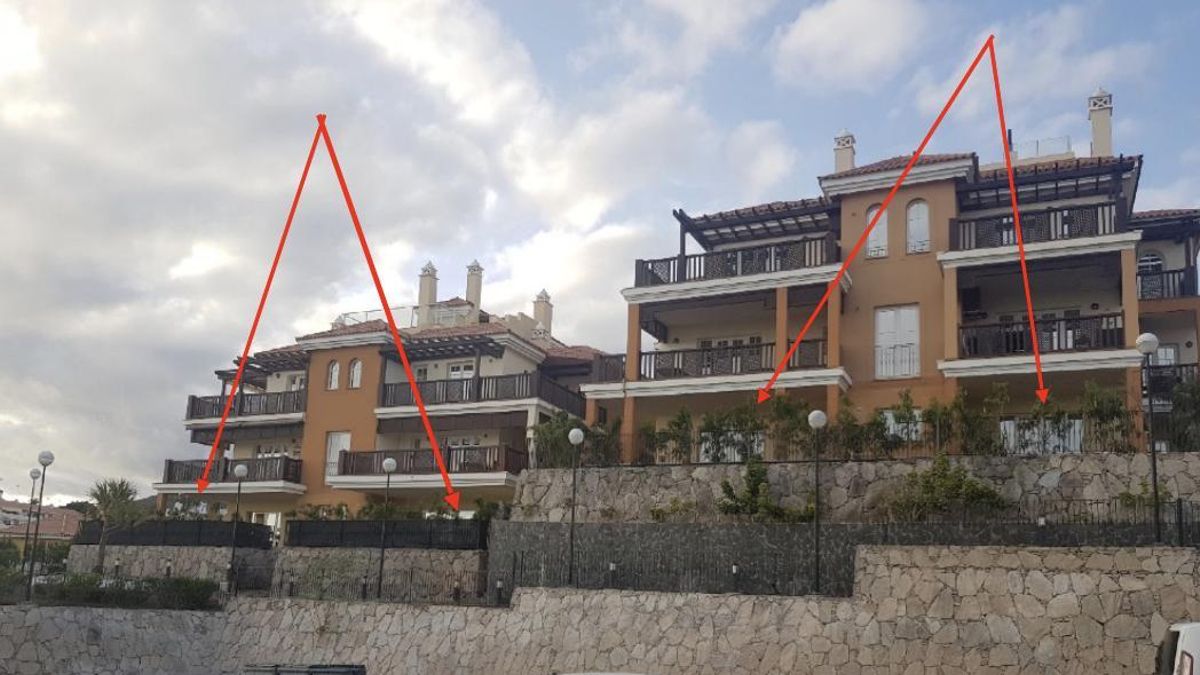
A court ruling (not yet final) that upholds the illegality of 37 homes built without planning permission in the Monte Carrera development in Arguineguín has forced Mogán Council to suspend the file for a private Urban Environment Action Programme (PAMU). This initiative aimed precisely to regularise those properties through the transfer of some land. The file has been halted to assess how the recent judicial decision affects the plan, according to municipal sources and as confirmed by Mogán’s Councillor for Planning, Mencey Navarro, in statements to the newspaper Canarias 7.
Architect’s Warning and Judicial History
In the report that gave the green light to process the PAMU, the municipal architect had already warned that this legal dispute could impact the administrative file for the regularisation of the homes and that this should be assessed legally. In a sentence handed down on 31 March, the magistrate of Court Number 2 of the Las Palmas de Gran Canaria Court of First Instance (Administrative Disputes Section) dismissed the appeal by the development company, Carrera Ground Floor, against the order to restore planning legality issued by Mogán Council itself, which had been finalised in the administrative process since January 2022.
Unauthorised Works During the Pandemic
The ruling proved that the works were carried out without a licence during the Covid-19 pandemic and involved demolishing the basement walls to create irregular flats. The original licence from March 2005 permitted a maximum height of two storeys. However, the complex was built exceeding this limit, rising to three storeys in contravention of local planning rules. To avoid having to demolish the extra floor, a legalisation agreement was reached in April 2011. The solution involved sealing off the ground floor with a perimeter wall, turning it into a closed basement.
However, in 2020, according to reports drawn up by the Local Police following complaints from residents and confirmed by expert reports, the developer knocked down these enclosing walls to build the 37 new homes and three commercial units there. The sentence rules that by demolishing the walls and opening up these homes without a licence, the development once again had three habitable floors and, therefore, breached planning law.
Controversial Amnesty Plan Approved Just Before Ruling
Just one month before this sentence was issued, the full council of Mogán, with votes in favour from the governing group (Juntos por Mogán), had given the green light to process the PAMU, which seeks to amnesty these works. This private initiative proposes ceding 625 square metres of land to the council in exchange for being granted an increase in buildable area of 3,120 square metres, which the developer needs to regularise the 37 homes and three commercial units. In February, the local government authorised subjecting the project to a simplified environmental assessment.
Growing Opposition and Legal Challenges
Juan Manuel Gabella, a councillor for Nueva Canarias-Bloque Canarista (NC-Bc), sent a letter on 10 April to the mayor, the council secretary, and the Legal Advisory Service. In it, besides asking for clarification on the legal consequences of the recent sentence for the home regularisation file, he questioned why the PAMU had been allowed to continue without the developer having provided proof of ownership for the land it intends to transfer. In that letter, the councillor recalled that Mogán Council itself requested this certificate of ownership from the company, and it has not been submitted.
The Community of Owners of the complex, called Monte Carrera Green Garden Club, also strongly opposed the legalisation manoeuvre pushed by the developer. They sent a letter to the council on 6 March demanding the immediate suspension of the file. The residents warned that the land the company intends to give the council in exchange for increased buildable area are actually common elements of the community. They also stated that this initiative was never subjected to proper consultation among the owners, nor did they give their consent for such a purpose.
Businessman Juan Manuel Pérez León also formally requested the suspension of the file in a complaint presented through administrative channels. In it, he claimed that this project created a “green light effect for planning irregularities” by allowing the consolidation of clandestine works.
What’s happening in the Canaries – straight to your phone
News, weather alerts and practical updates – direct from the islands, in English. We live here and know what’s going on – before the international media catch up. Everything lands on our WhatsApp channel – no middlemen, no algorithm. Curated for families, expats and travelers.

Vivanta shuts all dental clinics including six in Tenerife

Civil Guard warns of digital skimming threat to online shoppers

Tenerife shifts FDCAN funds from roads to housing

PSOE warns Arrecife plan could ‘bury’ El Cable beach in concrete

Canary Islands faces loss of 20% of self-employed workers

Canary Islands to get 26 new substations by 2030

Canary Islands poverty rates stuck since pandemic

Court backs eviction over verbal room rental in Arona

Canary Islands pushes for 10-year residency rule for foreign buyers
