
The Path to a Microclimate
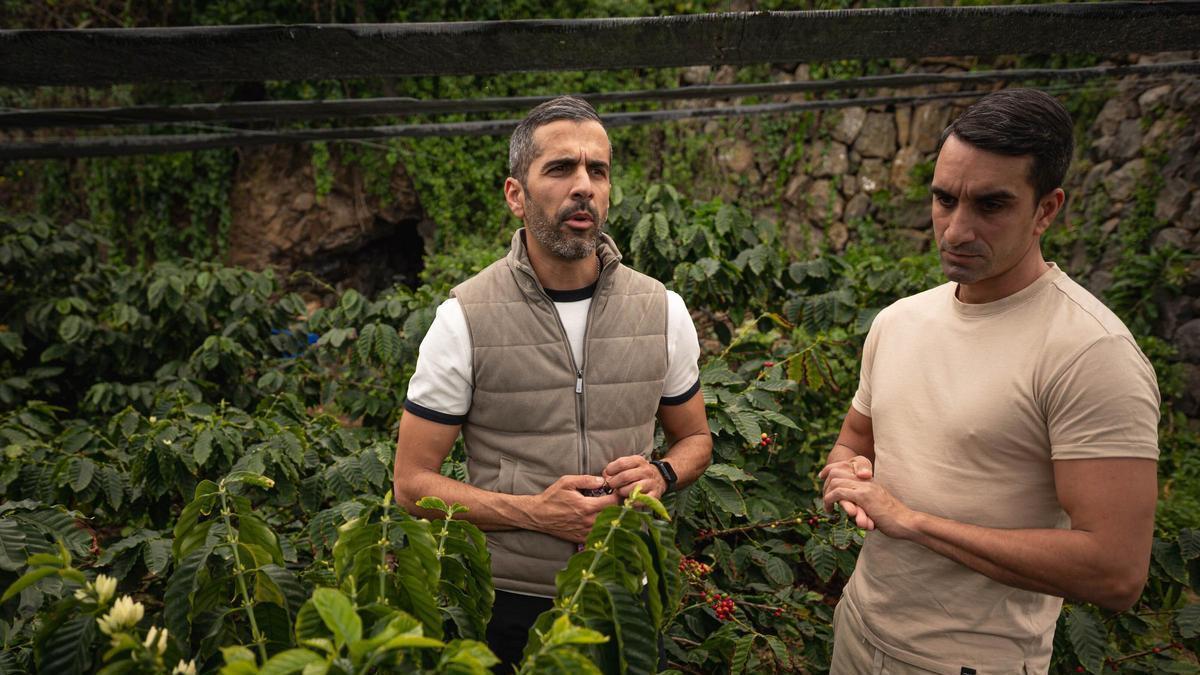
To reach the four plots where the Abreu Rodríguez brothers cultivate their coffee, you must ascend the “path to the microclimate”. This is how they describe the steep slope leading to the terraced fields holding around 2,000 coffee plants in San Juan de la Rambla, in northwest Tenerife. The plantation sits at an altitude of between 150 and 300 metres, a fundamental factor that imparts the necessary character to the final product. Quality coffee made in Tenerife. It sounds strange. More than strange, it seems exotic for coffee to be grown on the island.
Altitude and Subtropical Advantage
Antonio Abreu Rodríguez explains that “normally, obtaining a quality bean is associated with altitude. In the case of the Canary Islands, the subtropical climate means we don’t have to go as high as in Colombia or Kenya, for example.” Location was key to launching the project. They mapped the weather and its behaviour for a year alongside engineers from Nicaragua, who also supplied them with this variety of coffee plant. They planted in a nursery eight years ago, transferred them to the soil, and 2026 marks their second productive year. Commercially, they have only been operating for a year, and to buy their coffee you just need to find them on Instagram, where they also post all cultivation updates. They are also working on building a website which will be available very soon. “We are finalising agreements to place the product in specific locations,” he notes.
Creating Value in a Rural Community
Beyond the quality product, the Abreu Rodríguez brothers are motivated by creating value in their hometown. “You can create value in rural municipalities like San Juan de la Rambla, with fewer than 5,000 inhabitants, from where young people like us have to leave to seek our fortunes. Doing this is a way of giving back to the town some of what it gave us. We owed it this,” Antonio states with conviction. The entrepreneurial spirit of this brotherly pair means they finance the project with their own funds. “For now, each of us has our own separate job and we invest and reinvest our savings here,” they clarify.
Family Roots and a Spark of Inspiration
The figure of Antonio and Javier’s father was crucial for the birth of their brand, Oceánico. “He always made us understand the importance of being connected to the environment,” Javier states. They describe him as passionate about Canarian culture and highlight his strong ties to the agricultural sector. This planted the seed. Later, one of the brothers working in high-end hospitality and receiving very basic training in coffee watered that seed of curiosity. “The light bulb went on. Then I travelled a lot to Germany and saw that in specialty coffee shops the product was treated like a chef’s dish,” he describes.
Surfing Knowledge Reveals the Perfect Spot
The practice of surfing and knowledge of the territory was fundamental to their success. “We realised the prevailing winds are from the northeast; we are protected on the eastern flank by a natural barrier. When there’s a storm, it always passes over us, and on the western side we have a ravine that allows air circulation, so here we are always going to be two or three degrees cooler than the rest. If we were talking in wine jargon, this would be a ‘pago’ [a specific terroir],” he explains.
Overcoming Drought and Calima
However, it was not all easy. The path to the microclimate of San Juan de la Rambla yielding optimal fruit had many complications: “We started planting in the hardest years of the drought. That made us lose 70% of the crop. This was combined with a very aggressive calima [Saharan dust haze] and a period of strong wind. It pushed us to the limit and we almost abandoned the project,” comments Javier. But they did not.
From 300 to 1,000 Kilos
In 2025 they harvested 300 kilos of “green coffee”, which is what the product is called before roasting. This year they aim to harvest 800 to 1,000 kilos, almost four times more. To make one kilo of green coffee, seven kilos of coffee cherry are needed. The fruit is very similar to a cherry. That is how it is found on the plant right now, which is of considerable height. The Abreu Rodríguez brothers have them covered with nets so the sun does not burn them. They found that the sun caused significant damage to the plant, as did the salinity from the sea. Luminosity is directly related to the caffeine in the bean, although they always speak in terms of the cup: “In the end, the creation of caffeine is nothing more than a chemical reaction the plant has to stress,” they define.
Tasting the Fruit, Understanding the Cup
Seeing the coffee plant for the first time, touching the fruit, opening it and eating it, disrupts the moment of the bitter sip from a cup of coffee. Some fruity notes mix and, just like in a wine tasting, a novice begins to notice the nuances if Antonio or Javier point them out. The involvement of the brothers from La Rambla in the product is total, and they do not mind too much if there are other coffee productions in Tenerife, something which is rare. “We are focused on obtaining a quality cup. It is not enough for us to concentrate on the exoticism of the origin. We believe that has a very short lifespan,” they argue.
Pushing Boundaries with Fermentation
For this reason, they began studying fermentation processes that yield different cup profiles in their first commercial year. “We launched five varieties of coffee from the same bean and this year we will have between 10 and 12,” they predict. After everything related to planting comes fermentation. A process they also carry out themselves and which produces the varieties. “In the Canary Islands, what little there is, is natural coffee. The cherry is picked, laid out in the sun and dehydrated. It’s good, prized coffee. But we go further,” he announces. The Abreu Rodríguez brothers look for trends in coffee consumption and delve into specific terminology, far beyond the ‘barraquito’, ‘cortado’ or ‘condensada’. “When you start to break down what is behind the coffee sector, you realise it is much deeper and that we are still only halfway there,” they say.
From Father’s Patio to Semi-Industrialisation
They carry out the bean fermentation in the patio of their father’s house, the man who planted the seed and anchored it firmly to the land of San Juan de la Rambla. They have specific machinery for this and admit that at some point they doubted whether what they were doing would give the expected result. “Now, we are moving towards semi-industrialisation. For the next campaign, we want to stop doing everything so artisanally,” they confess. They hold the utmost respect for the agricultural work they are doing and have commercial information to know that, for now, the market accepts a quality coffee produced in San Juan de la Rambla, in northwest Tenerife, by two brothers, Antonio and Javier Abreu Rodríguez, who want to give back to their town everything it did for them.
What’s happening in the Canaries – straight to your phone
News, weather alerts and practical updates – direct from the islands, in English. We live here and know what’s going on – before the international media catch up. Everything lands on our WhatsApp channel – no middlemen, no algorithm. Curated for families, expats and travelers.

Iberdrola plans Tenerife’s biggest battery storage plant

The wild canary that gave its name to the Canary Islands

Canary Islands sea hits second-hottest year on record

Legal bid to halt tree felling in Santa Cruz’s La Salud

Fiesta del Charco: A journey through La Aldea’s past

Corralejo dunes power line set for removal

ULPGC launches 14 research projects at Las Canteras

TMT will never be built, says Canary Islands astrophysics chief

Pedro Duque: Canarias is the “ultimate dream” for rockets
