
A Monument of Neglect Amid Grand Promises
It is one of the most talked-about cultural, historical, and scientific heritage restoration and recovery projects in Tenerife—indeed, probably in the whole of the Canary Islands. Journalistic ink has flowed freely, accompanied by grand announcements and lofty words in every format imaginable. And yet, it has all been pure smoke, empty rhetoric; words as hollow and fraudulent as the actions, works, projects, and commitments have been non-existent. However, it seems a new and hopeful chapter may now be opening.
The Yellow House and Its Global Legacy
Many residents of Tenerife, and not a few Canary Islanders, have at some point heard of a yellow house in Puerto de la Cruz, in the north of Tenerife, where the world’s first experiments on primates were conducted. The name Wolfgang Köhler may also ring a bell—one of the most important scholars of human evolution and animal behaviour of the 20th century, following the rise of Darwinian theses and comparative psychology of humans and animals. So too might that of one of his great followers, the recently deceased ethologist Jane Goodall (1934-2025), who, after first learning of it 50 years earlier, revisited this building in 2011 and 2023 as if arriving at a scientific El Dorado, despite it being in ruins, always calling for its restoration due to its historical and symbolic relevance.
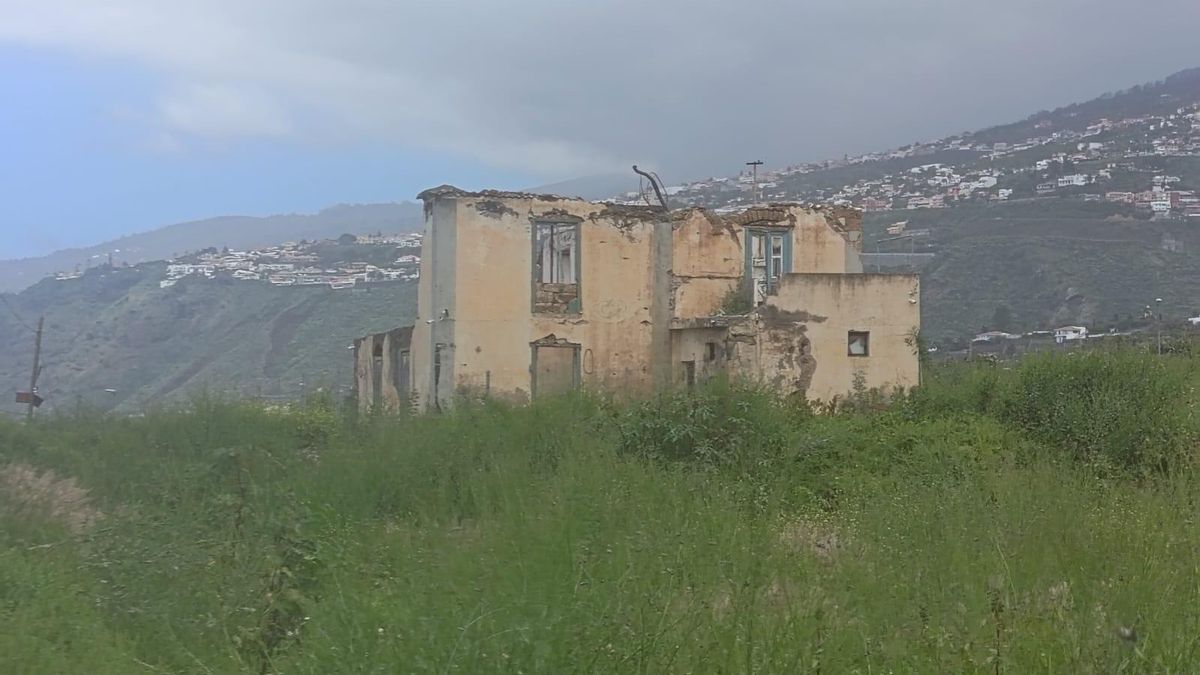
Köhler was key to the cultural and scientific importance of this two-storey house. Yet, despite this global significance, it has presented a pitiful and lamentable image since 1993, when the then-owning family (the English Yeoward family, influential in other parts of the island) decided on its partial demolition. The property has changed hands and the new owners appear more inclined towards the protection, recovery, and promotion it deserves, though this again is a matter of time and fulfilling promises.
33 Years of Broken Promises
Since 1993, promises and supposed projects to recover this emblematic building have followed one after another. It is emblematic fundamentally because the first properly scientific experiments on monkeys and primates on planet Earth—that is, conducted with method and prestigious researchers—were carried out within its walls. A historic step, therefore, which placed Tenerife, specifically Puerto de la Cruz, on the map for its excellent climate, and which has spent 33 years in a sad state of total abandonment and pure public neglect (by the council, island government, regional government…), despite all that has been written and said about this once splendid and pioneering Yellow House.
As can be seen in the images accompanying this text, the building is partially demolished or in a calamitous state compared to what it once hosted. It is located on land not yet colonised by the concrete so prevalent in Puerto de la Cruz—the smallest municipality in the Canaries at nine square kilometres, but a tourist hub with intense urban pressure, especially in the prized La Paz area where the house stands. Nevertheless, the closest construction remains the evangelical church to the south, and the Casa Amarilla continues to stand out from afar, visible from the road descending to Martínez or the route circling this select urbanisation, despite its shocking appearance.
A New Dawn for Collaboration?
According to the first deputy mayor and councillor for Sustainable City of Puerto de la Cruz, David Hernández (ACP), the property owner who acquired the plot is actively collaborating with the council on the future restoration. “They have already assumed and fulfilled several commitments, such as fencing the perimeter and a first phase of cleaning. Currently, we are waiting for them to present a project for shoring up the building as a provisional measure to prevent further deterioration,” he stated. He added: “We maintain fluid communication with the owner, who has at all times shown a willingness to collaborate and recognition of the house’s historical value. For our part, we ensure that the obligations for maintenance, conservation, and restoration are met, and so far, they are responding appropriately to municipal requirements.” The Island Council (Cabildo), for its part, did not respond to this newspaper’s questions.
The Pioneering Primate Residents
Undoubtedly, if what Hernández says comes to pass, it is excellent news after 33 years of waiting, though it will still depend on the degree of compliance and the timelines to meet the legacy of this place. Since 1993, it has been rare for a local (and even island-wide) term of office and electoral manifesto (though increasingly diluted) not to have hinted, proposed, or outright announced that yes, within those four years, the Casa Amarilla would be reformed, justice would be done, and it would be converted into a scientific, educational, or cultural centre to explain and highlight the studies it hosted from 1912—when its construction was approved and, almost immediately, the first six female chimpanzees from Cameroon and a male from Nigeria were brought in. This was especially true after it managed to be declared a Site of Cultural Interest (BIC) in 2005. But nothing, until now, though prospects are better than a few years ago.
The Birth of a Scientific Landmark
In reality, as the Wolfgang Köhler Association has been disseminating for decades, with key, enthusiastic, and tireless members like Melchor Hernández Castilla, and professors from the Faculty of Psychology at the University of La Laguna (ULL) like Dr Carlos Álvarez, the project began a little before 1912. It involved the creation of the Tenerife Anthropoid Station under the direction of Eugen Teuber (1889-1958). From 1913, Teuber began his research on animal behaviour in this building, ideally situated. But soon, at the end of that same year, he was replaced by the German Köhler (1887-1967), who advocated a more cognitive and comparative psychology approach, marking a milestone in the world of primatology and the celebrated Gestalt school.
Yes, it was here, in this corner of the then (and still, were it not for so much concrete) spectacular Orotava Valley, where the analysis of primate behaviour similar to humans began. Experiments included the famous one of placing a banana in high places until the monkey or chimpanzee learned to stack boxes to reach it and eat it, which, fundamentally, proved an advanced cognitive capacity for association, projection, and intuition. It began to question behaviourist theories like those of Pavlov (famous for the dog), Skinner, or Thorndike, which denied reflection and reasoning in these animals and based everything on trial and error.
A Foundation for Global Science
Köhler’s great work (*Intelligenzprüfungen an Menschenaffen*, 1921; *The Mentality of Apes*, published in English in 1925, or *Experimentos sobre la inteligencia de los chimpancés*, in the Spanish version of 1989) became essential reading for later primatologists like Jane Goodall. It presented key ideas such as chimpanzees, like humans, possess an automatic or instantaneous discernment that allows them to comprehend situations, the elements at play, and how to find intuitive cognitive solutions. Thus, the backbone of Gestalt Theory or School was established, based on the principle that perception is not explained by the sum of sensory inputs, but that the brain partially constructs and structures what is perceived, making the whole different from the sum of its parts.
In other words, the first experiments of one of the most relevant psychological theories in history were conducted in Tenerife, studied for nearly a century in faculties worldwide, generating countless theses and published books. And the place where it all began has simply been a sorry sight for over three decades.
A Difficult History From the Start
Despite the neglect since 1993, it is worth remembering that the Casa Amarilla never had it easy. To begin with, its activity started just two years before the outbreak of the First World War. Although Spain was neutral, which also benefited exports from the Canaries, it was not exempt from the conflict’s repercussions. One of these was Köhler himself, accused by the British living in Tenerife at the time (a large colony, especially in Puerto de la Cruz) of spying for Germany and even of monitoring submarine movements in this part of the Atlantic.
After the Great War ended in 1918 with Germany’s defeat, he was left almost without funds for his project and had to sell the house. The so-called Anthropoid Station moved to the El Ciprés estate in La Orotava, as detailed by the association in various works. The scarce funding also forced this alternative to close in 1920, and Köhler had to return to his country, marked by defeat, war reparations, and the horrific rise of Nazism. The primates of the Casa Amarilla remained under the care of Manuel González, who had been looking after them since 1912, but in October 1920 they were taken to Berlin Zoo, the last one dying in 1921.
Precisely in 1993, the Island Council began the BIC file, but the Yeoward family decided to demolish part of the building, thus breaching the intended protection and the proposed transfer of the plot to the port council to create a museum. The BIC status, however, was delayed until 2005, when it was approved by the regional government, but the house was never expropriated, as the Wolfgang Köhler Association has repeatedly demanded.
In 2012, a year after Goodall’s visit, the Urban Consortium for the Rehabilitation of Puerto de la Cruz announced its commitment to rehabilitating it and creating an annex for a headquarters of the Wolfgang Köhler Atlantic Neuroscience Centre. But again, it was just smoke, more smoke. That said, as the Association highlights, at least the continuous reports or news items that have appeared over time (and this is just one more) about the Casa Amarilla have done it some justice and put it on the map, if only for brief moments.

Iberdrola plans Tenerife’s biggest battery storage plant

The wild canary that gave its name to the Canary Islands

Canary Islands sea hits second-hottest year on record

Legal bid to halt tree felling in Santa Cruz’s La Salud

Fiesta del Charco: A journey through La Aldea’s past

Corralejo dunes power line set for removal

ULPGC launches 14 research projects at Las Canteras

TMT will never be built, says Canary Islands astrophysics chief

Pedro Duque: Canarias is the “ultimate dream” for rockets
