Eight million euro summer safety drive for Canary Islands power grid
Endesa, through its distribution subsidiary e-distribución, is investing more than €8 million in the Canary Islands this summer to inspect power lines, manage vegetation, and improve network safety using drones, artificial intelligence, and new technologies.
The arrival of summer poses a major challenge for electricity infrastructure each year, particularly in regions where high temperatures, drought, and increased energy demand raise the risk of incidents. Against this backdrop, Endesa has launched a new maintenance and prevention campaign through its electricity distribution arm, e-distribución. The investment of €8.066 million across the Canary Islands is designed to strengthen the safety and reliability of the grid during the most demanding months.
The initiative forms part of the company’s national summer plan, with total investment reaching nearly €105 million across Spain – a 36% increase on the previous year. The primary aim is to reduce the risk of breakdowns and wildfires near electricity infrastructure, while ensuring continuity of supply amid increasingly extreme weather events.
Why summer puts pressure on the grid
Summer weather conditions make this one of the trickiest periods for managing electricity networks. Rising temperatures, prolonged dry spells, and windy episodes can increase the likelihood of incidents both at installations and in nearby forested areas. For this reason, Endesa has stepped up its inspection, preventive maintenance, and vegetation management programmes around power lines. The company aims to minimise any situation that could affect electricity supply and reduce risks arising from the coexistence of energy infrastructure with the natural environment.
The work will be carried out across all the Canary Islands, combining on-the-ground operations with advanced technological tools that can detect problems before they become incidents.
Thorough inspections and corrective actions already underway
Preventive maintenance has become a key strategy for distribution companies to guarantee grid stability. Since the start of the year, e-distribución has carried out 17,337 inspections at low and medium voltage distribution centres and reviewed 11,900 kilometres of overhead high and medium voltage lines. The aim is to identify any anomalies early that could affect network performance. Once potential defects or elements at risk of deterioration are detected, repairs are prioritised to avoid problems during the months of highest energy demand. The company reports that 45,186 corrective actions have already been executed this year to resolve issues identified during preventive inspections.
Drones and AI take centre stage
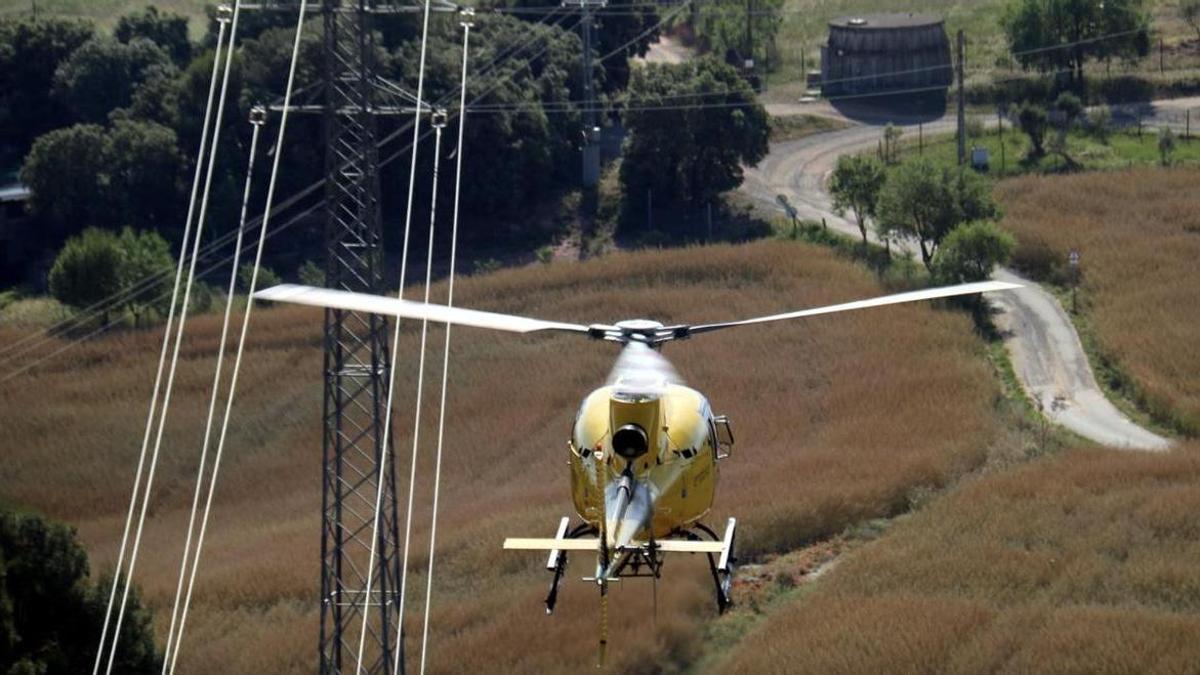
One of the main innovations in this campaign is the introduction of a new generation of drones for inspecting electricity infrastructure. The company has deployed 17 long-range drones, developed by technology firm FuVeX, capable of operating up to ten kilometres away – twenty times the range of a conventional drone. These devices allow for faster and safer inspections of power lines, especially in hard-to-reach areas or locations with challenging conditions for fieldwork.
The drones are equipped with high-resolution digital cameras, thermographic sensors, and LIDAR (Light Detection and Ranging) technology, which uses laser beams to generate highly accurate three-dimensional maps. Using these systems, technicians can identify deformations, obstacles, deterioration, or abnormal hot spots that could lead to future faults. As well as improving inspection capacity, this technology helps reduce travel, lower occupational risks, and cut emissions associated with traditional monitoring methods.
Digital twin and artificial intelligence
Digital transformation also plays a prominent role in the network maintenance strategy. All information gathered from sensors, drones, and inspection teams feeds into what is known as e-distribución’s digital twin of the electricity grid. This is a virtual replica of the physical infrastructure that can reproduce the network’s status in real time and analyse its behaviour using advanced simulation tools. The digital model incorporates data from sensors distributed throughout the network, generating a volume of information that is then processed by artificial intelligence systems. The application of these technologies makes it possible to identify patterns, detect potential risks, optimise maintenance resources, and set action priorities more efficiently. This ability to anticipate is especially important in a context marked by the increasing frequency of extreme weather events and the progressive electrification of the economy.
Vegetation management as a fire prevention measure
Alongside technical maintenance of infrastructure, vegetation management is one of the most important actions within the summer campaign. Currently, around 60% of the more than 320,000 kilometres of lines managed by e-distribución in Spain are overhead routes, many located in areas with forest vegetation. The proximity of trees, shrubs, and other plant species to power lines can increase the risk of incidents, particularly during periods of high temperatures or wind.
For this reason, Endesa is allocating €19.8 million to forestry management work this year, of which €1.6 million corresponds to the Canary Islands. Actions include selective pruning and cleaning work to maintain the safety distances between vegetation and electricity infrastructure as required by regulations. So far this year, 11,104 kilometres of overhead lines have been surveyed to check the state of vegetation and carry out preventive actions.
Among the measures developed by the company is the creation and maintenance of controlled vegetation corridors beneath power lines. These spaces act as natural firebreaks, limiting the spread of potential wildfires and facilitating access for emergency teams if intervention is needed. The work is carried out in coordination with public administrations, environmental bodies, and local agents to ensure the actions are compatible with ecosystem protection. In addition, the company has introduced new tools to improve the safety and efficiency of the teams carrying out felling and pruning. These include remotely controlled brushcutters, exoskeletons to reduce physical strain on workers, and advanced communication systems integrated into protective helmets.
Keeping workers safe in the summer heat
Prevention is not just focused on infrastructure and the natural environment. The safety of the professionals carrying out this work is also a priority. During the summer months, teams are provided with specific devices designed to prevent heatstroke. These are smart wristbands capable of monitoring parameters such as ambient temperature, humidity, and the worker’s heart rate. When they detect risky conditions, they emit alerts that allow activity to be stopped immediately and preventive measures to be taken. The teams also have hands-free communication systems that facilitate coordination between different members of the brigades, even in complex environments.
Another tool introduced by e-distribución is a mobile application designed for teams working on forestry tasks. Through this platform, workers can report the presence of items that could pose a risk to the environment, such as accumulations of plant waste, illegal dumping sites, or any other factor likely to increase fire danger. The app also allows them to report the location of bird nests, especially of protected species, to facilitate their protection and coordinate necessary actions with the relevant authorities.
Infrastructure upgrades and modernisation
The summer campaign also includes modernisation and renewal work on infrastructure considered strategic for network operation. Planned work includes replacing conventional cabling with twisted cable on low-voltage lines, automating medium-voltage installations, and renewing essential components such as insulators, connectors, lightning arrestors, and protection systems. Interventions will also be carried out at electrical substations, distribution centres, switching points, and remote control systems to improve response capacity in the event of incidents. These actions are aimed at reducing the time needed to restore supply after a fault and increasing the network’s resilience in adverse situations.
Coordination with emergency services
Fire prevention and incident management require close collaboration between electricity companies, public administrations, and emergency services. To this end, e-distribución maintains specific coordination protocols with civil protection bodies, local and regional administrations, and various emergency services. These mechanisms are particularly important during the period of highest wildfire risk. Among the measures planned is the possibility of carrying out preventive disconnections of certain electrical installations when circumstances advise it, to ensure the safety of intervention teams and facilitate firefighting efforts. In addition, company technicians participate on the ground and in coordination centres when significant emergencies occur, contributing to a joint and coordinated response.
About Endesa
Endesa is Spain’s leading electricity company and the second-largest in Portugal. It is also the second-largest gas operator in the Spanish market. The company develops an integrated business of electricity generation, distribution, and retail, and offers value-added services focused on the electrification of energy uses for homes, businesses, and public administrations. Endesa is committed to the United Nations Sustainable Development Goals and corporate social responsibility, also acting in this area through the Endesa Foundation. Its workforce totals around 9,000 employees. Endesa is part of the Enel Group.
What’s happening in the Canaries – straight to your phone
News, weather alerts and practical updates – direct from the islands, in English. We live here and know what’s going on – before the international media catch up. Everything lands on our WhatsApp channel – no middlemen, no algorithm. Curated for families, expats and travelers.

Geothermal energy breakthrough in Tenerife

Tenerife strikes geothermal energy in Vilaflor

Canary whales face ship strike risk warns new study

The underwater ‘grandmothers’ of the Canary Islands

Galaxy M74’s hidden star disc discovered by IAC

Canary banana prices hit year low in August

Hope for Tenerife’s seabed meadows

Tenerife’s Noah’s Ark: Seeds of Survival Hidden Beneath the Botanic Gardens

Earthquake swarm recorded near Agaete in Gran Canaria