
The Evolving Canarian Shopping Basket
The shopping basket of Canary Island residents is becoming increasingly varied. The space long reserved for gofio, bananas, and fresh vegetables – essential for a good potaje stew – is now opening up to more international products and, above all, quicker meals. The pace of life on the islands is frenetic, and only a minority now have time for slow cooking, waiting for a stew to simmer, or preparing a three-course meal every day. Businesses, from large supermarkets to local grocers – and even traditional markets – have had to reinvent themselves to adapt to consumer demands, who often want to solve lunch or dinner with a quick microwave meal.
The Rise of the Ready Meal
The Secretary General of the Canary Islands Supermarket Association, Alonso Fernández, notes that prepared meals have gained significant popularity in recent years. Contrary to popular belief, he emphasises that this new trend does not translate to worse nutrition or higher consumption of ultra-processed foods. The dishes that tend to succeed are those prepared daily on the premises and sold in portions, such as chicken thighs with potatoes, tortillas, meatballs, or lasagne. “It’s practically home-cooked food; the main difference is that it comes ready, and the consumer only has to heat it up at home, in the office, or wherever they want to enjoy it,” he explains. In fact, he has observed that customers spend considerable time reading labels to understand the ingredients and nutritional value. “We see them first stop to review them and then make decisions based on their composition,” he argues.
A Busy Mother’s Balancing Act
Tenerife resident Ainoa Galdona, 33, is one of those consumers trying to strike a balance between healthy and fast eating. A mother to a six-year-old girl, both she and her partner work full-time. “At home, we always try to have a stew for the first course and meat or fish for the second, with rice or potatoes made in the air fryer, but now and then we also sin with a prepared meal, especially when we have a busy day or take a Tupperware to work,” she says. When she does cook, she gets many ideas from social media. On platforms like Instagram or TikTok, culinary content – especially at an amateur level – is hugely popular. Users share ideas for office lunches or five-minute dinners, practice batch cooking – dedicating a few hours on Sunday to prepare all the week’s meals – and even do grocery hauls, showing product by product. All with the same goal: to be practical and spend as little time in the kitchen as possible.
Galdona’s intention is for her daughter to eat as healthily as possible because she “loves” fruit. However, she confesses that she often doesn’t have the time to care for her diet as much as she would like. She also admits that, although they don’t cook many dishes from the Canarian recipe book at home, for them, the potaje is “sacred.”
A Lifelong Cook’s Sacred Tradition
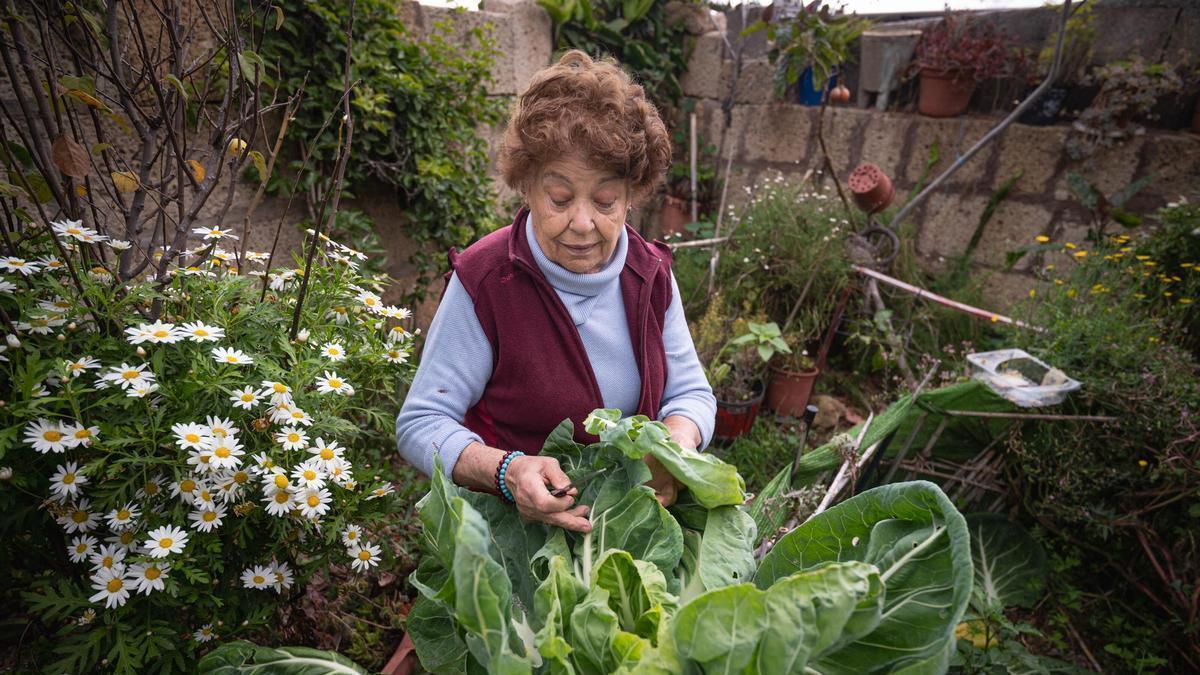
Barbara Rodríguez, a neighbour of Charco del Pino (Granadilla de Abona, Tenerife) – known in the south of the island as Charín – also shares this immense love for hearty stews, an emblem of the Islands’ gastronomy. This 78-year-old Tenerife native is one of those who defends that, if you put down the phone and turn off the television, you can find an hour a day to make lunch. “In my house, the midday meal is sacred; I don’t even let my children or my husband lift the lids off the pots,” she states. For many years, she worked in kitchens at taverns and hostels and even received a first prize in gastronomy.
Her shopping basket never lacks products like pulses – especially lentils from Lanzarote – oil, rice, fruit, and vegetables. Although the truth is she doesn’t have to go far to get cabbage, parsley, garlic, green beans, and other ingredients for her stew. Every day she goes out to her vegetable garden and cuts them fresh: “The food turns out incredibly tasty; it’s worth it for the product to be local.” While she reiterates that she respects all tastes, she believes that “junk food has invaded us” and therefore encourages younger generations to bet on the dishes of before. “They are practical meals that smell and taste good because everything is natural,” she details. In this sense, she hopes that some young people will take an interest in the Canarian recipe book and keep the gastronomy alive. Even so, she is clear that “they are not going to make meals like ours.” To feed a family where “the men eat a lot,” she opts to make a large pot of cabbage stew, which she will accompany with a tortilla made with local island potatoes and eggs she buys from local farmers. “I have to hide it because otherwise, my husband finishes it before lunch,” she confesses.
A Generational Divide in the Fridge
Although in both households – Ainoa’s and Charín’s – there is a clear intention to eat healthily, their fridges and pantries are quite different. If the older woman has a bowl of cut papaya ready for smoothies, the younger one buys cartons of juice from the supermarket for her daughter to take to school. Something similar happens with imported products; one resists buying them, believing “what’s from here is the best,” and the other puts pizzas, oriental noodles, and kebab meat in her trolley.
Regarding this, Fernández states that, just as ready meals arrived in shops to solve the lack of time, the emergence of these foreign foods on supermarket shelves is no accident either. In recent decades, the streets of the Archipelago have filled with sushi, açaí, American fast food, tacos, pasta, and arepas, among many other varieties. “We are an internationalised community due to migration and tourism,” he points out. This convergence of nationalities has had a curious effect on islanders’ diets. “Although in recent years we have lived through a genuine revolution, it is a process that takes some time. People go out to eat, for example, at a Japanese restaurant one day, they like it, they go again, and they want to bring those dishes into the domestic sphere. That’s when they start requesting them at the supermarket,” he maintains.
Coexistence on the Shelves
Despite their growing popularity, these products are not arriving to replace others but to coexist on the shelves. The Secretary General clarifies that the offer – and the variety – is always increasing. “References are being incorporated, especially of packaged foods that come from other countries,” he highlights. In this way, an ever-greater balance is being created between those who, like Charín, are faithful to local produce and those who, like Ainoa, choose to try new creations. In the middle of this transition – or rather, this generational leap – it is especially oriental products that have been westernised and Mexican food that are triumphing.
For the moment, in homes like that of Tenerife neighbour Barbara Rodríguez, the main protagonists are the dishes of a lifetime: “I use Canarian mojo sauces a lot and make a fantastic escaldón stew, as it was done before, with little meat because we usually didn’t have it at home.”

Vivanta shuts all dental clinics including six in Tenerife

Civil Guard warns of digital skimming threat to online shoppers

Tenerife shifts FDCAN funds from roads to housing

PSOE warns Arrecife plan could ‘bury’ El Cable beach in concrete

Canary Islands faces loss of 20% of self-employed workers

Canary Islands to get 26 new substations by 2030

Canary Islands poverty rates stuck since pandemic

Court backs eviction over verbal room rental in Arona

Canary Islands pushes for 10-year residency rule for foreign buyers
