
Papal visit to the Canary Islands: security and coordination challenges
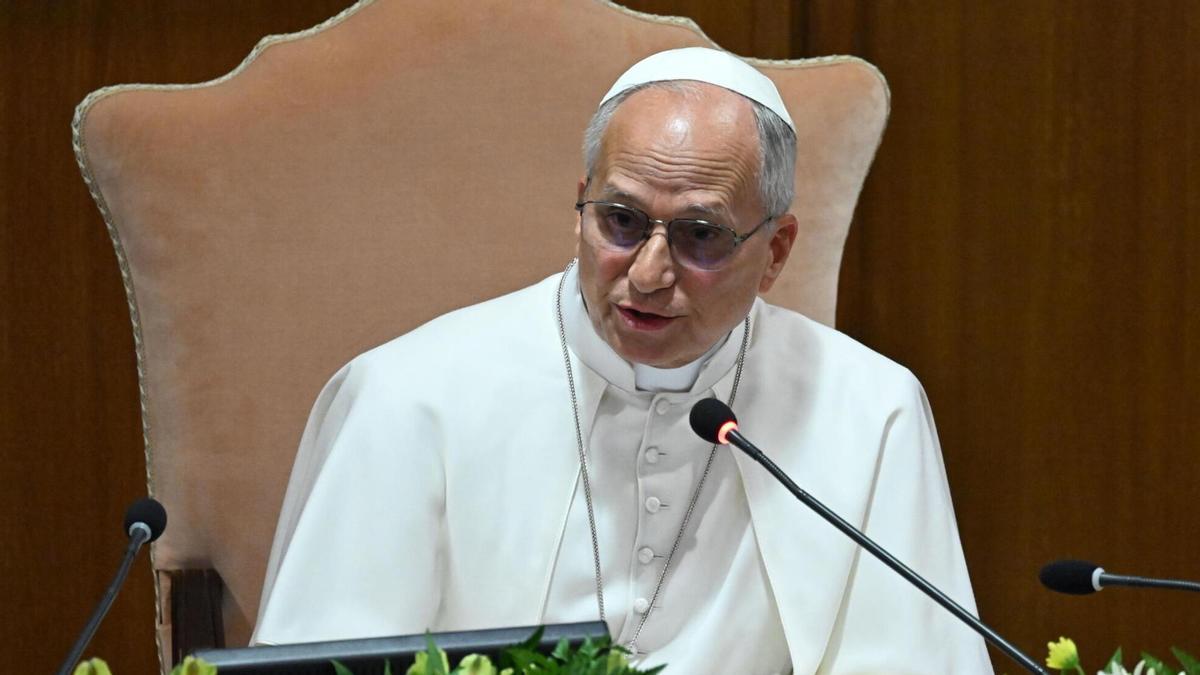
The Pope’s visit to the Canary Islands will represent one of the biggest security and institutional coordination challenges the archipelago has seen in recent years. Thousands of worshippers, civil and religious authorities, police officers, and emergency teams will converge in an operation designed to guarantee both the pontiff’s protection and the smooth running of the large-scale events planned in Gran Canaria and Tenerife.
Official request for service suspensions still pending
With less than two weeks until the Holy Father’s arrival and the clock ticking, the definitive mobility and security plan remains unclear. The Government Delegation must formally request that the Canary Islands Government partially suspend certain public services on 11 and 12 June in Gran Canaria and Tenerife respectively, coinciding with the Pope’s visit to the islands. However, as of Thursday afternoon, that formal request had not yet been submitted, and the regional executive had not received any official petition to order the suspension of classes, medical appointments, or court hearings.
The delay by the Government Delegation in processing this request to the regional government is causing a knock-on delay in the execution of the entire operation and its implications for public services across the archipelago, as well as in communicating how all this will affect the public. Should such a suspension go ahead, it would impact sectors including the judiciary, education, healthcare, and businesses, which would be encouraged to adopt remote working.
Mobility plan for Las Palmas still unresolved
Adding to the situation, there is still no finalised mobility plan for Las Palmas de Gran Canaria, which is considered key to properly organising the large security deployment expected during the most heavily attended events. Despite the lack of a formal request, the Government Delegate in the Canary Islands, Anselmo Pestana, confirmed on Thursday after the Security Committee meeting on the papal visit that non-urgent consultations and appointments have already been rescheduled, with only priority activity and treatments that cannot be postponed being maintained. “Emergency medical teams and services will also be reinforced,” he explained.
These cancellations could lead to a further increase in healthcare waiting lists, adding to the consultations already suspended during the ongoing doctors’ strike.
Church urges swift action as Vatican advances final preparations
While the administrations continue their standoff, the Church is urging that the operation be defined as soon as possible. Bishop José Mazuelos has confirmed that the visit is now entering its final organisational phase, with the running orders practically finalised and sent to the Vatican for final approval. Mazuelos also expressed concern about the lack of definition surrounding the mobility and traffic plan, an aspect he considers key to guaranteeing safety. “You don’t improvise when it comes to mobility or security,” he warned, calling for the planned measures to reduce travel and facilitate the work of emergency services to be made public as soon as possible.
The prelate also admitted that there had been some unease in recent weeks over the Vatican’s delay in finalising the official programme for the visit, although he insisted that it is now up to the Canary Islands institutions to speed up communication of the planned measures to reassure the public and complete a security operation without recent precedent in the archipelago. According to him, an advance security team of five people will arrive on Sunday to inspect the venues where events will take place, review the planned residence, and coordinate final protocol details. Among the sites to be inspected are Arguineguín and the Gran Canaria Stadium, which will host the Eucharistic celebration.
Island council president calls for urgent mobility decisions
In the same vein, the President of the Cabildo of Gran Canaria, Antonio Morales, has also insisted on the need for urgent decisions regarding mobility during the papal visit, considering it a key factor for safety on the island. “Decisions are taking too long,” warned Morales, who advocated reducing traffic as much as possible and promoting remote working in both the public administration and the private sector to avoid mass travel.
What’s happening in the Canaries – straight to your phone
News, weather alerts and practical updates – direct from the islands, in English. We live here and know what’s going on – before the international media catch up. Everything lands on our WhatsApp channel – no middlemen, no algorithm. Curated for families, expats and travelers.

Canary Islands sea hits second-hottest year on record

Legal bid to halt tree felling in Santa Cruz’s La Salud

Fiesta del Charco: A journey through La Aldea’s past

Corralejo dunes power line set for removal

ULPGC launches 14 research projects at Las Canteras

TMT will never be built, says Canary Islands astrophysics chief

Pedro Duque: Canarias is the “ultimate dream” for rockets

Court blow to Tenerife motor circuit project
La Palma faces new volcanic risk planning deadline
