
Canary Islands push for economic diversification
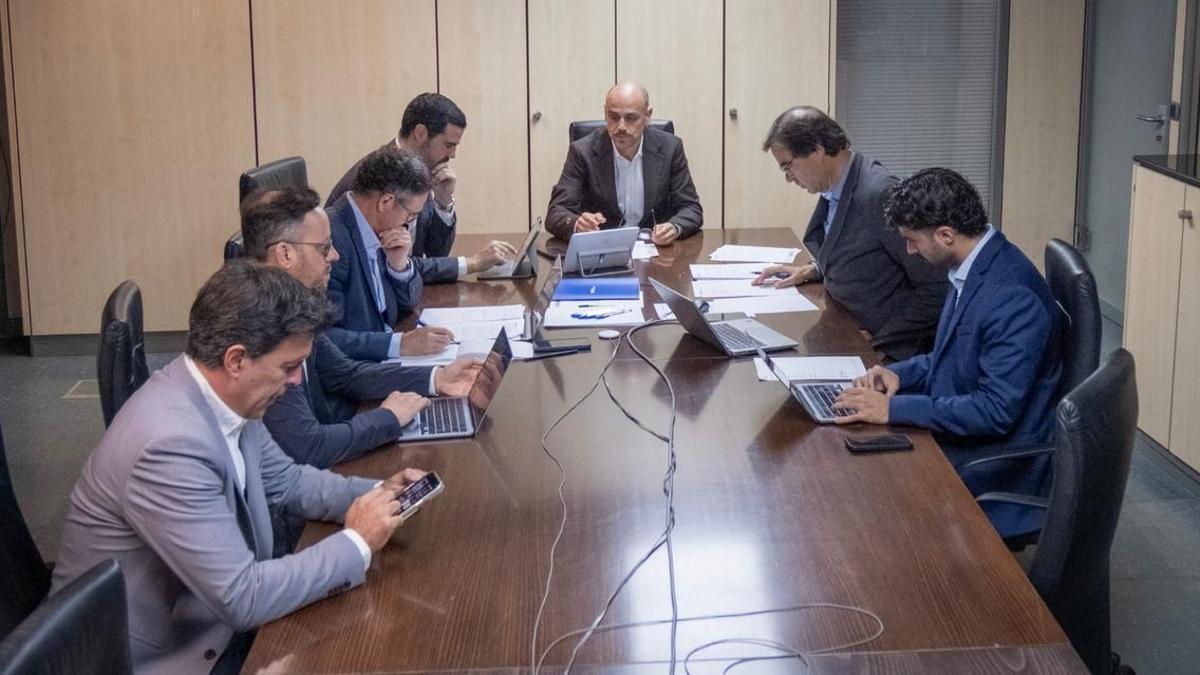
The Canary Islands continue to make progress in their strategy to diversify the archipelago’s economy towards strategic, high-quality employment sectors. This was confirmed this morning at the board meeting of the public company Proexca, which reports to the Presidency of the Canary Islands Government. The Deputy Minister of the Presidency and President of Proexca, Alfonso Cabello, highlighted the excellent work carried out in recent years by the teams from Invest in the Canary Islands, Foreign Promotion, Training and Talent, and Marketing, Communication and Data.
Interdepartmental connection has been crucial for improving processes for companies across different sectors, allowing their needs to be heard in a more direct and cross-cutting manner. This way of operating is a clear line of action in Proexca’s strategy to include the Canary Islands in global value chains.
Four key sectors leading the charge
Within these 360-degree plans, four sectors stand out: audiovisual, maritime, technology, and aerospace. Clear advances are being shown in both the efforts and resources dedicated to positioning them in global value chains and in the results being achieved.
The audiovisual sector is a prime example. The strategy focuses on consolidating the Canaries as an international production and post-production hub, leveraging the already established local ecosystem and Europe’s most competitive tax incentives (the REF). The main focus is attracting film shoots from major studios and promoting the animation and video game industry under the brands “Canarias tu mejor versión” and “Canary Islands Film”. The goal is not only to be a filming destination but to strengthen the local industry so it can participate in international co-productions and retain talent.
To this end, Proexca will support companies and seek investors at major markets like the Berlinale, Annecy, the Málaga Festival, or San Sebastián, as well as in the video game sector at events like the Tokyo Game Show, BitSummit Kyoto, or the San Francisco Games Developer Conference.
Technology, blue economy, and aerospace ambitions
In the technology sector, the strategy will focus on consolidating the Canaries as an international hub for tech companies through service exports and investment attraction, capitalising on the growing local ecosystem and Europe’s most competitive tax incentives (REF). The islands have already positioned themselves at Málaga Transfiere and will attend other fairs like the South Summit in Madrid or SWITCH in Singapore.
Regarding the blue economy, the upcoming Wind Europe event in Madrid this April is noteworthy, alongside other important events like Navalia in Vigo or SMM in Hamburg. At these, Canary Islands ports and their entire service and business environment will be promoted as a reference logistical hub, supplier, and naval repair centre in the Mid-Atlantic. This will boost their connectivity as a tri-continental platform, their proximity to Africa, and position them for new energy and business opportunities like offshore wind.
Another notable sector is aerospace, which has been taking off in recent years. Recently, a delegation presented the Canary Islands Aerospace Strategy at Xponential Europe in Germany and is already preparing its next showcase in Seville at Newspace. This strategy is an instrument driven by the Canary Islands Government to transform the archipelago into an international reference in the aerospace sector, leveraging its unique climatic and orographic conditions and its privileged geostrategic position in the Atlantic.
Driving internationalisation and investment
The Deputy Minister of Economy and Internationalisation and Vice-President of Proexca, Gustavo González de Vega, highlighted the administration’s role in helping the private sector continue to internationalise through direct aid like ‘Canarias Aporta’, which gains importance each year in both participation and funding from the administration.
Another objective is to continue working on attracting foreign investment. To this end, programmes like ‘Landing Canarias’, which supports companies setting up on the islands, and the ‘Business Ambassador Program’, which incentivises specialists and consultants to recommend qualified leads for establishment in the islands, will be improved.
Another programme being reinforced is ‘Canarias Know-How’, which supports the internationalisation of Canarian expertise by aiding local companies in international tenders, conducting technical assistance in African and Latin American markets, and securing agreements with organisations to promote the participation of Canarian companies in their tenders. Notable here is the agreement with the Central American Bank for Economic Integration to promote international tenders in sectors like the blue economy and tourism, as well as technical assistance for Canarian companies planned for Colombia and trade missions to El Salvador and Honduras.
Strategic governance and African focus
A key strategic line is to continue strengthening the governance of internationalisation, carried out both horizontally and vertically by Proexca. For example, through the Regional Internationalisation Council (CRI), with Proexca and its CEO Pablo Martín Carbajal serving as the Technical Secretariat for all Canarian institutions with internationalisation competencies. This ensures all parties are moving in the same direction and simplifies the understanding of the islands’ inherent complexity for investors.
This governance is also worked on vertically, hand-in-hand with clusters and associations. The historical and commercial relationship with Africa is also important and is worked on within the CRI’s own strategy. This is not only to make the islands an attractive territory as a tri-continental Atlantic hub due to their geographical proximity to the continent but also for the export of knowledge, goods, and services from sectors like industry or agri-food.
In coordination with the General Directorate for Relations with Africa, Proexca develops the economic and business axis of the Canary Islands-Africa Strategy with several identified and time-measurable lines of action.
International presence and new strategic office
Proexca thus has personnel in third countries, including two of its own delegations in Africa, specifically in Morocco and Senegal. In collaboration with Fucaex, work is also carried out in Mauritania and Cape Verde. Proexca also has delegations in strategic points like Belgium, for its relations with multilateral organisations that favour technical assistance or tender processes for Canarian companies, and Germany, one of the European countries presenting the most opportunities for sectors like audiovisual, agri-food, or aerospace and also a source of investment in the Canaries.
Finally, Madrid also hosts a Proexca delegation, as it is considered a third market for Canarian companies due to the archipelago’s idiosyncrasies, as stated by companies themselves when applying for aid to develop their internationalisation projects on the Iberian Peninsula.
Lastly, during the board meeting, the recently created Strategic Projects Office was discussed for the first time. Operating in coordination with the General Directorate for Strategic Projects and led by its director David Pérez-Dionis, it has been launched to further drive the diversification of the Canary Islands’ economy. A total of seven technicians make up the office with the objective of continuing the operational strategy for the internationalisation of the Canary Islands economy.
What’s happening in the Canaries – straight to your phone
News, weather alerts and practical updates – direct from the islands, in English. We live here and know what’s going on – before the international media catch up. Everything lands on our WhatsApp channel – no middlemen, no algorithm. Curated for families, expats and travelers.

Vivanta shuts all dental clinics including six in Tenerife

Civil Guard warns of digital skimming threat to online shoppers

Tenerife shifts FDCAN funds from roads to housing

PSOE warns Arrecife plan could ‘bury’ El Cable beach in concrete

Canary Islands faces loss of 20% of self-employed workers

Canary Islands to get 26 new substations by 2030

Canary Islands poverty rates stuck since pandemic

Court backs eviction over verbal room rental in Arona

Canary Islands pushes for 10-year residency rule for foreign buyers
