Summer on hold: seven Tenerife beaches closed by landslides
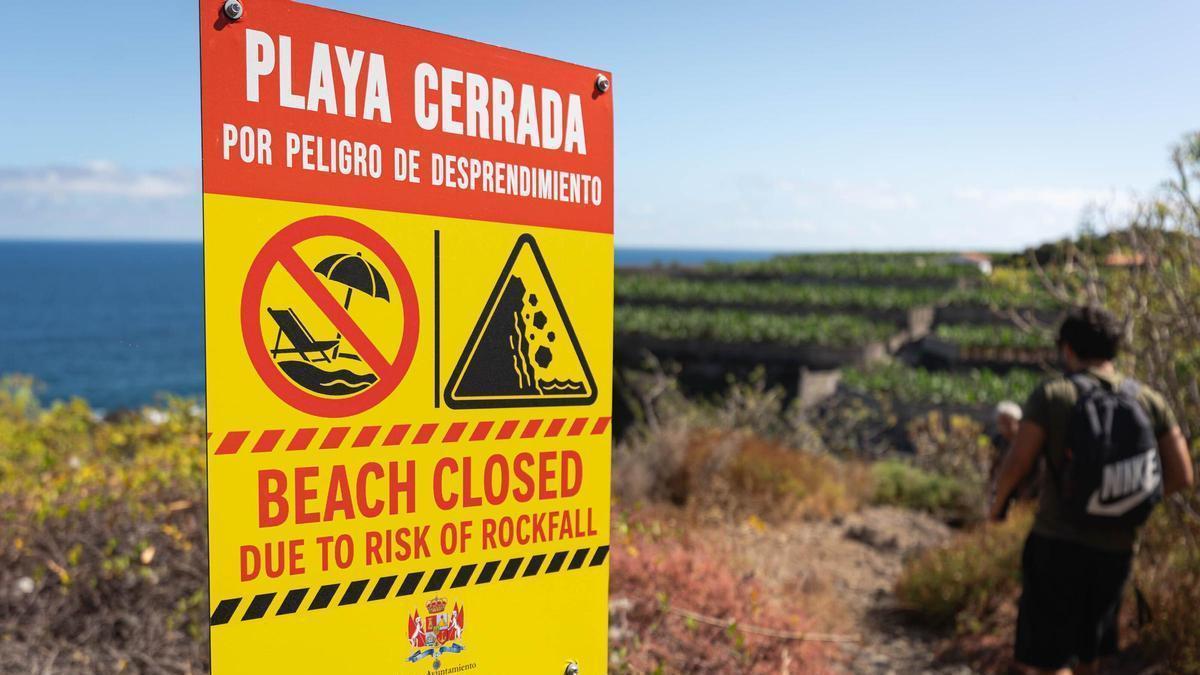
Summer is synonymous with beach time in Tenerife. Yet seven coastal spots on the island remain closed due to cliff or hillside collapses, which have made access particularly hazardous. Fearing for public safety, local councils have taken a precautionary approach, decreeing closures and restricting swimming. These affected locations are concentrated in the north of the island and the metropolitan area.
The beaches of Los Patos in La Orotava, Benijo and Las Gaviotas in Santa Cruz, La Consolación in the Garachico neighbourhood of El Guincho, Los Barqueros in Buenavista del Norte, Santo Domingo in La Guancha, and the Tabaiba rock pool in El Rosario are all currently off-limits. Each has suffered landslides or collapses that have led to closures and bans lasting months, and in some cases, decades.
A deadly precedent set in 2009
The deaths of two people at Los Guíos beach in Los Gigantes (Santiago del Teide) when part of the cliff collapsed set a grim precedent for Tenerife. It happened on 1 November 2009. From that moment on, local authorities recognised that the risk of landslides was not merely a probability but a deadly certainty with serious legal consequences.
Santo Domingo: the longest-running closure
The most prolonged beach closure on the island is that of Santo Domingo in La Guancha. Since 2007, the municipality’s only swimming spot has been restricted due to the risk of landslides. In 2010, shortly after the Los Gigantes tragedy, it was officially and permanently closed, and it has never reopened. Failed attempts to stabilise the slope involved the national Coastal Authority (Costas) and the Cabildo of Tenerife during the CC-PSOE coalition government (2015-2019). In 2018, the island institution and La Guancha council signed a €180,000 agreement to carry out a second phase of work, but this did not lead to the beach reopening. When responsibility for the coastline was transferred to the Government of the Canary Islands in 2023, a new window of hope opened for La Guancha’s coast. However, more than three years on, no steps have been taken to reclaim this northern spot.
Los Barqueros: a decade of closure
The beach of Los Barqueros in Buenavista del Norte has been closed for more than ten years. The town’s most emblematic coastal spot, with its strong links to local fishermen, has no planned reopening, according to the council. They argue that any remedial work is extremely complex due to its location in a ravine. Access was also prohibited after the Los Gigantes accident. To reach the spot, also known as Puerto del Buen Jesús, visitors must descend a steep slope that gradually narrows beneath the cliff face. A deteriorated ramp once used to launch boats into the sea, along with several vessels, are among the remnants of this fishing heritage at a beach officially closed to swimming, yet still frequented by locals.
Los Patos: three summers and counting
One of the most popular beaches on Tenerife’s north coast is in La Orotava. Los Patos has now been closed for three consecutive summers. The instability of the cliff and the risk of landslides have put paid to the enjoyment of this stretch of coastline, known for its fine black sand, ground down by the relentless erosion of the northern sea. The municipal council in La Orotava says: “We are waiting for the studies being carried out by Involcan to be completed.” The aim is to better understand the geological processes affecting the stability of the coastal cliffs at Los Patos. A meeting was held in early July to review the progress of these diagnostic works and planned actions for the coming months. The technical team has indicated that a first draft of conclusions on this stretch of coastline is not expected until November. Is a fourth summer without Los Patos on the horizon?
Benijo and Las Gaviotas: Santa Cruz’s troubled coastline
The Tenerife metropolitan area also has beaches closed by landslides. Benijo beach in the Anaga mountains is one such case. Santa Cruz council closed access to this spot in July 2024, and two years on the official ban remains in place. The collapse occurred on the slope next to the steps providing access to and from the swimming area, with several rocks hitting the only path to the beach. Last May, the council declared the situation an emergency to allow the national Coastal Authority (Dirección General de Costas) to grant a provisional authorisation while standard procedures continue. Despite the official closure, visitors to this popular Santa Cruz beach continue to access it via unofficial routes.
Santa Cruz has another beach added to its list of landslide closures. Las Gaviotas is one of the coves most visited by residents due to its relative proximity to the capital. In June this year, a swimming ban was reimposed. It is not the first time this coastal spot has had to close due to the risk of collapse. Following the latest closure, Santa Cruz council declared an emergency, describing the situation as “a serious danger to people and property due to the possibility of landslides occurring on the slope of the access to Las Gaviotas.” To address the instability of the hillside, confirmed in a technical report, an urgent contract worth approximately €1.9 million with a 12-month execution period was approved. The beach will not reopen until the work is completed.
La Consolación and Tabaiba: ongoing concerns
Another beach closed to swimmers is in Garachico, specifically in the El Guincho neighbourhood. The council banned swimming at La Consolación last February after part of a wall collapsed at the top of the cove. Six months on, no solution has been found to allow its reopening, although the local authority confirms: “We are taking steps to declare the situation an emergency.” The technical project to eliminate the risk of collapse has already been drafted, and the council has met with local property owners, as the wall is private property. According to municipal sources, the national Coastal Authority authorised the closure five months after the council’s request, “but hasn’t said anything more.” The main concern is that visitors are ignoring the installed fencing.
The municipality of El Rosario also has a closed coastal spot in Tabaiba Baja. Although access to Playa del Moro was reopened last June, swimming is still banned at the adjacent Tabaiba rock pool. The council continues repair work on damage caused by low-pressure system Therese and is also carrying out work to enable the automatic filling of the pool basin.
What’s happening in the Canaries – straight to your phone
News, weather alerts and practical updates – direct from the islands, in English. We live here and know what’s going on – before the international media catch up. Everything lands on our WhatsApp channel – no middlemen, no algorithm. Curated for families, expats and travelers.

Tenerife faces huge tourism expansion despite moratorium calls

El Bejeque in Las Canteras adds sea to its fire

Siam Park Gran Canaria must build its own desalination plant

Fuerteventura’s biggest resort to open on 1 November
Gran Canaria to teach tourism history in schools
Canary Islands see 0.3% rise in foreign tourists in August

Row over 368-bed hotel project in La Gomera
Spanish astronaut trains in Lanzarote for Moon mission

Tivoli La Caleta hosts first red tuna Kaitai in Canarias