
Compiled with the help of artificial intelligence, based on Spanish-language information. Source below the article.
If most of us were asked what a Serinus canaria is, few of us would probably know what to say. Yet it is highly likely that the animal hiding behind that scientific name has, at some point, been part of our lives or those of a close relative. When we think of the symbols of the Canary Islands we tend to turn to the landscape: the sea, Mount Teide, the volcanoes, Roque Nublo or the beaches. But there is another, far smaller symbol which, precisely because of its size, can go unnoticed.
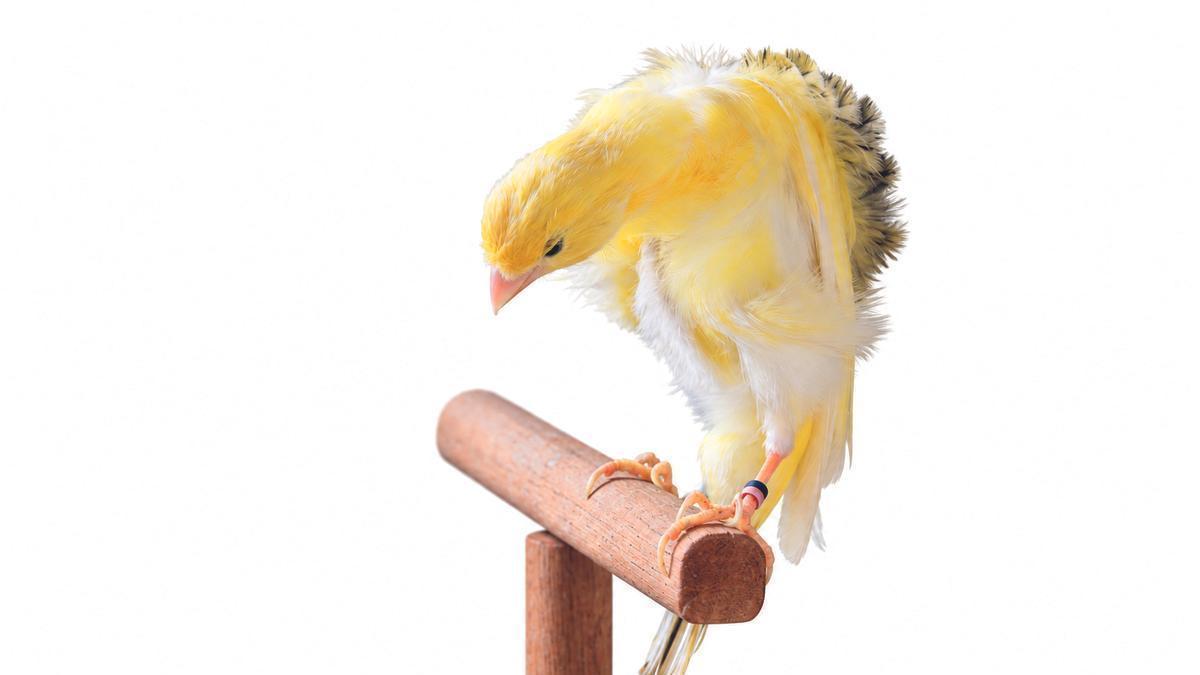
It is the wild canary, Serinus canaria, a species native to the Canary Islands and other territories of Macaronesia. Its presence in the archipelago is part of the islands’ natural heritage, and its scientific name preserves, from the very classification of zoology, its link with the Canaries. The wild canary is also the starting point of a story that ended up carrying the name of the archipelago far beyond its borders.
A small bird with a global legacy
From that little bird of the Islands came, after centuries of breeding and selection, the domestic canary we know today in its many varieties of song, colour, shape and posture. The relationship between the bird and the Islands even reached one of the best-known cultural products of recent decades. In The Simpsons, the episode “The President Wore Pearls”, from the fourteenth season, uses precisely the link between the canary and the Canaries as part of its plot.
In the story, Homer discovers that the Springfield nuclear power plant is registered in the name of a small canary. The device allows Mr Burns to dodge certain legal responsibilities and turns the bird into an unexpected piece of the plant’s corporate set-up. When Homer and Bart meet the animal, they end up sending it to the Canary Islands. The joke works because of something that is especially obvious in the Canaries: the name of the animal and the name of the archipelago are closely related. For an international audience, the reference also serves to introduce the islands into a production of global reach through something as recognisable as a canary.
The scene has a curious reading from the Canaries. While the archipelago usually appears associated with tourism, the climate or its landscapes, in this case it is a few yellow feathers that carry its name into a series watched by millions of viewers.
From the wild canary to the showbird
But behind the fictional character there is a far longer history. Serinus canaria is not simply the origin of a popular domestic animal. It is a species belonging to the natural heritage of the islands and the starting point of a breeding tradition that developed over centuries. The domestic canary is not exactly the same as the wild canary we can find in the wild. The selection carried out by breeders over generations gave rise to specimens with characteristics very different from those of the wild population. Song, colour, body shape, posture, plumage and size became elements to work on.
Over time, that selection ceased to be a simple domestic hobby and became an organised activity, with associations, judges, competitions, rules and breed standards. The history of the canary thus moved from the fields and ravines of the islands to the aviaries and competition halls of various countries.
The spread of the domestic canary across Europe began after the arrival of Europeans in the archipelago, between the fifteenth and sixteenth centuries. Its song and appearance aroused the interest of the well-to-do classes and, according to historical tradition, some specimens arrived as gifts at courts and noble houses. During the first centuries, keeping a canary at home was linked to certain privileged sectors. Over time, however, the custom spread and the bird ended up forming part of households of very different backgrounds.
Canary breeding on the islands today
In the Canaries, the relationship with the canary did not disappear either. The care of these animals continued to form part of the daily life of many families, and breeding took on new forms with the development of associations and competitive canary breeding. One of the most respected breeders in the islands, Juan José González Oliva, is, as well as a breeder, a judge and a deep connoisseur of posture canaries. His career is linked to some of the chapters of Tenerife canary breeding and to the work carried out around the Remixto Lagunero.
According to González Oliva, the history of this pastime is also the history of knowledge passed from one breeder to another. It is not simply a matter of preserving birds, but of learning to select, reproduce and recognise certain characteristics generation after generation. The organisation of breeders’ associations in the Canaries is relatively recent. The first known groups date from Tenerife and Gran Canaria around the 1970s, with an activity that subsequently spread and became structured on other islands. Determining the exact number of associations and breeders that have formed part of this history is not easy, due to changes in the groupings and the membership of some enthusiasts in different bodies.
Within this evolution, several posture breeds developed or worked on in the Canaries have achieved international recognition. Among them are the Melado Tinerfeño and the Giboso Español, while the Remixto Lagunero, linked to San Cristóbal de La Laguna, continues its journey through the federative recognition process.
Song canaries in Gran Canaria
In Gran Canaria, canary breeding also has a dimension in which the protagonist is not the colour of the plumage or the shape of the body, but the sound. Around that passion Agracanto was born, the Gran Canaria Association of Song Canaries, constituted on 3 October 2008 by a group of ornithology enthusiasts particularly interested in the breeding and selection of song canaries. Since then, the association has developed an activity focused on knowledge and dissemination of this modality, on the training of enthusiasts and on the organisation of competitions.
In the case of song canaries, breeding does not consist solely of raising specimens. It also implies working over generations to achieve certain qualities in the animals’ voices and learning to recognise them. One of the leading figures in this speciality is the Cantor Español. In this modality, breeders pay attention to aspects related to the voice, diction, musicality and repertoire of the specimen. The work begins long before a competition arrives: there is breeding, feeding, hygiene, moulting and the monitoring of each bird. Then comes the moment to listen to the result of all that process.
Agracanto has organised specific competitions in this modality in Gran Canaria for years. In 2025 it held its seventeenth Cantor Español Song Canary Competition, a track record that reflects the continuity of this associational activity on the island. The existence of competitions, judges and training spaces allows knowledge not to remain solely within each aviary, but to be shared between different generations of breeders.
The association also establishes in its own philosophy a link between the domestic canary and its origin. Agracanto recalls the relationship of the bred canary with the wild canary, Serinus canaria, and links the passion for songbirds with knowledge and protection of the natural environment and its habitat. That connection is especially interesting within the history of the canary in the Canaries. The same animal that in its wild state forms part of the archipelago’s natural heritage ended up becoming, after centuries of selection, the protagonist of an international pastime. In Gran Canaria, associations such as Agracanto keep part of that history alive from the aviaries: breeding specimens, organising competitions and passing on knowledge about song.
The patient work behind every bird
Canary breeding requires a dedication that often remains invisible to anyone who only sees the final result. Behind a specimen that takes part in a competition there are months of care, selection and monitoring. The breeder must know the characteristics of their birds, plan the pairings, control reproduction, ring the specimens and observe their evolution. In the posture varieties they will have to look at the shape and position of the animal; in the song varieties, by contrast, they must pay special attention to the voice and the repertoire.
Over the years, that knowledge generates genuine living archives. Breeders keep genealogies, note down crosses, compare specimens and study which characteristics appear or disappear in each generation. The experience acquired in an aviary can end up being as important as any manual.
Tenerife’s own breeds
The canary’s journey to Europe did not mean the Islands were left out of their own story. On the contrary, canary breeding continued to evolve in the Canaries and some breeders developed lines with their own characteristics. The Melado Tinerfeño is one of the most obvious examples. Its name leads directly to Tenerife and it is the result of a selection process developed by breeders on the island. Its international recognition turned a variety worked on for generations into a reference within posture canary breeding.
The Giboso Español has a different history. Its evolution is related to the exchange of specimens and knowledge between Andalusia and Tenerife during the twentieth century. It cannot be considered a breed created exclusively in the Canaries, but Tenerife breeders played an important role in its development and consolidation. Today it is an internationally recognised breed within posture canary breeding and constitutes another example of how exchanges between breeders from different territories have gradually shaped the varieties we know.
More recent is the history of the Remixto Lagunero, linked to San Cristóbal de La Laguna. Its journey shows how a canary variety can need generations of work before reaching a stable definition. For a breed to be recognised within organised canary breeding it is not enough for a few different specimens to exist. Its characteristics must be able to be transmitted stably, there must be a sufficiently homogeneous population and clear criteria must be established to allow it to be identified. The process of the Remixto Lagunero shows precisely that less visible side of canary breeding: the patient construction of a breed. Behind it there is selection, crossing, mistakes, corrections and years of work by different breeders.
Breeding as a form of conservation
In the world of canary breeding there is an idea that sums up much of that work: to breed is also to conserve. The conservation of a domestic breed should not be confused with the protection of wild populations of Serinus canaria. They are different realities. While the conservation of the wild canary has to do with its natural populations and their ecosystems, the conservation of domestic varieties depends on there being living specimens, controlled reproduction, genetic diversity and breeders capable of maintaining their characteristics. Each conserved line represents a part of that history.
Knowledge is conserved too: how to select a pair, how to recognise a characteristic, how to interpret a fault or how to maintain a standard over several generations. Rings, records, genealogies, breed standards, competitions and associations form part of that structure. They are tools that allow the pastime not to depend solely on one person’s memory and that knowledge to pass from one generation to the next.
As with any activity related to animal breeding, canary breeding also faces new demands in terms of animal welfare. Regulations and social sensitivity have evolved and raise questions about the conditions in which animals should be kept and bred. For breeders, the challenge consists of adapting the activity to those demands without losing the knowledge accumulated over decades. Feeding, hygiene, space, reproduction and the conditions of the aviaries form part of a conversation in which both the experience of those who have been breeding for years and scientific, veterinary and technical knowledge must have a place. The very structures that canary breeding has built can be a tool for facing that future: associations, training, records and breeding criteria allow common practices to be established and information to be passed between enthusiasts.
A tradition passed down through families
The history of the canary in the Canaries is not only in books. It is also in the aviaries, in the breeders’ societies, in trips to competitions and in family conversations in which someone explains to another how to choose a pair or recognise a particular specimen. In many families, the pastime has passed from parents to children. Knowledge is transmitted in a practical way, watching and listening to the animals and learning from mistakes. That continuity explains how a tradition born around a small bird has managed to survive for generations.
In that transmission of knowledge the face of Juan José González Oliva also appears. His career as a breeder and judge, and his knowledge of posture canaries, represents that part of canary breeding that does not appear when you simply contemplate a specimen in a cage: the hours of observation, the selection, the learning and the experience accumulated over the years.
The story began long before. A small bird lived in the islands and received a scientific name that preserves its origin for ever: Serinus canaria. Later it left the Canaries, reached Europe and became one of the best-known domestic birds in the world. Its appearance changed, its song changed and numerous varieties appeared, but the name remained. Perhaps that is why that scene from The Simpsons is so curious, in which a canary ends up being the owner of a nuclear power plant and ends up travelling to the Canary Islands. Behind the joke there is a far older reality: an animal whose name was born here and which, centuries later, continues to carry the word Canarias wherever it is spoken of.
What’s happening in the Canaries – straight to your phone
News, weather alerts and practical updates – direct from the islands, in English. We live here and know what’s going on – before the international media catch up. Everything lands on our WhatsApp channel – no middlemen, no algorithm. Curated for families, expats and travelers.
Iberdrola plans Tenerife’s biggest battery storage plant
Canary Islands sea hits second-hottest year on record
Legal bid to halt tree felling in Santa Cruz’s La Salud
Fiesta del Charco: A journey through La Aldea’s past

Corralejo dunes power line set for removal

ULPGC launches 14 research projects at Las Canteras

TMT will never be built, says Canary Islands astrophysics chief

Pedro Duque: Canarias is the “ultimate dream” for rockets
