
Compiled with the help of artificial intelligence, based on Spanish-language information. Source below the article.
César Manrique Foundation to examine tourism’s impact on Canary Islands healthcare
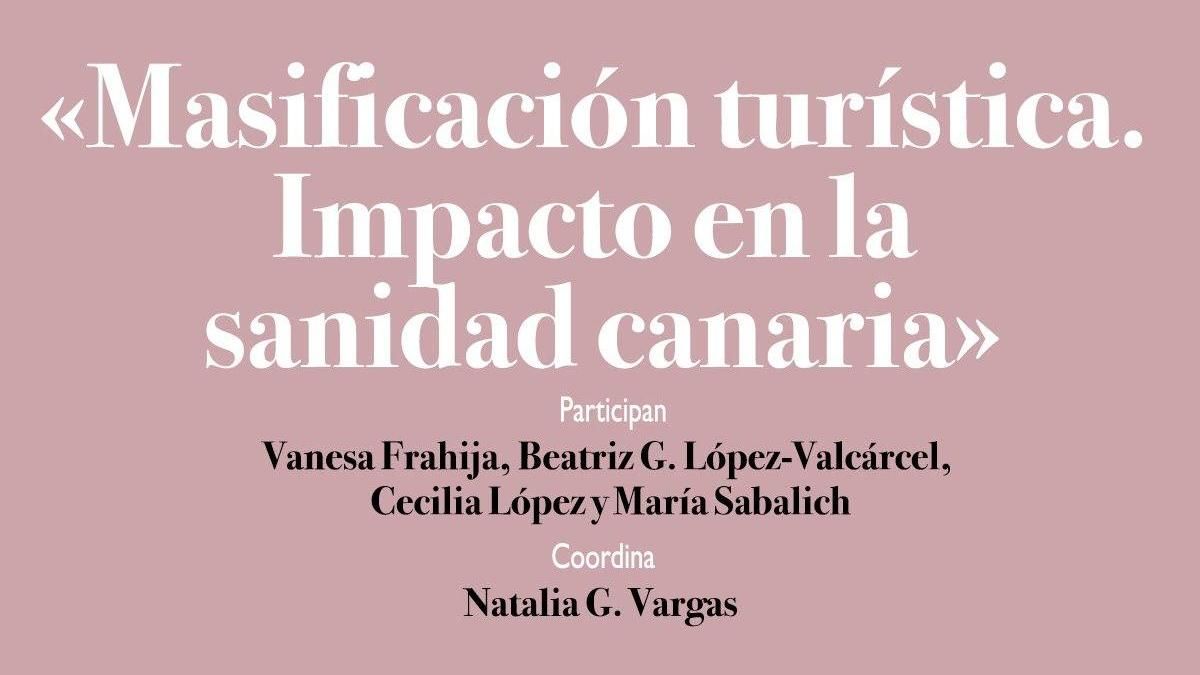
The César Manrique Foundation (FCM) will analyse the impact of mass tourism on healthcare in the Canary Islands this Thursday from 7.30pm. The event will take the form of a round table featuring Vanesa Frahija, Beatriz González, Cecilia López and María de los Ángeles Sabalich. Natalia G. Vargas, a journalist at Canarias Ahora who also coordinated the activity, will moderate the discussion. The event will be held in the José Saramago Room (La Plazuela, Arrecife) and streamed live on the foundation’s website and YouTube channel. Entry is free until capacity is reached.
First in a series of meetings on mass tourism
This round table, devoted to the state of healthcare in the Canary Islands, will be the first in a series of meetings focusing on the impact of mass tourism on essential sectors of the archipelago. The encounter will share experiences and reflections on how the current mass tourism model affects one of the basic pillars of society: the health system. Testimonies from the speakers, who come from different health-related fields, will offer first-hand insight into a range of realities, from the day-to-day work of emergency professionals in Lanzarote to the personal experience of a relative who accompanied her mother for 22 days in the emergency department of a hospital in Tenerife.
Pressure on the public system and the role of private healthcare
The discussion will also examine the capacity of the Canary Islands’ public health system to respond to the population’s needs in a context of growing tourist pressure, as well as the difficulties and challenges faced by its professionals. Proposals relating to the defence of the labour and social rights and interests of the health sector will also be put forward, and there will be reflection on the role of private healthcare in light of the difficulties and challenges facing the public system.
Who are the speakers?
Vanesa Frahija is general secretary of Comisiones Obreras in the Canary Islands. She began her work as a union representative in 2003. In 2014 she took on the general secretaryship of the Trade and Hospitality Union in Lanzarote and, between 2016 and 2025, held the general secretaryship of Comisiones Obreras in Lanzarote, broadening her scope of representation to all employment sectors. In addition to the general secretaryship of CCOO in the Canary Islands, she is also a counsellor on the Canary Islands Economic and Social Council and the Canary Islands Labour Relations Council, an advisory member to the president of the Canary Islands Government and a member of the Social Dialogue Table.
Beatriz González is professor of economics at the University of Las Palmas de Gran Canaria and a researcher in health economics. She is an honorary member of the Association of Health Economics, a trustee of the Ernest Lluch Foundation and a corresponding member of the Royal Academy of Sciences of Galicia. She is also a member of the advisory committee of the Spanish Society of Health Managers and of the scientific panel of the Lanzarote Biosphere Reserve, among other bodies. She has received the Cross of the Order of Civil Merit for Health and has been named Adoptive Daughter of the city of Las Palmas de Gran Canaria and of the island of Gran Canaria.
Cecilia López holds a degree in theology and is a teacher of religion, philosophy and personal, social and professional development. She currently teaches in the Community of Madrid. For years she has accompanied people through processes of particular vulnerability and life transitions. The experience of caring for her mother during her illness strengthened her desire to reinvent herself and to continue deepening her work in end-of-life accompaniment and other processes of personal transformation.
María A. Sabalich is a specialist in family and community medicine and in emergency medicine, with more than 15 years of clinical experience. She currently coordinates the emergency department at the Dr José Molina Orosa University Hospital. She holds a master’s degree in hospital and health service management and is an accredited ITLS and clinical simulation instructor. She combines clinical work with management and teaching, with a particular interest in patient safety, clinical simulation and continuous improvement in the quality of care.
Natalia G. Vargas is a journalist specialising in human rights and migration. She holds a master’s degree in human rights, democracy and globalisation and has worked at Canarias Ahora, a regional newspaper associated with elDiario.es, since 2019. Her coverage has included the 2020 migration crisis in the Canary Islands, the La Palma volcano eruption and the mobilisations in defence of the territory and for a change in the Canary Islands’ economic model. She has collaborated with the Pulitzer Center on investigations into rights violations affecting migrant minors in the Canary Islands and on urban development projects in protected areas of the archipelago. She has also worked at La Opinión de Tenerife and as a freelance journalist in Senegal, Gambia and Cape Verde.
What’s happening in the Canaries – straight to your phone
News, weather alerts and practical updates – direct from the islands, in English. We live here and know what’s going on – before the international media catch up. Everything lands on our WhatsApp channel – no middlemen, no algorithm. Curated for families, expats and travelers.

Tenerife comic salon returns with 40 exhibitions and 80 artists

Buenavista del Norte and Villa de Mazo compete for Christmas lights glory

WOMEX 2026 closes in Gran Canaria as Tenerife named 2027 host

Five French sailors injured as yacht hits rocks off Lanzarote

Amaia Montero’s emotional tribute at Gran Canaria concert

Netflix begins filming new thriller in Tenerife

Loquillo and Amaia headline Tenerife Peñón Fest 2026

Figueres: Canary Islands tourism model hard to square with climate limits

Fairy advert reignites Canary Islands gentrification row
