Quality over quantity: the new tourism model
The Canary Islands are shifting their tourism model from mass numbers to higher quality, aiming to improve infrastructure and services so that the industry’s contribution to the local economy – some €23 billion last year – is no longer solely reliant on the sheer volume of visitors. With 17 million tourists arriving in 2025, the goal is to boost economic impact while reducing overcrowding.
Retail emerges as a key sector
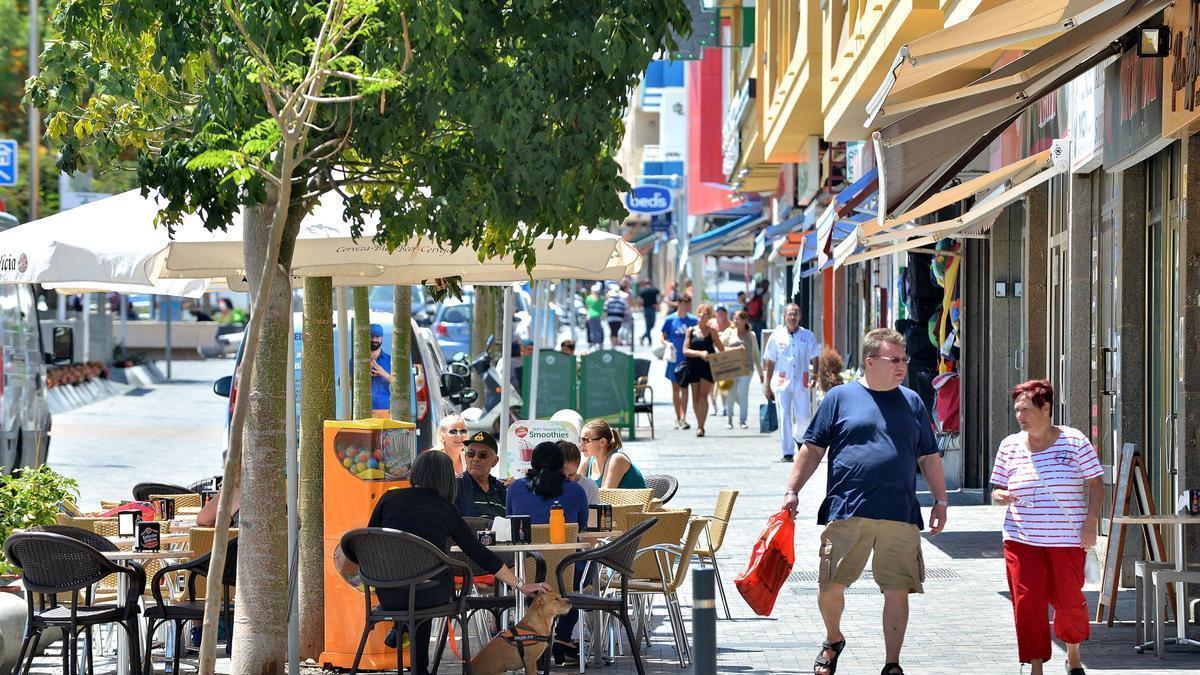
In this context, retail is emerging as a crucial piece of the diversification puzzle. Tourists are not just opening their wallets for accommodation and dining; they are also spending on leisure, clothing, accessories, perfume and electronics. So much so that the archipelago has overtaken Catalonia as the region with the highest tourist spending on non-essential purchases, according to the latest report, “Textile Retail in Figures 2025”, from the National Association of Textile, Accessories and Leather Retailers (Acotex).
Tourism lifts all boats
José María Mañaricúa, president of the Federation of Hospitality and Tourism Entrepreneurs of Las Palmas, stresses that tourist spending “has a positive effect on all sectors of the economy” and that retail is a clear example of how tourism drives other activities. “When a tourist comes to the Canary Islands, they go to restaurants, take taxis, visit shopping centres, buy clothes and all kinds of accessories,” he says.
The fact that tourists spend money beyond flights and accommodation is nothing new. What stands out in the report, however, is that the Canary Islands have maintained their share of tourist spending from the previous year, while Catalonia saw a one-point drop.
Spending up 7% across Spain
The Acotex study shows that the money visitors left behind in Spain grew by 7% compared with 2024, reaching €134.743 billion in 2025. This continues the upward trend that began after the pandemic, and already surpasses the pre-COVID figure of €91.912 billion by more than €42.8 billion.
When it comes specifically to non-essential purchases, the Canary Islands accounted for 18% of total tourist spend in Spain – the same share as the previous year and on a par with Catalonia, despite Catalonia’s one-point decline. This is particularly significant given that Catalonia received more than 20 million visitors last year and has a powerful retail network. Even so, the islands strengthened their tourism leadership by coming out ahead in spending on this type of purchase.
Who else made the top five?
The Balearic Islands followed with 16%, Andalusia with 15%, Madrid with 13%, Valencia with 12%, and the remaining regions collectively accounting for 8%.
The study indicates that the bulk of tourist spending goes on fashion and accessories – 87% – followed by culture at 7%, jewellery at 3%, electronics at 2%, and perfume and other products at 1%.
Perfume still a big draw in the Canaries
However, in the archipelago, Abbas Moujir, president of the Federation of Urban Areas of the Canary Islands (Fauca), notes that perfume is the most sought-after product. “We see it not only in tourist areas, but also, for example, when cruise ships arrive,” he points out. Historically, the archipelago has been known as a destination where certain products – such as perfumes, cosmetics, electronics and tobacco – could be bought more cheaply because of its special tax regime. For fragrances in particular, sales continue to be one of the main draws for tourists, helped by their ease of transport, their association with gift-giving and the presence of well-known brands.
Early signs of a slowdown
Despite this top ranking, the first few months of the year have already shown a slowdown in sales across the archipelago, especially in tourist areas. Abbas Moujir attributes this to “a possible drop in on-the-ground spending”. The geopolitical situation has pushed up the price of oil and kerosene again, with a direct impact on air travel. In a territory like the Canary Islands, which is heavily dependent on air connectivity and tourist flows, the rising cost of tickets could either reduce visitor numbers or change their spending habits.
What higher ticket prices mean for local shops
In other words, even if tourists maintain high spending at source – paying more for flights or higher-category accommodation – that expenditure does not always trickle down to high-street shops, restaurants or complementary activities. This is why the retail sector is watching with concern as international uncertainty threatens to undermine one of the pillars of the Canary Islands’ lead in tourist shopping. “Perhaps tourists will choose closer destinations, meaning lower costs,” the specialist adds. “It all depends on how the situation evolves, on regional conflicts and, above all, on what happens in the Middle East,” says Moujir.
German market under pressure
In countries like Germany, tensions in the region, rising energy prices, a lack of structural reforms and the absence of a clear strategy to regain competitiveness are all dampening growth prospects. This is no small matter for the Canary Islands, because the German market – alongside the British one – is one of the most important source markets for the islands’ tourism industry. The relationship is direct: the lower visitors’ purchasing power, the less they have to spend on holiday.
Nationality of shoppers: a different picture
The Acotex study also analysed the nationality of shoppers. Across Spain as a whole, the top spenders were Americans (27%), Mexicans (23%) and Argentinians (15%). In the Canary Islands, however, the profile is expected to be different, dominated by Britons and Germans, given that these two markets accounted for 50.7% of all tourists visiting the archipelago last year.
A tale of two realities
The Canary Islands reflect a dual reality in the retail sector. They lead the country in tourist shopping spending, driven by the weight of both foreign and domestic visitors in the local economy. However, this strength contrasts sharply with the low spending of residents themselves in local shops. In fact, the average annual spend by Canarians in this area is the second lowest in Spain, ahead only of the Balearic Islands, at €241.59. The low average income of Canarian residents largely explains this discrepancy.
What’s happening in the Canaries – straight to your phone
News, weather alerts and practical updates – direct from the islands, in English. We live here and know what’s going on – before the international media catch up. Everything lands on our WhatsApp channel – no middlemen, no algorithm. Curated for families, expats and travelers.

Two men injured in fall from wall in Playa de Troya

Tenerife-forged bell rings again in tiny Rioja village

Canarian journalists to discuss a world in conflict at Las Palmas theatre

Festival del Sur returns to Agüimes with theatre from three continents
Man, 24, seriously hurt in buggy crash on Gran Canaria track

Woman, 81, rescued from sea at Las Vistas beach in Adeje

Tenerife to receive ES-Alert volcano drill messages

Canary film Benito Pérez Buñuel to premiere in Venezuela

Teen rescued after ravine fall in Güímar, Tenerife