Canary Islands wine: A heritage of love and patience
There was a time when wines from the Canary Islands sailed across the ocean to grace the tables of European royal courts. The English playwright William Shakespeare immortalised them in several of his works under the name “Canary Wine,” making them synonymous with excellence and prestige. More than four centuries later, the wines of the archipelago are once again capturing international interest, thanks to a wine-making heritage unique in the world: indigenous grape varieties, pre-phylloxera vines, volcanic soils, and a way of cultivating the land that has survived generation after generation.
A conference on wine as cultural identity
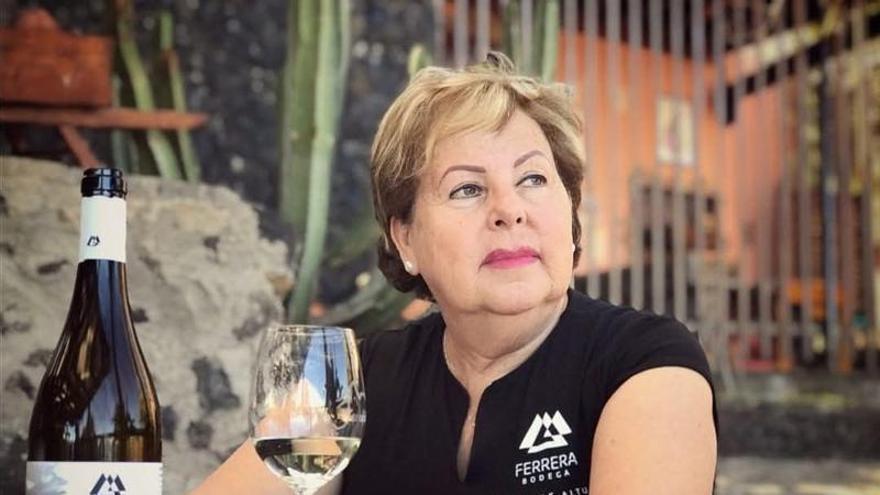
This legacy, which transcends gastronomy to become an expression of the islands’ identity, will be explored by Carmen Gloria Ferrera Tejera, head of Bodegas Ferrera in Arafo, Tenerife. She will lead the conference and tasting event titled ‘Wine: Heritage, Love and Patience’ on 15 July at 19:00, as part of the 13th ULPGC Campus of Ethnography and Folklore. This is one of the academic activities included in the programme of the 31st International Folklore Festival of Villa de Ingenio.
For Ferrera, wine cannot be understood solely as a foodstuff or consumer product. It is a cultural legacy that encapsulates the relationship between humans and the land. “Wine is probably one of the best ways to understand the passage of time. Heritage, because we are the custodians of the work and knowledge of those who came before us. Love, because nobody dedicates a lifetime to a vineyard without feeling a genuine passion for the land. And patience, because nature has its own rhythms, and wine teaches us that rushing never yields good results,” she says.
In the Canary Islands, she explains, these three words take on an even deeper meaning. “We cultivate century-old vines on challenging terrain, preserve unique varieties, and maintain an agricultural landscape that forms part of our identity.”
From historical prestige to modern recognition
For centuries, wine was one of the Canary Islands’ great calling cards. Today, after years of quiet work, the islands’ wines are once again positioning themselves among the most distinctive on the international stage. “I believe we are recovering that historical prestige. For a long time, our wines were largely unknown outside the islands, but today the opposite is true. They are receiving more and more international recognition and generating increasing interest among sommeliers, restaurants and consumers. The challenge is no longer proving that we make great wines. That is already established. The real challenge is to continue telling our story so that the world knows the enormous wine-making heritage the Canary Islands possess,” she explains.
However, she insists that success does not lie in competing with other wine regions. “I don’t think we should try to be like anyone else. Our strength is precisely in being different. We have indigenous varieties that practically don’t exist anywhere else in the world, pre-phylloxera vines, volcanic soils and an enormous diversity of microclimates. The Canary Islands play in their own league,” stresses the Tenerife winemaker.
A matriarchal legacy in the vineyards
Carmen Gloria Ferrera continues the matriarchal saga that has steered Bodegas Ferrera since its foundation, with vineyards stretching across the protected landscape of Siete Lomas in the Güímar Valley. Her grandmother and mother refused to bow to the sexism that prevented women from being involved in the wine world. She has succeeded in establishing her winery as a benchmark for the island and for Canarian wines, particularly its dry, fruity white wines, and even a sweet wine made from grapes rescued from a major fire.
Challenges at home and a changing palate
Despite international recognition, Ferrera believes there is still important work to be done within the archipelago itself. “Too often we value what comes from abroad more than what we have right on our doorstep. Yet the Canary Islands possess one of the most unique wine-making heritages in the world. Our varieties, our volcanic soils and our old vines are a legacy we must protect and be proud of,” she notes.
Traditionally, the Canarian consumer has been more associated with beer than wine, although the trend is beginning to shift. More and more people are interested in knowing the origin of their food, consuming local products and experiencing wine-related activities. Young people in particular show great curiosity when wine is presented to them in a simple, unpretentious way. But in her view, drinking wine does not necessarily mean understanding it. “It is not enough to drink wine; it is also important to know who produces it, how the vine is cultivated, what it takes to maintain that landscape, and what story lies behind each bottle. When you know all that, you stop simply buying a wine and start valuing a territory,” she says.
Experiences and the next generation
At Bodegas Ferrera, they realised long ago that the future of the sector does not depend solely on making good wines. “Today, a bottle is no longer just a product. People want to know the people behind it, walk through the vineyard, understand how the land is worked, and take home a memory. We try to ensure that those who visit us not only taste a wine, but experience something and understand the enormous effort behind every glass,” she adds.
To this challenge, another is added that particularly concerns the sector: generational renewal. “Working in the countryside requires effort, training and a great deal of dedication. If we want there to be a generational handover, we must ensure that young people see that making a living from agriculture can be a dignified, innovative project with a future. We also need society to value the work of our farmers much more. Fortunately, in my case, the succession is secured,” she assures.
Wine as cultural heritage
Within the Campus of Ethnography and Folklore, the conference proposes looking at wine from an unusual perspective: as a cultural heritage that speaks of the history of the Canary Islands with as much intensity as folk music, craftsmanship or traditions. “Wine has been part of our history for centuries. It has been present in our economy, our festivals, our gastronomy and our relationship with the world. Talking about Canarian wine is also talking about the landscape, the music, the craftsmanship and the way of understanding life in our islands,” says Ferrera.
And perhaps that idea is summed up in the invitation with which Carmen Gloria Ferrera welcomes those who try a Canarian wine for the first time: “Before you drink, close your eyes for a moment. What you have in your glass is not just wine. It is volcanic earth, the trade winds, sunshine, effort, history and the work of many generations of families who never stopped believing in this land. After the first sip, you will understand why Canarian wine moves you as much as it surprises you.”
What’s happening in the Canaries – straight to your phone
News, weather alerts and practical updates – direct from the islands, in English. We live here and know what’s going on – before the international media catch up. Everything lands on our WhatsApp channel – no middlemen, no algorithm. Curated for families, expats and travelers.

Two men injured in fall from wall in Playa de Troya
Tenerife-forged bell rings again in tiny Rioja village

Canarian journalists to discuss a world in conflict at Las Palmas theatre

Festival del Sur returns to Agüimes with theatre from three continents

Man, 24, seriously hurt in buggy crash on Gran Canaria track

Woman, 81, rescued from sea at Las Vistas beach in Adeje

Tenerife to receive ES-Alert volcano drill messages

Canary film Benito Pérez Buñuel to premiere in Venezuela

Teen rescued after ravine fall in Güímar, Tenerife