
Asian hornet colony found in urban Las Palmas
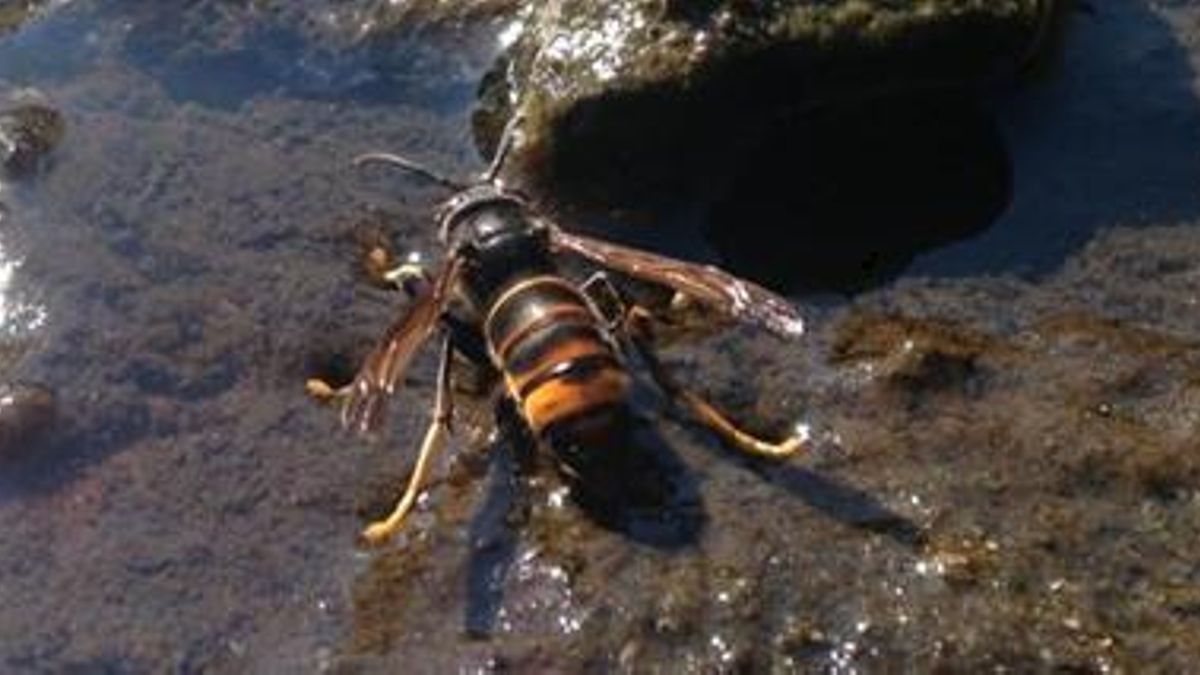
The Association for the Development of Climate Action (ADACIS) has released a guide advocating for a coordinated response against the Asian hornet (Vespa velutina ssp. nigrithorax), following the discovery of a colony containing hundreds of specimens in a tree in the urban area of Las Palmas de Gran Canaria. The guide was compiled seven months ago.
How the invasive species arrived
The Asian hornet has been classified as an invasive species in Spain since 2010. It originally entered the country from France via the northern Iberian Peninsula, often travelling as a stowaway in wooden shipping containers. From there, it spread to the Balearic Islands, where—despite considerable effort—it has not been successfully eradicated.
Why the Canary Islands are at risk
The arrival of the Asian hornet in the Canary Islands has raised serious concerns among institutions, biologists, and beekeepers. The archipelago’s ecosystems are particularly fragile, and its ports and airports see heavy traffic in goods and people. Moreover, the hornet is a highly aggressive predator, threatening more than 140 species of wild bees, 50 of which are endemic to the Canary Islands. Of particular concern is the Canarian black bee (Apis mellifera), a livestock breed that already faced significant threats—the worst being the varroa mite—before the arrival of this feared new predator.
A call for experience-based action
Ezequiel Navío, spokesperson for ADACIS, stresses that the priority now is to implement actions based on the experience of regions that have already battled the hornet using a multidisciplinary approach. He emphasises that this issue also affects public health, as the insect’s sting can pose a risk to human life. ADACIS has made the guide—published seven months ago and already warning of the risk posed by the arrival of Vespa velutina—available to both institutions and the general public. The document aims to assess the state of the Canarian beekeeping sector and propose agreed solutions to the threat.
‘Improvisation generates high economic costs’
“Improvisation generates high economic costs, puts public health at risk, and makes it difficult to contain the impact on biodiversity and, in particular, on beekeeping,” ADACIS asserts in the document. Navío praises the information and response work carried out by the Government of the Canary Islands’ Early Detection Network for Exotic Species (REDEXOS) since the news broke, describing it as “formidable”. He notes that REDEXOS has been consulting with experts, the Cabildo of Gran Canaria, Las Palmas City Council, and all other relevant authorities. He adds that it is important, during this crisis, to avoid “noise and distraction”.
Beekeepers and sentinel apiaries: the next steps
From now on, beekeepers will be best placed to assess and report the appearance of Asian hornets in their hives. To support this, the creation of sentinel apiaries at strategic points such as ports and airports has been proposed. The Government of the Canary Islands is urging the public to report any sightings by calling 1-1-2, or by sending photos or videos of hornets and nests via WhatsApp to the REDEXOS Early Detection Network on 646-601-457.
What’s happening in the Canaries – straight to your phone
News, weather alerts and practical updates – direct from the islands, in English. We live here and know what’s going on – before the international media catch up. Everything lands on our WhatsApp channel – no middlemen, no algorithm. Curated for families, expats and travelers.

Canary Islands sea hits second-hottest year on record

Legal bid to halt tree felling in Santa Cruz’s La Salud

Fiesta del Charco: A journey through La Aldea’s past

Corralejo dunes power line set for removal

ULPGC launches 14 research projects at Las Canteras

TMT will never be built, says Canary Islands astrophysics chief

Pedro Duque: Canarias is the “ultimate dream” for rockets

Court blow to Tenerife motor circuit project
La Palma faces new volcanic risk planning deadline
