Compiled with the help of artificial intelligence, based on Spanish-language information. Source below the article.
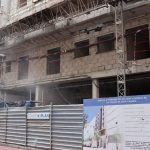
The developer of the Monte Carrera residential complex in the resort of Arguineguín, in the municipality of Mogán, has only the Supreme Court left as a route to legalise the 37 homes and three commercial units it built without a licence on the ground floor of the complex. The Canary Islands High Court of Justice (TSJC) has rejected the appeal lodged by the company Carrera Ground Floor against the first-instance ruling, which had already backed the order to restore legality issued by Mogán Council and final in administrative proceedings since 2022. The high court’s Administrative Chamber has also ordered the developer to pay the costs of the proceedings, capped at 5,000 euros. The ruling, notified to the parties last Monday (Mogán Council and the residents’ community are named as defendants), is not yet final. It can be appealed within 30 days before the Supreme Court.
A neighbour’s complaint uncovered the case in 2020
A complaint from local residents brought the case to light in 2020. The Local Police established that the company was carrying out works without a licence to knock down the walls enclosing the ground floor and convert the basements and storage areas into 37 habitable homes in the middle of the Covid-19 lockdown. Officers caught the workers on site. The original planning permission authorised the construction of 131 homes with a maximum height of two storeys. However, the developer put up a third storey that was not permitted. To avoid having to demolish the entire building, Mogán Council then allowed the ground floor to be sealed off with perimeter walls so that it would count as a basement or storage area. Years later, the company tried once again to give the building three storeys by demolishing those enclosing walls and converting the basements into homes to market them for residential use, despite having neither a municipal licence nor authorised change of use.
Demolition order became final in 2022
Following the residents’ complaint and the Local Police action, the council opened proceedings against the company in 2021 and, through its Urban Planning Discipline department, ordered the demolition of the illegal works. The resolution became final in administrative proceedings in January 2022. The developer decided to take the decision to court. Carrera Ground Floor argued that the conversion of the basements into homes had been consolidated more than four years before Mogán Council opened the urban planning discipline file and that the infringement had therefore expired. It also maintained that those homes were in a regime of “out of order” (fuera de ordenación) and could not, as a result, be demolished. The company’s thesis was that, having originally been built with three storeys (despite regulations not allowing it) and with the council having allowed it to remain that way (through the solution of sealing the basements), the building was assimilated into the “out of order” category and therefore unaffected by the order to restore urban planning legality. In support of this thesis, Carrera Ground Floor submitted an age certificate signed by the architect Sergio Álvarez in 2019. The report certified the construction state of the units at the time of the visit: it maintained that the perimeter wall did not exist and suggested that some of the basement homes were already finished, although it did not establish precisely how many.
Courts reject the developer’s arguments
Both the first-instance court, in a ruling issued in April this year, and now the TSJC have rejected the company’s arguments. Both decisions agree that the demolition of the basement walls returned the building to a state of illegality by once again exceeding the authorised number of storeys. In addition, during the oral hearing it emerged that the homes had no verification of urban planning use and no water or electricity connections. In this latest ruling, the TSJC’s Administrative Chamber, with judge Óscar Bosch as rapporteur, criticises the developer for merely reproducing verbatim in its appeal the arguments it had already put forward at first instance. The Canary Islands high court concludes that the judge weighed in a reasoned manner the technical reports, photographs, expert statements and the testimony of the Local Police officers. The TSJC therefore accepts the account given in the first-instance ruling: the complex was built with three storeys when regulations permitted two; by converting the ground floor into a basement, the works were legalised; and then, by demolishing those enclosing walls, the developer again exceeded the authorised heights. For the Chamber, this fact rules out any suggestion that the building could be considered out of order, since it was legal until that later action.
Questions over the architect’s age certificate
The court also questions the age certificate submitted by Carrera Ground Floor. The ruling stresses that the architect himself admitted that his report had not verified the urban planning use of the building or the original licence. Nor did it specify how many homes were finished. Alongside the legal battle, the developer attempted a manoeuvre to amnesty the 37 homes by processing the so-called Programme of Action on the Urban Environment (PAMU) in Loma II. That private initiative proposed handing over 625 square metres to Mogán Council for green spaces in exchange for increasing the complex’s buildable area by 3,120 square metres, the exact figure needed to legalise the basements. The plan, which had the blessing of the municipal government led by Onalia Bueno (Juntos por Mogán), ran into outright opposition from residents and the opposition. The Monte Carrera Green Garden Club residents’ community warned that the land the developer intended to exchange was not its exclusive property but common elements. After the first-instance ruling, the council was obliged to halt the plan.
“Irregular planning activity”, says Nueva Canarias
For Juan Manuel Gabella, spokesperson for Nueva Canarias (NC) in Mogán, this ruling confirms “an irregular planning activity” and highlights “the passivity with which Mogán Council has dealt with this matter”. In the view of the Nueva Canarias councillor, the government led by Bueno should have acted “more forcefully” when residents and his party reported those works in 2020. Gabella points out that it was not possible to convert those basements into homes because that third storey “was not included in the project and was not covered by the applicable regulations either”. The NC councillor recalls that the council opened the door to legalising 37 homes that already had a demolition order. “We opposed that plan in the full council meeting and, therefore, I believe it is good news for the residents who live there and, obviously, for respect for current planning regulations and a rap on the knuckles” for Onalia Bueno’s government.
What’s happening in the Canaries – straight to your phone
News, weather alerts and practical updates – direct from the islands, in English. We live here and know what’s going on – before the international media catch up. Everything lands on our WhatsApp channel – no middlemen, no algorithm. Curated for families, expats and travelers.

Canary Islands public websites locked down over PHP security flaw

How to apply for public housing in the Canary Islands

Viral meningitis outbreak hits three children on El Hierro

Canary Islands tourism chief offers dialogue on residentialisation

Canary Islands office helps small councils ditch the peseta

Two tonnes of illegal tropical fruit seized at Tenerife port

Canary Islands approves new €1.6bn development fund

Mogán mayor says her €65,000 salary is too low

Abandoned cars in Canary Islands: hundreds left to rot