Compiled with the help of artificial intelligence, based on Spanish-language information. Source below the article.
Festival fun comes to an end in Taganana
Taganana is guaranteed a weekend of fun, and this year was no exception. The festival, now in its seventh year, has been filling this picturesque village in the Anaga massif with activities, drawing to a close on Saturday 22 August after several days packed with events for all ages, which also took place in nearby spots such as San Andrés.
The heat did not deter hundreds of people from making their way to this village on Saturday, the final day of this latest instalment, to enjoy music, crafts, clowning and dance in different spaces around the village. The day ended with a real celebration of the arts, though social consciousness was never far from the surface.
A warm welcome from the start
Everyone was made to feel welcome from first thing Saturday morning, with the programme getting under way at 11:00 in the Plaza de Nuestra Señora de las Nieves, where the El Mortero de Anaga zero-kilometre craft market opened its doors. Stalls selling clothing, accessories and handmade goods clustered in the shade of the square’s trees, where impromptu craft workshops also took place, much to the delight of the younger visitors.
At this same spot, festival organisers gave away up to 100 kilos of papas autodate (a local potato variety) free of charge to visitors.
Craftsmanship with a story to tell
Onelia Morín and her daughter Elena García were among those running stalls at the market, under the banner “Tocándonos la fibra de lo nuestro” (Touching the very fibre of what is ours). Ravine bulrush, also known as espadaña, is the star of Morín’s work; she uses the plant to create baskets and bags to suit all tastes.
“Crafts need to modernise, and we need to create pieces that people will buy and can take on a plane,” said the Taganana resident, who also took part in a round-table discussion on women entrepreneurs in Anaga during the morning. The craftswoman did not stop weaving for a minute, watched intently by several children who had asked her for a masterclass in the early afternoon – a request she could hardly refuse.
Her daughter Elena, meanwhile, makes small painted postcards and earrings from prickly pear leaves. “We work with two plants that were introduced to the Canary Islands and which were precisely the ones used to make all these objects, so that they wouldn’t spread too much,” she explained.
A festival that brings people together
As Morín pointed out, the beauty of this festival, now in its seventh and final edition, lies in the mix of people it attracts. Locals from Taganana and visitors wandered through the same spaces, regardless of where they came from, learning with equal enthusiasm and enjoying the cultural offering alike.
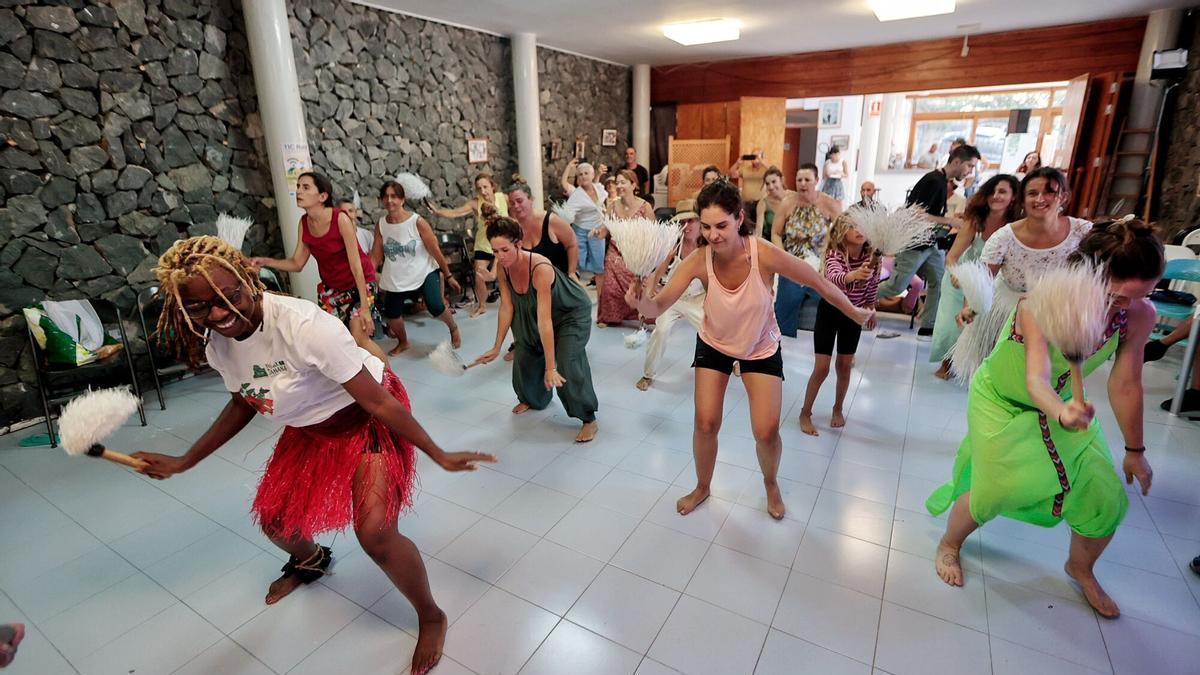
African rhythms were also very much to the fore during the day, thanks to Cameroonian band Lornoar, who ran a music and dance workshop alongside Michel Mbarga. The Anaga sociocultural centre filled with curious onlookers, mainly women, who made music and moved to the beats the guest artists introduced them to.
Music, clowning and a grand finale
Later in the afternoon, from six o’clock, the same venue hosted Fer Catastrofer, who performed the clown show “Punch! Un golpe a la apatía” (Punch! A blow against apathy).
Back in the Plaza de Nuestra Señora de las Nieves, music took centre stage for the rest of the evening with sets from DJ Carballeira, Aníbal & Lajalada and the Te Mô Dam project by Lornoar and Michel Mbarga. Tenerife’s Sara Socas then brought the day’s programme to a glittering close.
Throughout those hours, tradition and local heritage met the public through a contemporary lens. Aníbal and Lajalada, for instance, took audiences on a journey through the oldest traditional music of the Canary Islands, blending it with more modern musical allegories. Before each piece, they took the time to explain the process behind their music. They opened with tunes from La Gomera’s “new years” tradition, recounting how, in the old days, people would play music with drums and chácaras (castanets) while visiting houses around a village. They then spoke of the romance, a literary genre that originated in Europe and, musically, reached the Canary Islands after the Castilian conquest. Aníbal explained that it was then that these forms blended with rhythms that already existed in the islands, “and today they remain alive in a rather spontaneous way across the Islands,” he concluded, before launching back into song.
Eyes already on next year
The long line of cars parked along the Taganana road was the clearest sign of the interest this new edition of the festival generated. With its seventh edition now wrapped up, the organisers will surely already have the eighth firmly in their sights.
What’s happening in the Canaries – straight to your phone
News, weather alerts and practical updates – direct from the islands, in English. We live here and know what’s going on – before the international media catch up. Everything lands on our WhatsApp channel – no middlemen, no algorithm. Curated for families, expats and travelers.
Tenerife-forged bell rings again in tiny Rioja village

Canarian journalists to discuss a world in conflict at Las Palmas theatre
Festival del Sur returns to Agüimes with theatre from three continents
Man, 24, seriously hurt in buggy crash on Gran Canaria track

Woman, 81, rescued from sea at Las Vistas beach in Adeje

Tenerife to receive ES-Alert volcano drill messages

Canary film Benito Pérez Buñuel to premiere in Venezuela

Teen rescued after ravine fall in Güímar, Tenerife
Young woman dies after falling from flat in Santa Cruz de La Palma