
South Korean delegation visits Tenerife to study fog water harvesting technology
A high-level delegation of scientists and business leaders from South Korea has visited the facilities of the Canary Islands Institute for Agricultural Research (ICIA) in Tenerife. The aim of the meeting was to see first-hand the progress of the ‘Life Nieblas’ project, a pioneering initiative based on capturing water from the atmosphere for the reforestation of degraded areas, which is placing the Canary Islands on the strategic map of the global fight against desertification.
High-level meeting with scientific and government representatives
The Asian delegation was received by the Canary Islands Minister for Agriculture, Livestock, Fisheries and Food Sovereignty, Narvay Quintero, alongside the director of the ICIA, Janira Gutiérrez Peraza, the project coordinator, Carlos Regalado, and Professor Axel Ritter from the University of La Laguna. The South Korean group included experts from the National Disaster Management Research Institute (NDMI) and the Korea Research Institute for Human Settlements (KRIHS), which specialises in spatial planning, as well as an executive from the private sector.
Project inspired by the laurel forest of the Canary Islands
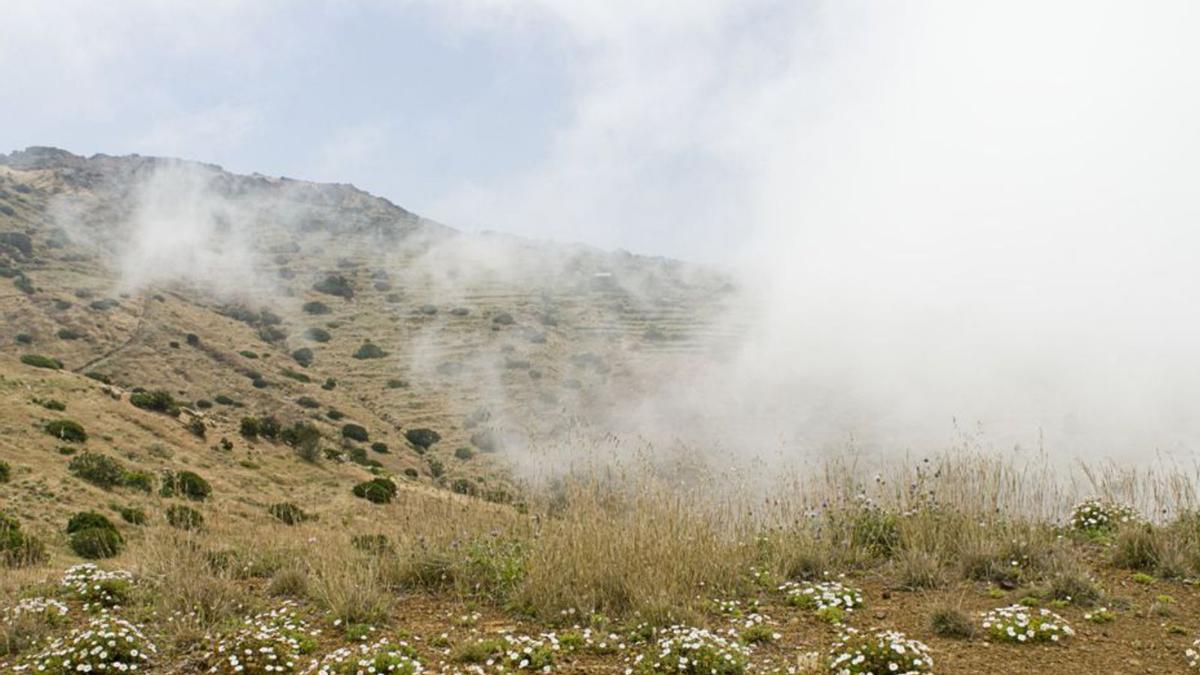
The ‘Life Nieblas’ project, which began in 2020 with funding from the European Union, is directly inspired by the natural environment of the islands, specifically the ability of laurel forest species such as the tree heather to retain ambient moisture. The system uses three-dimensional structures of vertical filaments that intercept fog droplets. The water flows by gravity into storage tanks, achieving 100% autonomous operation with zero energy consumption.
Outstanding results in Gran Canaria
During the session, Minister Narvay Quintero highlighted that the project has already been successfully tested in areas degraded by fire or deforestation in the Canary Islands, Catalonia and Portugal. It has yielded outstanding results on the island of Gran Canaria:
- 120,000 litres of water captured during the testing phase.
- 35 hectares reforested in areas severely affected by drought.
- 15,000 trees planted with a survival rate of 86%, a figure significantly higher than that achieved through traditional replanting methods.
- 175 tonnes of CO2 per year estimated capture potential thanks to the new forest mass generated.
Technical visit to ICIA laboratories and field sites
The South Korean delegation’s agenda included an exhaustive technical visit to the ICIA laboratories in Tenerife. The scientists examined the wind tunnel of the hydraulic laboratory, a state-of-the-art facility that has been key to testing and optimising the aerodynamics and efficiency of the collectors. They also travelled to Taborno in the Anaga Rural Park to see the institute’s hydrometeorological instrumentation, where the Department of Plant Production monitors soil physics, hydrological processes and real-time data acquisition, consolidating the potential of this Canarian technology to be replicated on an international scale.
What’s happening in the Canaries – straight to your phone
News, weather alerts and practical updates – direct from the islands, in English. We live here and know what’s going on – before the international media catch up. Everything lands on our WhatsApp channel – no middlemen, no algorithm. Curated for families, expats and travelers.

Canary Islands sea hits second-hottest year on record

Legal bid to halt tree felling in Santa Cruz’s La Salud

Fiesta del Charco: A journey through La Aldea’s past

Corralejo dunes power line set for removal

ULPGC launches 14 research projects at Las Canteras

TMT will never be built, says Canary Islands astrophysics chief

Pedro Duque: Canarias is the “ultimate dream” for rockets

Court blow to Tenerife motor circuit project
La Palma faces new volcanic risk planning deadline
