
Teide stirs again: New seismic pulses recorded in Tenerife
Mount Teide is showing signs of life once more. The depths of Tenerife have been shaking over the past 24 hours with several pulses of seismic activity detected by Spain’s National Geographic Institute (IGN) west of Las Cañadas del Teide—the same area that has been registering activity since 2016. This anomalous but normal behaviour for a volcanic territory began at 5:14am on 18 June.
Early morning tremor: A brief but significant pulse
During the early hours of that day, the first pulse of seismic-volcanic activity was recorded. According to the IGN, it was “very brief”, lasting just 11 minutes as vibrations rumbled through the cavities deep within the earth. But the seismic movements did not end there. Throughout yesterday afternoon and last night, several more pulses occurred, continuing until 5:21am on 19 June.
The first pulse, from 5:14am on 18 June, registered a total of 16 localised earthquakes at depths between 8 and 17 kilometres below sea level. All were almost imperceptible, with magnitudes ranging between 0.6 and 1 mbLg.
Continued activity: Dozens more events detected
Regarding the subsequent activity that began at 4:42pm yesterday (Thursday) and lasted until 5:21am today (Friday), a total of 63 seismic events have been automatically detected at the time of writing, of which 14 have been precisely located. In this case, the events were also located at depths between 8 and 15 kilometres and were even weaker than the previous ones—with magnitudes ranging between 0.4 and 0.8 mbLg.
Although most of the hypocentres are located in the western zone of Las Cañadas, as has been the case on previous occasions, this time an earthquake was also recorded near the town of Icod de los Vinos, with a magnitude of 0.3 mbLg at a depth of 2 kilometres. It is worth noting that at such a low magnitude, it is virtually impossible for the population to feel it.
Not a swarm: Experts downplay comparisons
While this may bring to mind the minor seismic crisis experienced between mid-February and early March on the island, the activity detected this time carries far less energy and, therefore, less force. As the IGN explains, these events are primarily characterised by a high content of low-frequency signals, unlike the usual volcano-tectonic events, and are classified as hybrid events. The activity from these pulses does not follow a repetitive family pattern, meaning they cannot be classified as seismic swarms. None of these events have been felt by the island’s population.
No immediate eruption risk: Expert reassurance
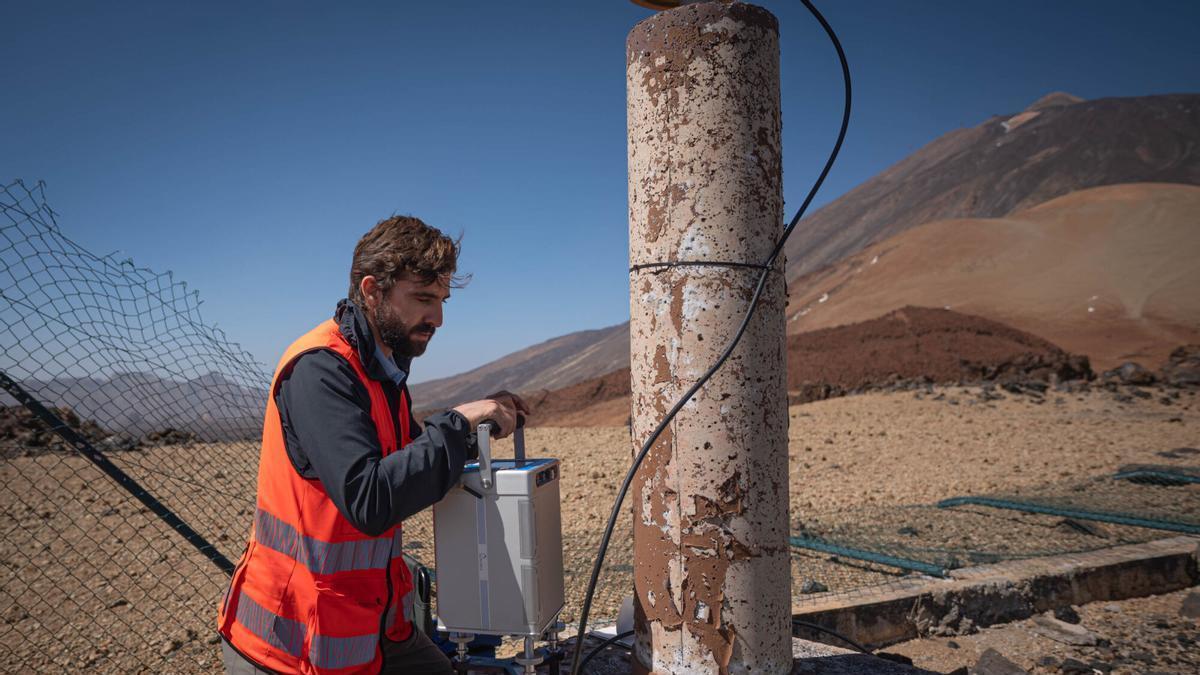
This type of activity does not increase the danger of eruption in the short or medium term on the island of Tenerife. The IGN, as the entity responsible for volcanic monitoring in Spain, has deployed a network of more than 100 stations, equipment and fixed sampling points across the island. These allow the institute to monitor and evaluate the most relevant parameters using current technology, and thereby conduct exhaustive real-time tracking of any change, alteration or anomaly in seismicity, ground deformation and geochemistry that could indicate a change in eruption risk over the short, medium or long term.
What’s happening in the Canaries – straight to your phone
News, weather alerts and practical updates – direct from the islands, in English. We live here and know what’s going on – before the international media catch up. Everything lands on our WhatsApp channel – no middlemen, no algorithm. Curated for families, expats and travelers.

Canary Islands sea hits second-hottest year on record

Legal bid to halt tree felling in Santa Cruz’s La Salud

Fiesta del Charco: A journey through La Aldea’s past

Corralejo dunes power line set for removal

ULPGC launches 14 research projects at Las Canteras

TMT will never be built, says Canary Islands astrophysics chief

Pedro Duque: Canarias is the “ultimate dream” for rockets

Court blow to Tenerife motor circuit project
La Palma faces new volcanic risk planning deadline
