
Compiled with the help of artificial intelligence, based on Spanish-language information. Source below the article.
Overnight tremors recorded near Tenerife
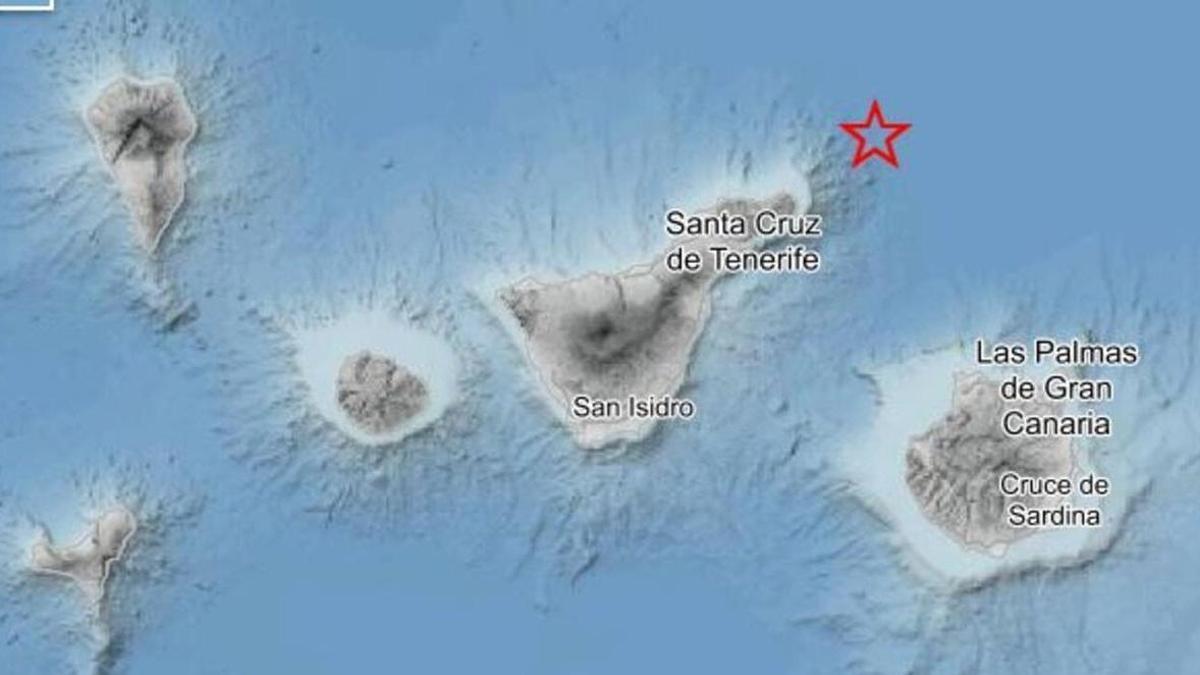
The National Geographic Institute (IGN) has reported the detection of three low-magnitude earthquakes during the early hours of this Friday, 14 August, in maritime areas close to the island of Tenerife. The seismic movements occurred in the Atlantic Ocean. According to data released by the institute, none of the tremors reached a significant magnitude, although all were registered by the seismic monitoring network that permanently tracks geological activity across the archipelago.
The strongest quake of the night
The first earthquake took place at 2.12am. The IGN placed its epicentre in the sea, to the north-east of Tenerife, and calculated a depth of 28 kilometres. The recorded magnitude was 2.2, making it the strongest of the three detected during the night.
Later, at 3.58am, a second seismic movement occurred in the Atlantic Ocean, to the west of Puerto de la Cruz. On this occasion, the earthquake reached a magnitude of 1.4 and was located at a depth of 23 kilometres.
The final episode was recorded at 5.42am. The epicentre was located in the maritime area between Tenerife and Gran Canaria, at a depth of 12 kilometres. The magnitude was 1.8, according to official IGN data.
Earlier activity this week
Earlier this week, specifically on Wednesday 12 August, the IGN recorded several earthquakes in Tenerife, including tremors to the south-east of Arico (at a depth of 23 kilometres with a magnitude of 1.2), to the south-east of Fasnia (at a depth of 24 kilometres with a magnitude of 1.7), and to the east of Arico (at a depth of 23 kilometres with a magnitude of 1.9).
Volcanic origins and constant monitoring
The Canary Islands is a region with frequent seismic activity due to its volcanic origin. Most of the movements detected by monitoring systems are of low intensity and usually go unnoticed by the population. The IGN maintains continuous surveillance of seismic and volcanic activity across the archipelago in order to detect any significant variation and provide up-to-date information to authorities and the public.
What’s happening in the Canaries – straight to your phone
News, weather alerts and practical updates – direct from the islands, in English. We live here and know what’s going on – before the international media catch up. Everything lands on our WhatsApp channel – no middlemen, no algorithm. Curated for families, expats and travelers.

Tuesday: heavy showers and storms in El Hierro

El Hierro issued yellow warning for heavy rain

Monday: autumn showers and a cooler feel

Sunday: scattered clouds and showers on the islands

Saturday: cooler air and clearing Saharan dust

Canary Islands weather: rain and storms on the way

Friday: summer heat before an autumnal weekend

Tuesday: cloud, showers and a building swell

Monday: cloud cover and scattered showers
