
Tenerife’s Enchanted Forest to Introduce Visitor Fee
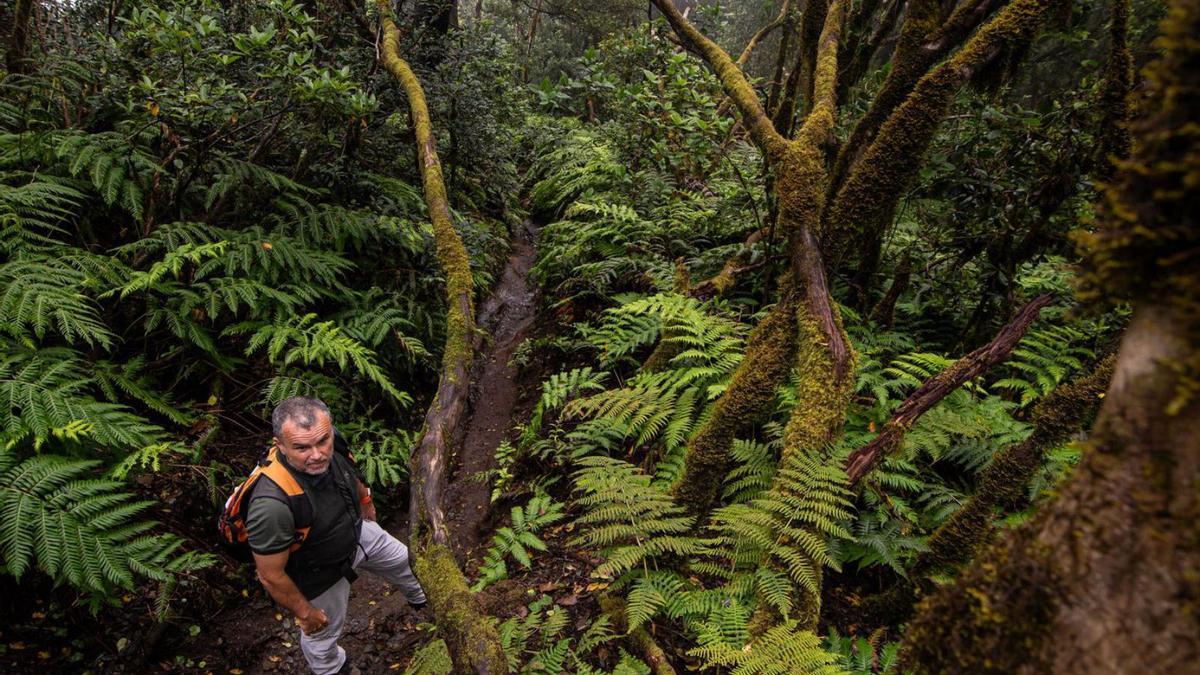
El Pijaral, on the northern slopes of the Anaga massif and known as the ‘enchanted forest’, will become the fifth trail in Tenerife to implement an ecotax. Currently, access is free but a permit is mandatory to enter one of the jewels of the island’s laurel forest, with a fine of €600 for those without one. Soon, a fee will also be required. The Tenerife Island Council is already working to activate charges for non-residents accessing this highly protected path.
A Strategy for Sustainable Access
This forms part of the insular government’s plan to increase the number of spaces with access limitations—either via a permit or an ecotax—based on carrying capacity. In El Pijaral, for example, no more than 100 people are allowed per day. The Council is extending the ecotax to one of the most in-demand regulated sites; reservations for El Pijaral are fully booked every single day of the year. Excluding those who did not use their permits, over 31,000 hikers traversed this ‘vegetal dinosaur’ last year.
Currently, the island has 41 trails or natural spaces where authorisation must be requested—via the online platform Tenerife On—or a fee paid for activities. Soon there will be more. The island’s Minister for the Natural Environment, Blanca Pérez, confirmed the expansion of this model, detailing that its aim is “the protection and conservation of the island’s privileged nature,” noting that 53% of its territory has some form of protected status. “The model works. Requiring a self-authorisation or charging an ecotax are protective and dissuasive measures to control the most valuable zones, reducing pressure.” Technical staff from the Natural Environment department will study each case so that measures restricting entry are adapted to the characteristics of each area. The next site has already been decided.
Existing Ecotax Sites and Their Impact
El Pijaral follows in the footsteps of four other points already regulated with an ecotax: the Barranco del Infierno in Adeje (managed by an external company), the Barranco de Masca in Buenavista del Norte, and the two trails ascending to the peak of Mount Teide (La Rambleta and Telesforo Bravo). For Masca and Teide, access is free for residents, while those not on the local register must pay €15. At Barranco del Infierno, non-resident adults pay €15 and residents pay €5.
The first natural space to incorporate the ecotax this political term was the Barranco de Masca. The traffic jams caused by mass visitor access to one of Tenerife’s most impressive trails led to limits being placed in 2021, with charges introduced from 2024. Last year it received 24,000 visits, and its visitor centre welcomed 85,482 people. Another example of a restricted trail—where booking is required though free—is the path from La Asomada to Cruz de Afur in Monte Aguirre, Anaga, which received 6,262 visits in 2025.
Beyond Fees: Permits and Other Regulations
Beyond financial restrictions, Tenerife has another 37 natural spaces that also have some type of regulation requiring a permit obtained via a reservation. The two access trails to the peak of Mount Teide began charging the ecotax on 19 January. In the first 15 days of operation, they received 3,000 people with a maximum daily capacity of 300 each. Yesterday marked three months since the payment model was implemented, and the pace of visits remains steady. Thus, in these first months of the year, this trail is nearing 20,000 visitors—not far from the over 31,000 that El Pijaral received in all of 2025.
Barranco del Infierno is a peculiar case among regulated sites. Entry management is handled by Adeje Town Council, which outsourced its control via a concession to a private company. Last year’s attendance data provided by the southern council indicates over 49,000 people visited. The daily capacity is 300 visitors, and safety measures for access mandate the use of a helmet; in most cases, routes are accompanied by an official guide.
Camping, Motorhomes and Managing Demand
Limits are not only on trails. Authorisation is also required to camp with a tent in any of the 15 designated zones. In 2025, over 42,000 spots were reserved for this activity. One problem detected by the island government in this area is the multiplicity of bookings for the same date—where one person reserves a spot in different areas for the same period and decides on one at the last minute, leaving others without an option. The Natural Environment department is also working to end this behaviour through Tenerife On.
Regarding wild camping (in the open air), there were 2,812 reservations across four zones located in Teide National Park: Guajara, Pico Viejo, Montaña Blanca and El Teide. Another model of nature enjoyment the island corporation wants to improve is motorhome tourism, which has seen a large increase in practitioners in recent years. Last year, over 27,000 requests were registered from motorhomers. Touring tourism is one of the main headaches. In terms of the Natural Environment remit, there are five areas for parking these house-vehicles, though they lack eco-points (for dumping black and grey water). The Council is working on Montaña Roja in El Médano and on constructing a new motorhome area in Pinalito, on the southern side of the Corona Forestal.
Addressing Overtourism in Natural Spaces
The passion for outdoor activities soared after the Covid-19 pandemic. Six years later, the fever for the environment—and for collecting landscapes on social media—continues, adding to the immense number of tourists (over 7.5 million in 2025) who visit Tenerife. The overcrowding of some natural enclaves forces the Council to increase regulation. One of the main black spots is Anaga, due to its proximity to the metropolitan area. It suffers daily road blockages that anger the inhabitants of the hamlets. Some of the measures to be adopted were discussed last Thursday in a meeting between residents, the island institution, and the town councils of Santa Cruz and La Laguna. Besides access controls, the implementation of a shuttle bus system to facilitate entry without the need for a private vehicle is under study.
How to Book Your Visit
Most natural spaces dependent on the Tenerife Island Council channel their reservations through the Tenerife On platform (www.tenerifeon.es). On this portal, you can book and request the necessary permits for hiking trails, wild camping zones, tent camping, or motorhomes, as well as for managing large groups in recreational areas. Rock climbing and canyoning also depend on the island entity but are not managed on this website. The regulated sites for canyoning are Los Carrizales and Lomo Morín (Buenavista del Norte), Chimoche (Güímar) and Los Arcos (La Orotava). For climbing, there are two regulated points: the Risco de Guaria (Guía de Isora) and El Roquito (Arona).
What’s happening in the Canaries – straight to your phone
News, weather alerts and practical updates – direct from the islands, in English. We live here and know what’s going on – before the international media catch up. Everything lands on our WhatsApp channel – no middlemen, no algorithm. Curated for families, expats and travelers.

Canary Islands sea hits second-hottest year on record

Legal bid to halt tree felling in Santa Cruz’s La Salud

Fiesta del Charco: A journey through La Aldea’s past

Corralejo dunes power line set for removal

ULPGC launches 14 research projects at Las Canteras

TMT will never be built, says Canary Islands astrophysics chief

Pedro Duque: Canarias is the “ultimate dream” for rockets

Court blow to Tenerife motor circuit project
La Palma faces new volcanic risk planning deadline
