
‘Deeply disappointing’: Loro Parque boss hits out at beach closures
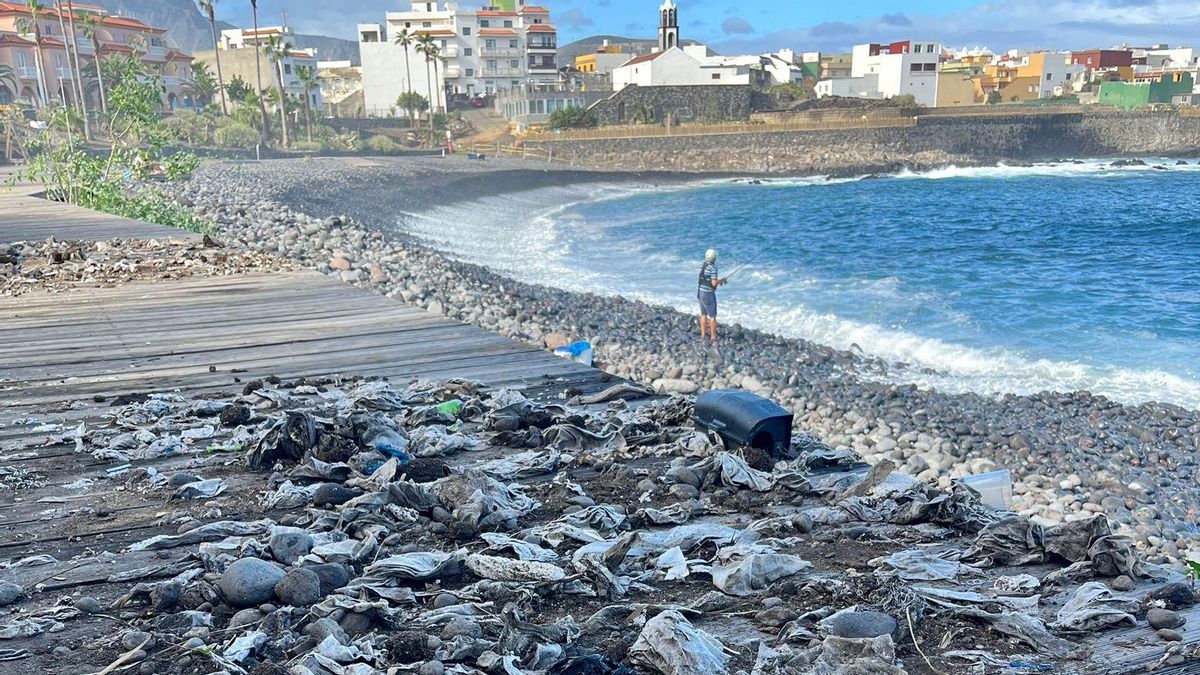
The director of the Loro Parque Group, Cybell Kiessling, has expressed serious concern and frustration over the critical situation affecting the Canary Islands’ coastline this summer. With several of Tenerife’s most iconic beaches closed, the businesswoman has called for institutional responsibility to guarantee the safety and enjoyment of the islands’ natural heritage.
“I am Canarian. Summer arrives and all we want is to enjoy our beaches. Yet many remain closed because of rockfalls, pollution, E. coli,” Kiessling declared. “It’s sad. Very sad. And deeply disappointing,” she added.
Which beaches are closed?
Kiessling’s complaint comes amid a series of preventive closures affecting parts of the island. Recently, Granadilla de Abona council in southern Tenerife was forced to temporarily close Leocadio Machado Beach in El Médano after detecting levels of the Escherichia coli (E. coli) bacterium above the permitted limit for bathing. But it is not the only one. Preventive closures have also been imposed at other beaches including Candelaria, Playa Jardín, Playa de Troya and El Puertito in Tenerife; Playa Blanca in Arrecife (Lanzarote); and El Confital in Gran Canaria.
In addition to poor water quality, there is also the risk of geological hazards. Currently, seven emblematic coastal spots on Tenerife remain closed due to the danger of rockfalls from cliffs and slopes. Among the affected locations are beaches of great scenic and tourist value, including Los Patos in La Orotava, Benijo and Las Gaviotas in Santa Cruz, La Consolación beach in Garachico, Los Barqueros in Buenavista del Norte, Santo Domingo in La Guancha and the Tabaiba rock pool in El Rosario.
A blow to tourism and local life
Cybell Kiessling placed particular emphasis on the damage this situation causes both to the local population and to the archipelago’s main industry: tourism. “Not only for those of us who live here, who deserve to enjoy our coastline safely, but also for the image we project abroad,” she stressed. “For a destination that leads international tourism, the lack of access to beaches is a severe blow to the islands’ competitiveness.”
“Thousands of tourists choose the Canary Islands for their beaches and find red flags and closed access points,” Kiessling lamented, insisting that the management of these spaces should be a matter of state for the competent authorities. She reminded that “the success of the Canary Islands as a destination depends on the health of its ecosystems and the efficiency of its public infrastructure. Looking after our beaches should not be an option or a debate. It should be a priority,” she concluded.
Unauthorised sewage: hundreds of outlets polluting the sea
Urban and tourist development pressure, along with historic deficits in sanitation and wastewater treatment infrastructure, have encouraged discharges into the sea across the Canary Islands. The majority of these are not authorised. According to the latest discharge census updated by the Canary Islands Government, the islands have 403 discharge points from land to sea. Of these, 361 are active and 216 are operating without authorisation.
Tenerife is the island with the most discharge points, with 180, followed by Gran Canaria with 115. This means that the two capital islands concentrate 295 land-to-sea outflows (81.72 per cent of the total). Many of these points affect protected marine waters.
‘A very serious public health problem’
“This is a very serious public health problem,” warns the president of the Canarian Business Association of Environmental Consultants (AECCM), Juan Rumeu. The association receives complaints every month from people who go to the beach and end up in A&E with viruses derived from faecal bacteria. “It happens more often than we think,” he asserts. He also criticises attempts to eliminate contamination by committing another irregularity: disinfecting with hypochlorites that “generate other harmful elements for health” due to the reaction of chlorine with organic matter. AECCM has asked the public authorities to explain what scientific evidence these treatment methods are based on.
Recently, the director of the ECOAQUA University Institute, Ricardo Haroun, warned of the serious consequences of wastewater and brine discharges on the marine fauna and flora of the Canary Islands. In his view, the loss of quality of coastal waters not only affects biodiversity and the benefits generated by marine habitats, but can also have consequences for the health of bathers, both locals and the many tourists who use the coastline. He considers it urgent to put this issue on the political agenda. The expert urged the competent authorities to urgently promote “more effective and sustained management models over time”.
EU court condemns Spain over sewage treatment failures
This issue was highlighted at the first Regional Meeting of the Scientific Councils of the Canary Islands Biosphere Reserves, held recently in Puerto del Rosario (Fuerteventura), sponsored by the Canary Islands Network of Biosphere Reserves (RCRB) of the Canary Islands Government. One of the most prominent topics was precisely the general concern over the loss of biodiversity, particularly in the marine environment.
The Court of Justice of the European Union (CJEU) has condemned Spain for failing to meet its obligations on the treatment of urban wastewater. The ruling, handed down on 18 December last year, concludes that the Spanish state has not adopted the necessary measures to guarantee the correct treatment of urban wastewater in various parts of the country, the majority in Tenerife, before it is discharged into the sea.
What’s happening in the Canaries – straight to your phone
News, weather alerts and practical updates – direct from the islands, in English. We live here and know what’s going on – before the international media catch up. Everything lands on our WhatsApp channel – no middlemen, no algorithm. Curated for families, expats and travelers.

Rain alert declared for El Hierro as La Palma stays on pre-alert

Wednesday: showers and unstable air across the Islands

Tuesday: heavy showers and storms in El Hierro

El Hierro issued yellow warning for heavy rain

Monday: autumn showers and a cooler feel

Sunday: scattered clouds and showers on the islands

Saturday: cooler air and clearing Saharan dust

Canary Islands weather: rain and storms on the way

Friday: summer heat before an autumnal weekend
