First works finished under Teide’s new management plan
The Cabildo of Tenerife has renovated the car parks at two of the most important sites in Teide National Park, marking the first completed project under the island authority’s new Park Management Plan (PRUG), which came into force in December 2025. The sites in question are the La Ruleta viewpoint – the most popular in the protected area, offering stunning views of the Llano de Ucanca, Las Cañadas and the Roques de García – and the Cañada Blanca Visitor Centre, another of the busiest spots at the summit of Spain. The two sites sit side by side, separated only by the TF-21 road that cuts through this landscape.
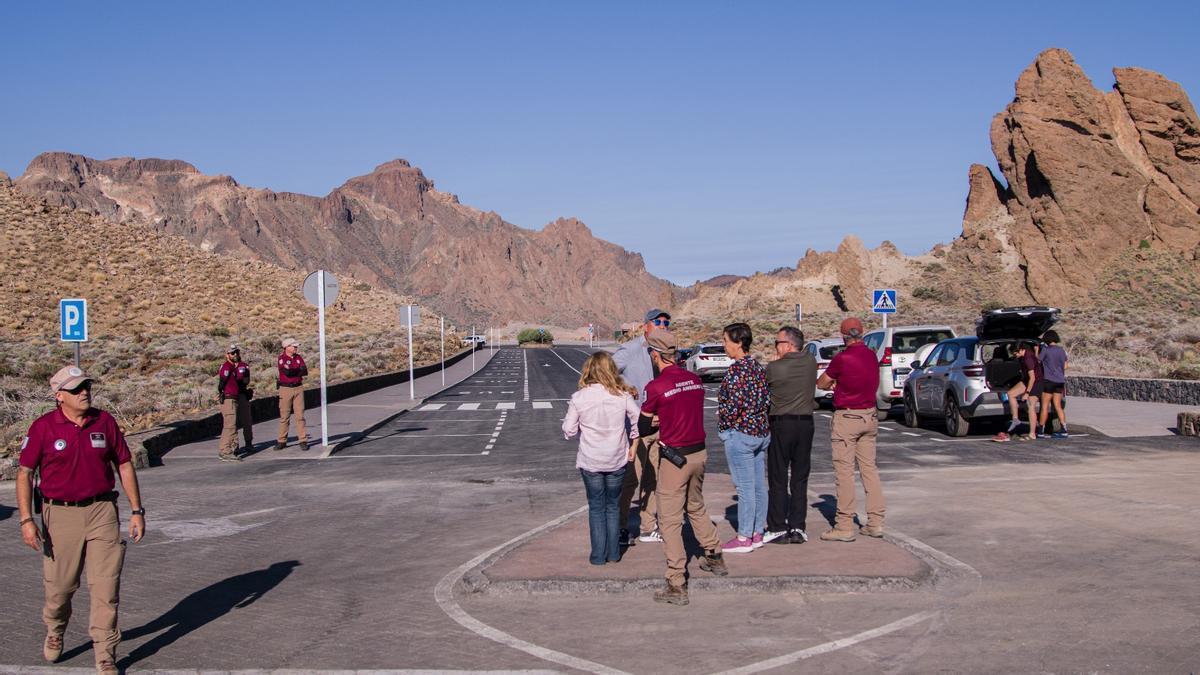
The works, which began before the new PRUG came into force, are the first to be completed under this planning framework for the most visited national park in Europe, which attracts five million people each year. The project organises access points, improves safety across the hundred or so parking spaces, and makes it easier for people with disabilities to move around. These car parks are directly linked to one of the main challenges facing the new management document: reorganising mobility within the National Park and preventing the concentration of vehicles and visitors from damaging the most frequented areas.
Eighty cars and fourteen coaches
Both spaces now have capacity for 80 cars and 14 coaches across an area of around 7,500 square metres. The works have involved an investment of €1.3 million, financed by European Next Generation funds and carried out by the public company Tragsa. The project has completely transformed the functionality of both zones. More than 5,000 square metres of road surface have been resurfaced, and nearly 2,500 square metres of pavement have been widened, with routes designed to channel visitor flow and prevent people from stepping onto natural terrain or crossing the road at unsafe points.
Accessibility has been a key focus of the project. The spaces now feature dropped kerbs, tactile paving and adapted areas for people with reduced mobility – options that were previously very limited in this part of the National Park. The island’s Councillor for Natural Environment and Sustainability, Blanca Pérez, said the work means there is now a “more spacious, orderly and safe car park”. She added: “Previously, there were no suitable conditions for accessing the area with adapted vehicles or wheelchairs – a problem that has now been resolved.”
Permanent surveillance to prevent misuse
The Cabildo will accompany the reopening with permanent surveillance to prevent a repeat of improper use. The aim is to stop parking outside designated areas, reduce dangerous manoeuvres, and prevent vehicles from occupying sensitive natural spaces. The organisation of coach parking has taken on particular importance in the new management model for Teide. The island’s Director of Natural Environment, Pedro Millán, said the future of the area lies in promoting collective transport over private vehicles. The expansion and reorganisation of coach spaces will improve the operation of both public transport and tourist services. The goal is for vehicles to drop off and pick up passengers without blocking traffic or creating hazardous situations.
Volcanic stone and circular economy
The works have also followed criteria of environmental integration and the circular economy. The project avoided the use of concrete and materials considered incompatible with the surroundings. Instead, natural volcanic stone was reused from other areas of the park and from previous demolitions. This choice reduces waste, improves the durability of the infrastructure and maintains a look that blends in with the volcanic landscape. The work was also carried out in challenging conditions due to the altitude and weather, which forced construction rhythms to be adapted.
La Ruleta and Cañada Blanca are two of the main access points to the Roques de García, the Parador Nacional hotel and several of the most popular trails in the National Park. The high volume of visitors had made parking a frequent source of problems, with badly parked vehicles, pedestrians crossing the road and visitors straying into unauthorised areas.
What’s happening in the Canaries – straight to your phone
News, weather alerts and practical updates – direct from the islands, in English. We live here and know what’s going on – before the international media catch up. Everything lands on our WhatsApp channel – no middlemen, no algorithm. Curated for families, expats and travelers.

Work on TF-5 third lane between Guamasa and Los Rodeos to start in November

Canary Islands international air arrivals fall 1.3% in September
Helicopter evacuates US cruise passenger near Tenerife
El Hierro airport sees 3.6% rise in September passengers
Gran Canaria approves €509k works to shore up GC-200 slope
Canary Islands gets €47.5m for free public transport in 2026
Canary Islands airports see 0.9% fall in September passengers
El Rejo road in La Gomera to close for six hours on Tuesday
Man, 65, seriously injured in GC-1 crash in Agüimes