
According to the platform, the vast majority of the structural measures that were supposed to provide a lasting solution are either still pending or significantly behind schedule, with a lack of transparency throughout the process. The key projects include the installation of tertiary treatment at the wastewater treatment plant (WWTP), the expansion of the district treatment plant, the rehabilitation of the submarine outfall at Punta Brava, auxiliary filter wells, the regularisation of pumping stations (EBAR), and a complete overhaul of the sewer network in the Punta Brava neighbourhood. The association is also demanding more information about water quality testing and how some of these facilities are actually operating.
Tertiary treatment: still not up to full capacity
“There’s a huge difference between resolving an emergency and fixing the underlying problem,” the group warns. The Cabildo of Tenerife and BALTEN, the public body responsible for supplying water for agricultural irrigation, pushed ahead with installing tertiary treatment at the district WWTP – a facility that had been planned since the plant was first built in the 1990s but only materialised in 2025. Tertiary treatment is an additional purification stage designed to further improve the quality of already-treated water and allow it to be reused. In this case, the aim was to pump the water to the La Cruz Santa reservoir to supply crops in Los Realejos and the wider Orotava Valley.
The problem, however, is that although the system was installed by 2025, the Cabildo announced it would begin operating partially in May and at full capacity by June. Yet BALTEN’s own technical documentation shows that commissioning was only carried out on a trial basis, and the project suffered repeated deadline extensions. The completion date was initially set for 1 June 2025, then pushed back to 1 October that same year, and later to 1 March 2026, mainly due to delays in the supply of medium-voltage cells. According to that report, pumping to La Cruz Santa was first tested on 2 June last year, and the first sustained pumping did not happen until 10 June, still within a commissioning period that remained open-ended.
Although the documents state that 93,008 cubic metres had been pumped to the reservoir so far, the platform questions whether the stated objective can really be considered met while the network is still being tested and is not yet operating at a fully established level. Official data from the island’s primary sector department reveals that the system currently treats only around 7,000 cubic metres per day. This represents barely a third of the total flow received by the treatment plant (estimated at some 20,000 m³ per day). As a result, the remaining 13,000 cubic metres per day go without the necessary tertiary treatment. Because this water does not meet the legally required quality for agricultural irrigation, this huge volume cannot be used for farmland and ends up being wasted, discharged into the sea.
Plant expansion delayed until at least 2028
As for the expansion of the district WWTP, the Cabildo maintains that work has already begun following the signing of the site start-up minutes around a month ago, with an investment of nearly €21 million. However, on the ground, there is no sign of earthworks or any real start to the project. The scheme, initially presented as urgent, ended up going through the ordinary administrative process, which extends its completion period to 37 months, pushing the finish date to at least 2028. For the campaign group, this gap between administrative deadlines and reality points to a hidden paralysis. They also warn that “the expansion could be undersized from the outset to cope with the projected growth of all the Valley’s municipalities.”
Adding to this, the Tenerife Island Water Council published a notice on Friday 12 June in the Official Bulletin of the Province, opening a new period of public information and consultation as part of the ordinary Environmental Impact Assessment for the planned expansion of the district WWTP for the Orotava Valley. The body argues that the inclusion of new technical documentation makes it necessary to re-submit part of the file for public consultation – a step that confirms the project is still stuck in its administrative and environmental phase.
Punta Brava outfall remains stalled
Meanwhile, the replacement of the submarine outfall at Punta Brava has still not begun, despite the contract being awarded a year ago, with a 16-month execution period. For Stop Vertidos, this delay is yet another sign of inaction. The group insists that “this is a priority project to guarantee the environmental safety of the final discharge and protect the coastline,” but complains that “there is no work on the outfall” and that, a year on, “the project is still at a standstill.” The Cabildo, for its part, states that the contract has been awarded to Ferrovial, that auxiliary works costing over €1 million have already been carried out for filter wells, and that the direct intervention has not yet started due to a lack of a good weather window in an area that is particularly challenging for underwater work. The reality, however, is that the key infrastructure needed to resolve the discharge problem is still not materialising.
Lack of transparency over filter wells and pumping stations
Adding to all this, there is no public information available about the work on the auxiliary filter wells, designed to temporarily divert wastewater or partially treated water into the subsoil in order to reduce discharges into the sea. According to local residents, “fundamental aspects such as their design, specific purpose, capacity, environmental controls or risk assessment” are unknown. Likewise, there is no information on the current status of the EBAR pumping stations at El Caletón, Playa Chica and Playa Jardín, whose job is to pump sewage towards the treatment plant.
Between 2023 and 2025, various disciplinary proceedings brought by the Natural Environment Protection Agency, the Directorate General for Public Health and the Environment Public Prosecutor’s Office revealed that these stations and their emergency overflows were operating illegally. Technical reports from these bodies confirmed that the facilities did not have the required environmental permits and that the legalisation procedures had not been completed. This meant that when the pumps became overwhelmed, they ended up discharging raw sewage into the sea without the mandatory permission required by the Coastal Law.
Old sewer network renewal at risk of losing funding
Furthermore, there is still no evidence that the project to completely renew the old sewer network in Punta Brava has even been drawn up. Although the Cabildo granted a subsidy of nearly €1 million to carry out the work, the lack of this administrative step prevents the project from being put out to tender. This delay not only perpetuates leaks of dirty water into the sea, but also puts the funding at risk, as it could be lost if it is not justified in time. While the town council remains silent on the EBAR stations, the sewers and the filter wells, Stop Vertidos denounces that Punta Brava is piling up announcements with no real solutions.
Water quality claims disputed
The Cabildo, for its part, insists on “stating and making clear that the water quality is excellent, both for bathing and for regeneration.” The campaign group responds: “The fact that the test results are within legal parameters does not mean that all the problems are solved. As long as the tertiary treatment is not working at full capacity, a significant proportion still depends on disinfection using sodium hypochlorite.” The application of chlorine to wastewater with a high organic load can encourage the formation of disinfection by-products, including trihalomethanes and other organohalogen compounds – substances that are potentially carcinogenic and highly toxic. These not only pose a long-term risk to public health for swimmers, but also cause serious ecological damage.
The reopening of Playa Jardín cannot be considered a closed case while the key infrastructure remains incomplete, delayed, or lacking the necessary transparency. The Stop Vertidos al Mar platform maintains that, although there have been minor advances, doubts persist over the entire sewage treatment system, as well as the real quality of the water and its possible by-products. For this reason, it is calling for public information, updates to the projects, and a comprehensive, definitive response that does not merely allow bathing, but guarantees effective protection of the coastline and structurally resolves a problem which, they warn, “is still not solved.”

How to apply for public housing in the Canary Islands

Viral meningitis outbreak hits three children on El Hierro

Canary Islands tourism chief offers dialogue on residentialisation

Canary Islands office helps small councils ditch the peseta

Two tonnes of illegal tropical fruit seized at Tenerife port

Canary Islands approves new €1.6bn development fund

Mogán mayor says her €65,000 salary is too low

Abandoned cars in Canary Islands: hundreds left to rot
Work resumes on 27 affordable rental homes in Las Palmas

Los Realejos residents fight on against propane gas plant
Doubts persist over sewage infrastructure a year on from Playa Jardín reopening
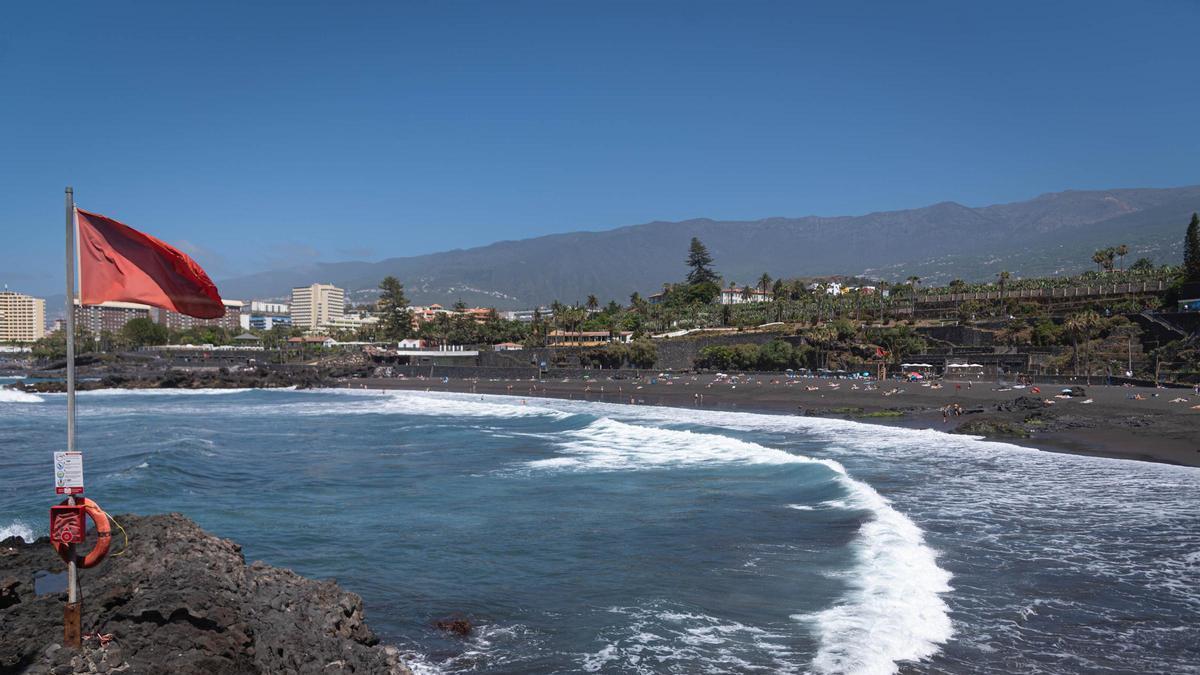
Just days before the first anniversary of the reopening of Playa Jardín in Puerto de la Cruz, the campaign group Stop Vertidos al Mar (Stop Dumping at Sea) has thrust the state of the town’s sewage infrastructure back into the spotlight, linking it to one of the most serious environmental incidents the municipality has ever seen. The beach reopened for bathing on 17 June 2025, after being closed for nearly a year due to dangerously high levels of faecal contamination in its waters. Now, a year later, with the coastline open to the public once more, the group believes serious questions remain over how much of the planned work has actually been carried out, and whether the ultimate solution to the sewage discharge problem is truly guaranteed.
According to the platform, the vast majority of the structural measures that were supposed to provide a lasting solution are either still pending or significantly behind schedule, with a lack of transparency throughout the process. The key projects include the installation of tertiary treatment at the wastewater treatment plant (WWTP), the expansion of the district treatment plant, the rehabilitation of the submarine outfall at Punta Brava, auxiliary filter wells, the regularisation of pumping stations (EBAR), and a complete overhaul of the sewer network in the Punta Brava neighbourhood. The association is also demanding more information about water quality testing and how some of these facilities are actually operating.
Tertiary treatment: still not up to full capacity
“There’s a huge difference between resolving an emergency and fixing the underlying problem,” the group warns. The Cabildo of Tenerife and BALTEN, the public body responsible for supplying water for agricultural irrigation, pushed ahead with installing tertiary treatment at the district WWTP – a facility that had been planned since the plant was first built in the 1990s but only materialised in 2025. Tertiary treatment is an additional purification stage designed to further improve the quality of already-treated water and allow it to be reused. In this case, the aim was to pump the water to the La Cruz Santa reservoir to supply crops in Los Realejos and the wider Orotava Valley.
The problem, however, is that although the system was installed by 2025, the Cabildo announced it would begin operating partially in May and at full capacity by June. Yet BALTEN’s own technical documentation shows that commissioning was only carried out on a trial basis, and the project suffered repeated deadline extensions. The completion date was initially set for 1 June 2025, then pushed back to 1 October that same year, and later to 1 March 2026, mainly due to delays in the supply of medium-voltage cells. According to that report, pumping to La Cruz Santa was first tested on 2 June last year, and the first sustained pumping did not happen until 10 June, still within a commissioning period that remained open-ended.
Although the documents state that 93,008 cubic metres had been pumped to the reservoir so far, the platform questions whether the stated objective can really be considered met while the network is still being tested and is not yet operating at a fully established level. Official data from the island’s primary sector department reveals that the system currently treats only around 7,000 cubic metres per day. This represents barely a third of the total flow received by the treatment plant (estimated at some 20,000 m³ per day). As a result, the remaining 13,000 cubic metres per day go without the necessary tertiary treatment. Because this water does not meet the legally required quality for agricultural irrigation, this huge volume cannot be used for farmland and ends up being wasted, discharged into the sea.
Plant expansion delayed until at least 2028
As for the expansion of the district WWTP, the Cabildo maintains that work has already begun following the signing of the site start-up minutes around a month ago, with an investment of nearly €21 million. However, on the ground, there is no sign of earthworks or any real start to the project. The scheme, initially presented as urgent, ended up going through the ordinary administrative process, which extends its completion period to 37 months, pushing the finish date to at least 2028. For the campaign group, this gap between administrative deadlines and reality points to a hidden paralysis. They also warn that “the expansion could be undersized from the outset to cope with the projected growth of all the Valley’s municipalities.”
Adding to this, the Tenerife Island Water Council published a notice on Friday 12 June in the Official Bulletin of the Province, opening a new period of public information and consultation as part of the ordinary Environmental Impact Assessment for the planned expansion of the district WWTP for the Orotava Valley. The body argues that the inclusion of new technical documentation makes it necessary to re-submit part of the file for public consultation – a step that confirms the project is still stuck in its administrative and environmental phase.
Punta Brava outfall remains stalled
Meanwhile, the replacement of the submarine outfall at Punta Brava has still not begun, despite the contract being awarded a year ago, with a 16-month execution period. For Stop Vertidos, this delay is yet another sign of inaction. The group insists that “this is a priority project to guarantee the environmental safety of the final discharge and protect the coastline,” but complains that “there is no work on the outfall” and that, a year on, “the project is still at a standstill.” The Cabildo, for its part, states that the contract has been awarded to Ferrovial, that auxiliary works costing over €1 million have already been carried out for filter wells, and that the direct intervention has not yet started due to a lack of a good weather window in an area that is particularly challenging for underwater work. The reality, however, is that the key infrastructure needed to resolve the discharge problem is still not materialising.
Lack of transparency over filter wells and pumping stations
Adding to all this, there is no public information available about the work on the auxiliary filter wells, designed to temporarily divert wastewater or partially treated water into the subsoil in order to reduce discharges into the sea. According to local residents, “fundamental aspects such as their design, specific purpose, capacity, environmental controls or risk assessment” are unknown. Likewise, there is no information on the current status of the EBAR pumping stations at El Caletón, Playa Chica and Playa Jardín, whose job is to pump sewage towards the treatment plant.
Between 2023 and 2025, various disciplinary proceedings brought by the Natural Environment Protection Agency, the Directorate General for Public Health and the Environment Public Prosecutor’s Office revealed that these stations and their emergency overflows were operating illegally. Technical reports from these bodies confirmed that the facilities did not have the required environmental permits and that the legalisation procedures had not been completed. This meant that when the pumps became overwhelmed, they ended up discharging raw sewage into the sea without the mandatory permission required by the Coastal Law.
Old sewer network renewal at risk of losing funding
Furthermore, there is still no evidence that the project to completely renew the old sewer network in Punta Brava has even been drawn up. Although the Cabildo granted a subsidy of nearly €1 million to carry out the work, the lack of this administrative step prevents the project from being put out to tender. This delay not only perpetuates leaks of dirty water into the sea, but also puts the funding at risk, as it could be lost if it is not justified in time. While the town council remains silent on the EBAR stations, the sewers and the filter wells, Stop Vertidos denounces that Punta Brava is piling up announcements with no real solutions.
Water quality claims disputed
The Cabildo, for its part, insists on “stating and making clear that the water quality is excellent, both for bathing and for regeneration.” The campaign group responds: “The fact that the test results are within legal parameters does not mean that all the problems are solved. As long as the tertiary treatment is not working at full capacity, a significant proportion still depends on disinfection using sodium hypochlorite.” The application of chlorine to wastewater with a high organic load can encourage the formation of disinfection by-products, including trihalomethanes and other organohalogen compounds – substances that are potentially carcinogenic and highly toxic. These not only pose a long-term risk to public health for swimmers, but also cause serious ecological damage.
The reopening of Playa Jardín cannot be considered a closed case while the key infrastructure remains incomplete, delayed, or lacking the necessary transparency. The Stop Vertidos al Mar platform maintains that, although there have been minor advances, doubts persist over the entire sewage treatment system, as well as the real quality of the water and its possible by-products. For this reason, it is calling for public information, updates to the projects, and a comprehensive, definitive response that does not merely allow bathing, but guarantees effective protection of the coastline and structurally resolves a problem which, they warn, “is still not solved.”