Holiday rentals at the heart of the housing crisis debate
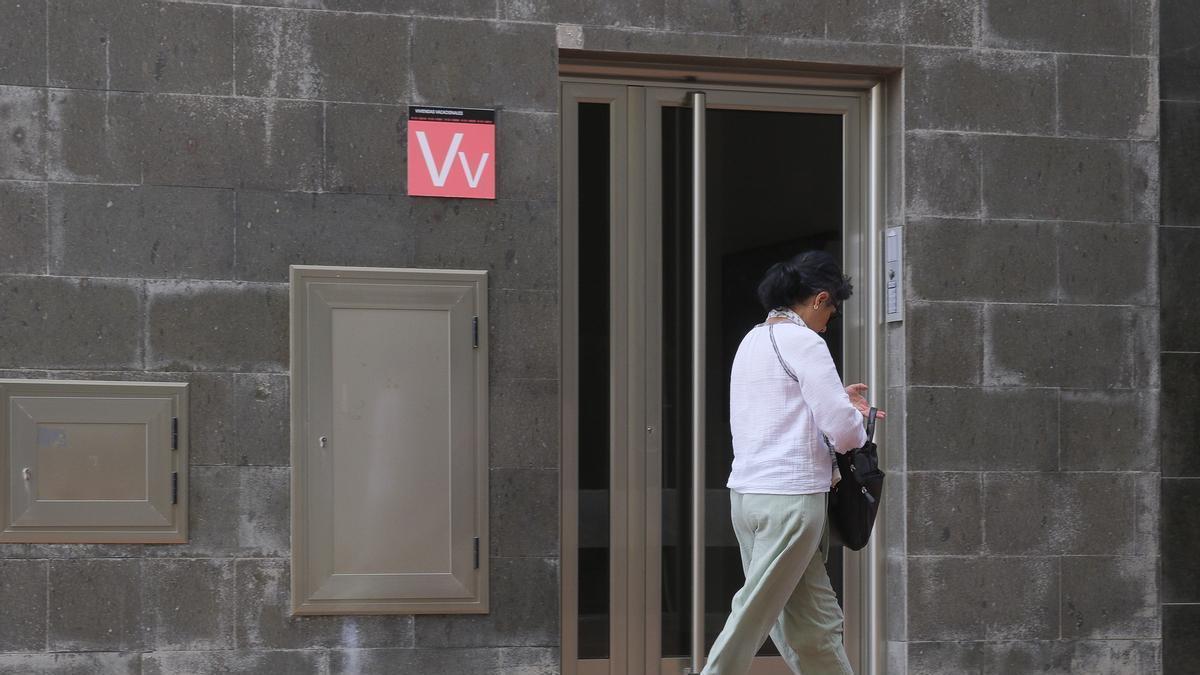
Holiday rentals have become a central point of contention in the Canary Islands’ housing emergency. A shortage of supply and soaring demand have turned the spotlight on properties that leave the residential market to be used for tourist accommodation. In the midst of this debate, the president of the Canary Islands Holiday Rental Association (Ascav), Doris Borrego, told La Radio Canaria that conventional renting is ‘infinitely’ more profitable.
Her claim clashes with the image of a destination that welcomes 17 million tourists a year and a sector associated with high earnings, even though its real profitability narrows when compared to a residential rental market that is itself strained by the price crisis.
Borrego’s argument: higher costs eat into holiday let income
Borrego attributed this lower profitability to the added costs borne by tourist accommodation, such as wi-fi connection, cleaning, and what she described as ‘infinitely higher’ taxes. In her view, these expenses debunk ‘the myth that you get a better return’ from this type of rental.
Official data: the raw numbers on holiday lets
But what is the real difference? According to the Canary Islands Institute of Statistics (Istac), the archipelago ended 2025 with an average of 46,984 holiday homes. In total, they generated €1.229 billion in revenue, meaning the average tourist property brings in €26,173.40 a year – that is €2,181 a month.
In a territory where tourism remains the main economic driver, holiday lets enjoy particularly high occupancy levels. Experts put the profitability threshold for this type of activity at an occupancy rate of over 60 per cent – a level the Canary Islands exceeds comfortably all year round. In fact, according to Istac, the booked occupancy rate did not fall below 88.9 per cent in 2025. That low point was recorded in September, coinciding with the end of summer and a traditionally quieter period in the archipelago’s tourism calendar. Over the whole year, average occupancy for holiday homes reached 92.45 per cent.
The residential rental market: high demand, limited supply
Meanwhile, the residential rental market remains under severe pressure from the housing emergency, with high prices in a context of strong demand and limited supply. In the Canary Islands, the average price stands at €15.70 per square metre, according to property portal Idealista. Extrapolated to an average 80-square-metre home, this would generate gross monthly income for the landlord of €1,256 – or €15,072 a year.
Head-to-head comparison: gross income
At first glance, the comparison appears to favour the holiday let. Without taking taxes, maintenance or additional costs into account, a tourist property would earn around €925 more per month than a conventionally rented home. In annual terms, the difference would be roughly €11,100.
When costs are factored in, the picture changes
However, that initial snapshot changes once operating costs are included. In a residential rental, the landlord faces expenses such as property tax (IBI), home insurance, refuse collection charges, and necessary repairs to keep the property in good condition – such as replacing appliances. Taking a conservative estimate, around 8 to 15 per cent of income is eaten up by taxes and maintenance costs.
A holiday let, by contrast, has a much broader cost structure. On top of taxes and maintenance come expenses that do not always fall on the landlord in a traditional tenancy: utilities, wi-fi, cleaning, laundry, replacing crockery and utensils, more frequent maintenance, platform commissions, and, in some cases, external management fees.
In total, the costs of a holiday rental flat represent approximately 30 to 40 per cent of gross income, with utilities, cleaning and platform commissions being the most significant items.
After deductions: the real margin
Even after these deductions, the holiday let would still leave a higher margin than the conventional rental – though much narrower than the gross income figures suggest: around €241 more per month and €2,892 more per year. In other words, the gap between the two models narrows significantly once expenses are subtracted, but the numbers do not support the idea that conventional renting is generally more profitable.
The key takeaway: it’s not just about income, but what’s left
So the key is not simply how much each model earns, but how much remains after the relevant costs are met. Holiday lets start from higher gross income but also carry a higher cost structure. Conventional renting, in the midst of a housing emergency, typically offers lower monthly income but greater stability and lower operating costs.
What’s happening in the Canaries – straight to your phone
News, weather alerts and practical updates – direct from the islands, in English. We live here and know what’s going on – before the international media catch up. Everything lands on our WhatsApp channel – no middlemen, no algorithm. Curated for families, expats and travelers.

How to apply for public housing in the Canary Islands

Viral meningitis outbreak hits three children on El Hierro

Canary Islands tourism chief offers dialogue on residentialisation

Canary Islands office helps small councils ditch the peseta

Two tonnes of illegal tropical fruit seized at Tenerife port

Canary Islands approves new €1.6bn development fund

Mogán mayor says her €65,000 salary is too low

Abandoned cars in Canary Islands: hundreds left to rot

Work resumes on 27 affordable rental homes in Las Palmas