Banana overtakes Canary Islands banana on Spanish mainland
History is repeating itself in quick succession, and the Canary Islands banana sector will surely be watching developments on the mainland market very closely – and with growing concern. The sector has gone from a target of producing 600,000 tonnes of bananas, the ambition of current Asprocan president José Carlos Rendón, to falling below 400,000 tonnes in 2025 – 375,000 to be precise. So what happened?
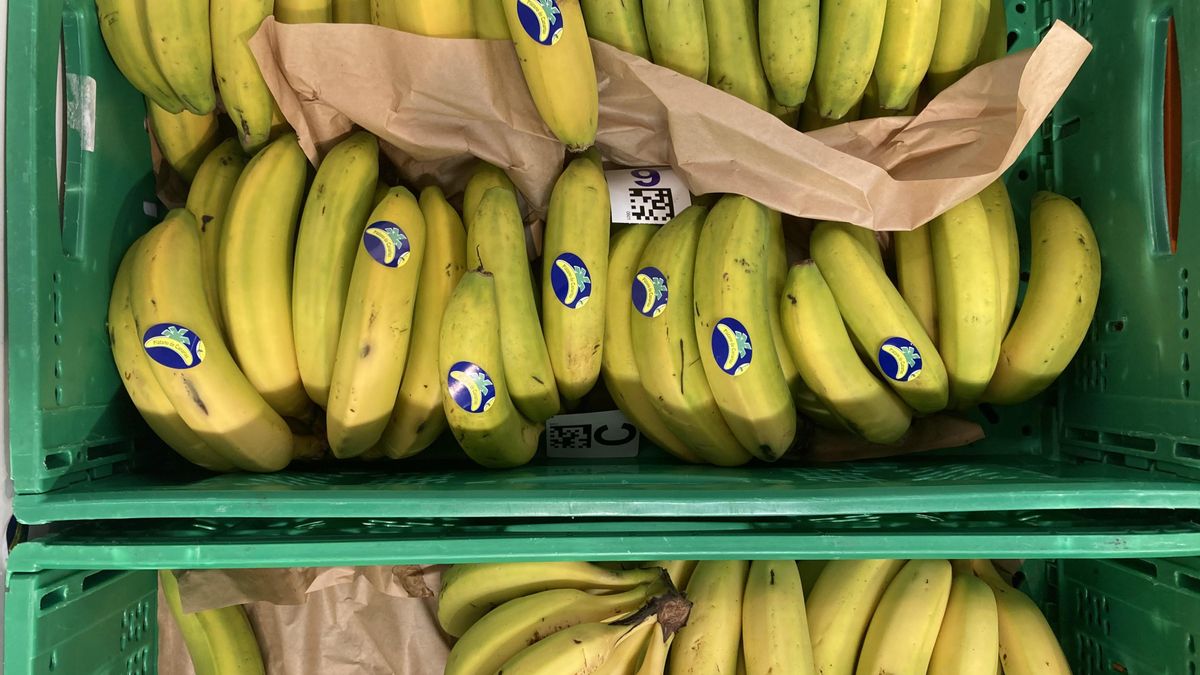
At the close of 2025, the Association of Banana Producer Organisations of the Canary Islands (Asprocan) acknowledged for the first time that the islands’ fruit, now carrying Protected Geographical Indication (PGI) quality certification, had ended that trading year on the Spanish market (its almost exclusive external destination) – the mainland and the Balearic Islands – with a 49% market share. The remaining 51% went to banana, the cheaper competing fruit imported from third countries, both in Latin America and Africa.
Now, in June 2026, that bad news has not turned good or positive – quite the opposite: last year’s setback has worsened. According to data published by Asprocan on its social media channels on 10 June, the banana organisation, citing figures from market research firm Kantar, reports that banana already accounts for 53% of the mainland and Balearic market, at least in the first five months of the current year (January to May). This means the Canary Islands banana retains just 47% of supply in that analysis period, two points lower than the figure Kantar also provided for the full year of 2025.
Production drop and EU pesticide ban blamed
For Asprocan, this loss of volume – kilos sold in the almost exclusive market where the Canary Islands sells its main agricultural product (excluding the islands themselves) – is due to a decline in production, an argument also put forward when banana dominance in Spain was confirmed at the close of 2025. But this time, unlike the reflection on the 2025 data, the organisation is not only citing the drop in Canarian output, which is real, but also linking the phenomenon to the European Union’s ban on the use of certain plant protection products needed for pest control and other plant health issues.
Other sources, however, point to very different factors, placing great emphasis on the difference in retail price between the islands’ bananas and the imported fruit, commonly known as banana. To illustrate: according to statistics from the Spanish Mercas network, in week 23 of this year (1 to 7 June), the average wholesale price of banana (yellow) in those establishments was around €1 per kilo, compared to €2.20 per kilo for the island product – a difference of €1.20 per kilo in the banana’s favour. That same week, the Canary Islands sent six million kilos to the mainland, and a similar volume is forecast for week 24, ending 14 June. But by the time the fruit reaches the supermarket shelf for the end consumer, the imported banana had an average price of €1.50 per kilo, while the Canary Islands fruit cost up to €3 per kilo.
Modest supply drop, but serious price worries ahead
For other market analysts, this price gap is a powerful reason behind banana’s advance. While it is true that Canarian banana production has fallen so far this year compared to the same period in 2025, the reduction in supply – fruit cut and ready for shipment to the mainland – is only 11 million kilos (1,100 tonnes), according to calculations from week 1 to week 23 of 2026, a mild or barely significant decline. However, what may be worse is that, even though this winter and part of spring 2026 saw farm-gate prices – the price growers receive for their fruit after all costs except those on the plantation – unusually low, below 2025 levels (which were very inflated) and even worse than in 2024, there is still more difficult times ahead. Due to a delay in cutting bunches caused by the harsh winter of 2025-26, the most abundant production is yet to come and will largely coincide with the months when bananas sent to the mainland (90% of what is harvested) almost always generate only losses for island farmers.
All this points to a very delicate, possibly even dramatic August, with the prospect of pica – the destruction or withdrawal of fruit from the market – becoming necessary. One operator in the external marketing of Canary Islands bananas, SAT Bonaoro, describes the market as “heavy” on its website, meaning the decline has begun. Its website reads: “Sales remain heavy and without much momentum. The high temperatures of recent weeks, combined with the wide availability of seasonal fruit on the market, are affecting consumption. With greater variety of fruit comes greater competition at the point of sale; for the moment, demand is not responding with the necessary intensity. We therefore remain in a stable but cheerless market scenario, watching closely how consumption evolves in the coming weeks.”
Consumer prices remain high despite lower wholesale costs
So what about what the end buyer pays? The lower green and wholesale prices are barely, if at all, passed on to the final consumer of the island fruit. And here, for some, lies another problem that depresses final consumption and gives banana wings. Asprocan always opts for the analysis of banana supply in Spain, excluding the Canary Islands (where banana is not present), provided by the specialist agency Kantar. In 2025, this confirmed the worst for the first time for a full year, according to these records: Canarian fruit absorbed 49% of all produce entering the mainland, with banana taking 51%. The Canary Islands had gone from controlling the entire Spanish banana market until 1 July 1993 (when the Common Market Organisation for bananas came into force) to being overtaken by banana in that same territory in 2025.
And most dramatically: up to May this year, that situation has worsened, with the Canary Islands banana’s market share falling further to 47%, two points lower than the previous year-end figure. Banana now has 53%. This market dynamic is precisely what had already been clearly observed upon studying statistics from the Directorate General of Customs, part of the central government. Although more recent records – those for the second quarter of this year – are not yet available, they point to the same or even worse figures than Kantar’s for the first five months of the year. According to an analysis based on Customs data provided by economist Juan S. Nuez, the most recent available (covering the first quarter of 2026), banana’s market share on the mainland was between a low of 51% and a high of 61%.
Imports surge, offering a stark picture
How can the current situation be explained? By the end of March, the Canary Islands had sent 2,423 tonnes more to the mainland than in 2025 (+2.6%), while bananas arriving in Spain had increased by 24,141 tonnes (+26.6%). Re-exports (from the mainland to other countries), mainly of Canary Islands bananas to Portugal, grew by 1,100 tonnes (+5.4%). Overall, the supply available on the mainland and the Balearic Islands was 25,464 tonnes greater (+15.6%).
What’s happening in the Canaries – straight to your phone
News, weather alerts and practical updates – direct from the islands, in English. We live here and know what’s going on – before the international media catch up. Everything lands on our WhatsApp channel – no middlemen, no algorithm. Curated for families, expats and travelers.

Two tonnes of illegal tropical fruit seized at Tenerife port

Canary Islands approves new €1.6bn development fund

Mogán mayor says her €65,000 salary is too low

Abandoned cars in Canary Islands: hundreds left to rot

Work resumes on 27 affordable rental homes in Las Palmas

Los Realejos residents fight on against propane gas plant

Canarias among Spain’s poorest regions as 36.2% live on low incomes
Canary Islands bananas lose ground to imported bananas

Canary Islands bottom of Spain’s social housing table