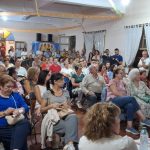
Spain’s plan for smaller classes
The Spanish Ministry of Education wants all schools in the country to reduce their class sizes by September 2031. A draft bill, which has been sent to parliament for approval, sets out a gradual reduction in student numbers across all year groups: from 25 to 22 in primary education, from 30 to 25 in compulsory secondary education (ESO), with figures for infant education, baccalaureate and vocational training (FP) yet to be confirmed.
Canary Islands already a step ahead
Although the document gives schools and secondary schools a little over five years to adjust to these numbers, the Canary Islands is already one of the country’s top-performing students. In fact, the region has set its own, earlier deadline: the 2027/28 academic year. Reducing class sizes is already a reality in the islands, so the question now is: how much will it cost? In the archipelago, this progress will come at a price of 92,190,000 euros and will require the creation of a total of 1,184 additional class groups. In primary education, 732 new classes will be created – rising from the current 4,716 to 5,448 – and in secondary, 452 new classes – from 2,285 to 2,737.
Where the money goes
That 92 million euros will go exclusively towards increasing the number of teachers. For each new class group, the education department estimates it will need to hire 1.5 teachers, each costing approximately 55,000 euros in secondary and 50,000 euros in primary. The biggest financial outlay, therefore, would be in primary education – around 54.9 million euros, compared to the 37.2 million budgeted for secondary. However, these calculations do not take into account the need to create new classrooms in schools that cannot increase their capacity, so the final figure would be somewhat higher.
Canary Islands model inspired national policy
The multi-year plan developed by the Canary Islands’ education department predates the ministry’s. What’s more, the regional deputy minister for education, José Manuel Cabrera, points out that the national government used the archipelago as a model when drafting its initial proposal. “You could say it copied the measures that had already been implemented here,” he highlights. He also clarifies that while the national text only covers primary and secondary education, the islands have gone a step further and also set precise figures for reducing class sizes in infant education: a maximum of 16 children in the 3-year-old class, 18 in the 4-year-old class, and 20 in the final year (age 5).
Disagreement over special educational needs
The main difference between the island model and the national regulations concerns students with special educational needs (SEN). The ministry’s proposal is that these children should count as two places, meaning that if the draft bill goes ahead, the Canary Islands would have to adjust to this requirement. For now, in the islands, only students with SEN due to disability or autism spectrum disorder (ASD), those with a significant curricular adaptation (ACUS) and those with severe behavioural disorders (TGC) are counted as two places, as well as those with severe communication or language disorders requiring a curricular adaptation (CA).
Progress already underway
In the archipelago, the reduction in class sizes is already halfway through the process. “By September, the first cycles of primary school – up to year four – will already have 22 students, and in the 3-year-old infant classes, there will be no more than 16 children,” explains the deputy minister. In secondary education, from year one to year three, classes will have no more than 25 students. The plan will be completed in the 2027-28 academic year, with reductions in the remaining infant years, in years five and six of primary, and in year four of secondary (ESO).
Educational benefits versus financial cost
Achieving a lower number of students per teacher improves learning conditions and the classroom atmosphere. Not only does it allow teachers to give more attention to each student, but it also improves the classroom environment and encourages greater participation. The intention behind implementing these measures is to move towards a more personalised, inclusive and higher-quality education. However, the impact on learning may not match the investment required. That is, at least, the view of the EsadeEcPol Centre for Economic Policy in a recent study. According to its calculations, over the next decade (2027-2036), the average net budgetary cost would be 2,818 million euros per year, with a cumulative total of 28,184 million euros. By 2031 alone, when the law is fully implemented in both primary and secondary education, the real cost would reach 6,549 million euros. For Esade, this is “a very expensive reform with little effect on learning.” The think tank also points out that the general reduction in class sizes will disproportionately benefit state and state-funded private schools where students from higher socio-economic and cultural backgrounds study.
Funding concerns and regional challenges
On this point, the deputy minister for education in the Canary Islands explains that most of Spain’s autonomous communities have criticised the ministry’s draft bill for not having an associated financial plan attached. Without this document, the resources allocated to each region will not be increased, meaning each one will have to manage on its own to meet the national requirements. “For now, we are only talking about the cost of teachers, but many schools will have to create new classrooms. In some areas, we are limited because we cannot create all the groups we would like to, particularly in the south of Tenerife,” he states. In these locations, the alternative solution will be to hire teachers for shared teaching – where several teachers work in the same space.
What’s happening in the Canaries – straight to your phone
News, weather alerts and practical updates – direct from the islands, in English. We live here and know what’s going on – before the international media catch up. Everything lands on our WhatsApp channel – no middlemen, no algorithm. Curated for families, expats and travelers.

How to apply for public housing in the Canary Islands

Viral meningitis outbreak hits three children on El Hierro

Canary Islands tourism chief offers dialogue on residentialisation

Canary Islands office helps small councils ditch the peseta

Two tonnes of illegal tropical fruit seized at Tenerife port

Canary Islands approves new €1.6bn development fund

Mogán mayor says her €65,000 salary is too low
Abandoned cars in Canary Islands: hundreds left to rot
Work resumes on 27 affordable rental homes in Las Palmas