Compiled with the help of artificial intelligence, based on Spanish-language information. Source below the article.
A survivor’s testimony arrives in Lanzarote
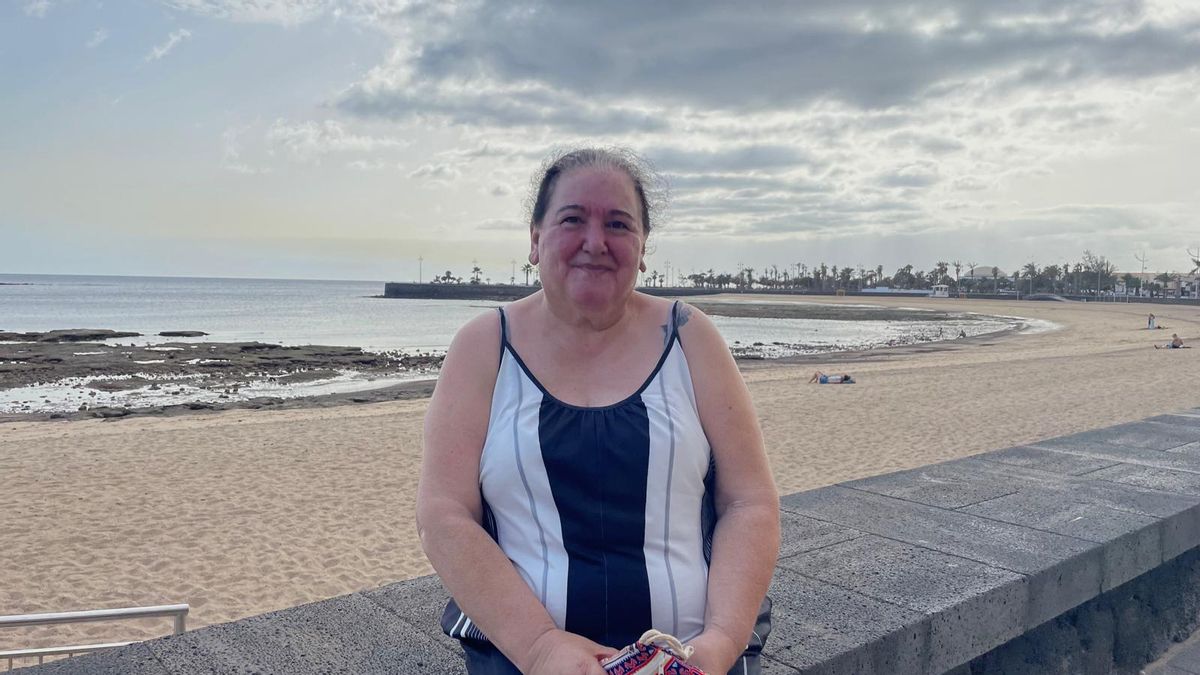
“My name, as a survivor of the Patronato, is Loli Benito. For reasons you will soon understand, I don’t use my father’s surname.” Loli has just turned 60, is studying, and has just completed a course in data recording. She lives where she always dreamed of living, in the house in Cantabria where her mother lived. She has just landed in Lanzarote, where, alongside researchers Belén López Cillero and Rocío Saiz and as part of the activities of the ‘Arrecife en Vivo’ festival, she will be able to give a face and light to one of the darkest chapters in the recent history of women in Spain.
Now, she says with relief, she does whatever she pleases, but that was not always the case. Between 1982 and 1984 – when Felipe González was governing in Spain – she was under the tutelage of the Patronato de Protección a la Mujer, a Francoist institution that, far from protecting the thousands of girls and women who passed through its centres, subjected them to abuse with the aim of “straightening out” those who did not fit the imposed role of the “good woman”.
Abuse at home and a psychiatric report
At the age of 16, Loli was admitted to the Maternidad de Peña Grande in Madrid, pregnant as a result of the rapes she suffered at the hands of her father. In this Patronato centre, pregnant girls and teenagers from all over the country were kept locked up. “I ran away from home a lot when I was little. I ran away because my father abused me. My mother was ill and spent a lot of time away from home, in hospital. So, when she wasn’t there, I would run away, because I knew what was waiting for me,” she says.
At the age of 12, “after many escapes”, Loli came under the tutelage of the Juvenile Court. “They wanted to know what was happening and they gave me a psychiatric assessment. In one of my conversations with my psychiatrist I confessed that my father was raping me. I trusted him, but he sent a report to the Juvenile Court and they decided to take me to a reformatory,” she recalls. Nothing was done to her father. “The Patronato was supposed to protect women – from whom? From my father? If anyone should have had hands laid on them, it was him, not me,” Loli adds.
Forced labour, punishment and sexual assault
At Peña Grande, Loli was subjected to forced labour, punishments, insults and sexual assaults. Other women who passed through that confinement also had their babies stolen. This routine was repeated across the entire network of Patronato centres, which came under the Ministry of Justice and were run by religious congregations. Regarding the work they were forced to do, Loli particularly remembers the visit of Pope John Paul II to Spain in 1982. “There was merchandising, which was a bag with a load of things inside. We made those bags, but I’m not talking about 5,000 or 10,000 – we made 50,000 bags. All that while pregnant and newly delivered,” she stresses. She also recalls making boxes for a well-known sports brand.
Researcher Belén López Cillero, author of the book ‘Nacionalcatolicismo y Patriarcado. El Patronato de Protección a la mujer y su junta provincial coruñesa’, adds that many girls and young women had their knees destroyed from scrubbing floors on their knees, and that some cannot even bear the smell of a particular type of bar of soap today, because it reminds them of when they packaged them en masse in the Patronato centres.
Loli spent an entire month locked in a punishment room. When she came out, the nuns sent her to clean the swimming pool. “I was really pleased, because it gave me some fresh air,” she recalls. However, there she was sexually assaulted by the centre’s gardener. “I’m sure the nuns knew, but, you know what? For me, sexual abuse was something normal. The worst had already been done to me by my father, who is supposed to be your pillar,” she says.
A second pregnancy and the loss of her children
She gave birth to her daughter in June 1982. Six months later, Loli’s mother died. At Easter 1983, Loli’s father was authorised to take her out along with the baby for four days. “He took me to a guesthouse, raped me again and got me pregnant again,” she recalls. The boy was born in December. “There was no protection whatsoever. They were the ones who put us at the feet of the horses,” she maintains.
Passing through the Patronato meant that many women, once outside the centres, ended up in relationships where they were victims of domestic abuse. “We wore the abuse written on our foreheads. I married an abuser,” she says. When Peña Grande closed its doors in 1984, the “idea” was that each woman would return to her place of origin with her family of origin. In her case that was unviable. So they gave her two options: to stay on the street with her children or without them. She had to make the decision in less than half an hour. “From the moment you enter Peña Grande, the idea is that you stay with your children. If they don’t do it at first, they do it later,” Loli says. “The first thing I thought was that I hadn’t brought children into the world to make them suffer. I had already been on the street, I was going to survive,” she recalls. And so it was. She stayed on the street and her children were adopted by a family in Barcelona.
Rebuilding a life and finding her children
Loli tried to rebuild her life. She had two more children and again received psychiatric treatment. “I told the doctor that I was missing my children and he told me ‘you have them here’. I told him I had two more and he gave me medication for hallucinations,” she shares. “I knew I had given birth, but there comes a moment when your head plays tricks on you,” she admits.
Time passed and destiny placed in her path the researcher who brought the reality of the Patronato to light, Consuelo García del Cid. At that point, Loli Benito even doubted that she had passed through Peña Grande because “nobody talked about it”. “I searched on the internet and there was nothing,” she denounces. But Consuelo appeared and showed her that she was not alone. She also confirmed that she had two children, with whom Loli was able to be reunited years later. “For me, the most healing thing has been finding my children after so long and being able to tell the world what I have been through,” she maintains.
Sorority and the fight for recognition
Loli keeps in contact with many of her companions through a WhatsApp group, and she assures that although it has not been “a bed of roses”, thanks to them she survived the Patronato. “You were alone, we only had each other. We invented sorority a long time ago,” she maintains. Many of the more than 40,000 women who passed through the Patronato are still alive, and thanks to their testimony it has been possible to recover the fragments of a history that dates back barely 40 years. Although officially this institution “died” in 1985, researchers have found testimonies dating as late as 1997.
Searching for files and lesbian women erased from the record
Accessing the files has not been easy. Researcher Belén López Cillero, who has devoted much of her career to gathering evidence of the human rights violations committed against women by this Francoist institution, explains how she had to “search the margins” because the authorities responsible initially told her that thousands of boxes of documentation about the Patronato had been lost in fires and floods. The same happens to filmmaker and LGTBIQ+ rights activist Rocío Saiz, who, in her words, became obsessed with searching for the lesbian women of the Patronato. “They didn’t appear anywhere and there was a very big gap,” she explains.
The investigations by López and Saiz show that sexual orientation was one of the reasons why women could be locked up in the Patronato centres. In Belén López Cillero’s book it is recorded that young lesbians were considered psychiatric patients and in their files they were described as women with “deep abnormal sexual inclinations”. They were subjected to conversion therapies, electroshock sessions and were overmedicated. “If you have been there, know that you are not alone,” insists Rocío Saiz, who does not give up in her determination to find the women from the collective who suffered the violence of the Patronato. Along these lines, the three call for reparation and support for the survivors. “Some of them today don’t want to speak because they feel they are to blame,” they lament.
A warning about the political moment
On the political moment Spain is going through, Loli believes that “as a survivor of the Patronato and also as a woman, a right-wing government would be a step back 40 years in time”. “It would mean disappearing again and losing all the respect they have for us now and all the support we have,” she says. “While men were building roads, women were locked up.” The Patronato did not distinguish between left-wing or right-wing women, because right-wing women were also put in to be re-educated. “This thing we talk about between victors and vanquished – in the case of the Patronato, they were all women. Fascism is against women,” they conclude.
What’s happening in the Canaries – straight to your phone
News, weather alerts and practical updates – direct from the islands, in English. We live here and know what’s going on – before the international media catch up. Everything lands on our WhatsApp channel – no middlemen, no algorithm. Curated for families, expats and travelers.
Rony the police dog honoured for finding two bodies

Lucho RK releases debut album Sordo de un pie
Gran Canaria approves new institute to manage island museums

La Laguna Book Fair returns with 200+ cultural events

Jay Wheeler returns to Canary Islands for two concerts

La Laguna Book Fair returns with over 200 events

Hiker airlifted from Roque Nublo after injury

Gran Canaria stadium revamp set for World Cup 2030

Football match suspended after violent clashes in Tenerife