
Compiled with the help of artificial intelligence, based on Spanish-language information. Source below the article.
Canary Islands set for stunning partial lunar eclipse
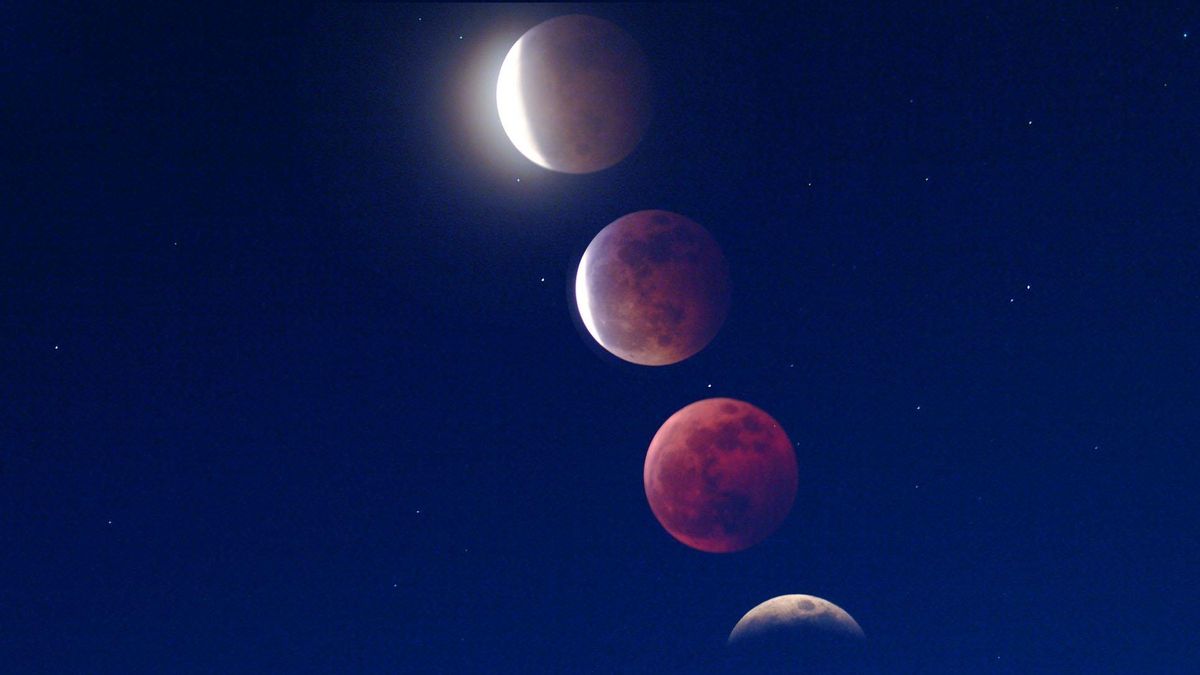
The Canary Islands are about to say goodbye to August, and they will do so with a partial lunar eclipse. We are in the middle of eclipse season, explains the Instituto de Astrofísica de Canarias (IAC), which adds that, within a window of just over 30 days, the geometries of the Sun, Earth and Moon align perfectly. Following the solar eclipse of 12 August, which was total across much of the Spanish mainland and partial in the Canaries, the architecture of the Solar System completes its cycle in the early hours of Friday 28 August with a partial lunar eclipse.
Up to 96% of the Moon covered by Earth’s shadow
During this event, at the point of maximum occultation, Earth’s shadow (the umbra) will cover between 90% and 96% of the lunar disc, leaving only a razor-thin outer sliver exposed to direct sunlight. The phenomenon occurs when Earth sits exactly between the Sun and the Moon, projecting a cone of shadow into space. As the Moon passes through this shaded region, it stops receiving direct solar radiation.
IAC astrophysicist and science communicator Irene Puerto explains that in their orbital dance at thousands of kilometres per hour, these three celestial bodies (Earth, Moon and Sun) become perfectly aligned in space, giving rise to a sequence of occultations, as has happened this August. “In each of these seasons, between two and three eclipses are usually recorded, alternating between solar and lunar events,” adds Puerto.
Why the Moon turns red
Contrary to what one might assume, the part of the Moon submerged in Earth’s shadow does not become completely invisible, the IAC explains. The reason lies in Earth’s own atmosphere, because sunlight grazes the edges of the planet and passes through the atmospheric layers. This causes the atmosphere to scatter shorter, bluer wavelengths, which is the same phenomenon that makes the sky blue during the day. Refraction does the rest: the longer wavelengths, those reddish and orange tones, are refracted and manage to bend towards the inside of the shadow cone, projecting onto the lunar surface.
During the eclipse, the Moon acts as a screen reflecting the light of all the sunrises and sunsets occurring simultaneously on Earth. Unlike solar eclipses, lunar eclipses are completely safe to observe with the naked eye, with no need for filters or special eye protection.
When and where to watch in Spain
To catch the phenomenon, viewers will need to stay up late or get up early in the early hours of Friday 28 August. In the Canary Islands (local time), the shadow phase will begin at 03:30, reaching its maximum at 05:13. On the mainland and in the Balearic Islands, the partial phase will start at 04:34 and its peak will be recorded at 06:12, when 96% of the darkening disc can be contemplated.
In other places such as Latin America, the phenomenon will be visible during the last hours of the night of Thursday 27 or the preceding midnight, depending on each country’s time zone.
No equipment needed
The IAC recommends making the most of the early hours of Friday to stay up late or rise early for scientific reasons, because celestial mechanics offers a perfect opportunity to observe the dynamics of our cosmic neighbourhood live. “There is no need to climb anywhere high or use any instrument,” they say.
What’s happening in the Canaries – straight to your phone
News, weather alerts and practical updates – direct from the islands, in English. We live here and know what’s going on – before the international media catch up. Everything lands on our WhatsApp channel – no middlemen, no algorithm. Curated for families, expats and travelers.

Tuesday: heavy showers and storms in El Hierro

El Hierro issued yellow warning for heavy rain

Monday: autumn showers and a cooler feel

Sunday: scattered clouds and showers on the islands

Saturday: cooler air and clearing Saharan dust

Canary Islands weather: rain and storms on the way

Friday: summer heat before an autumnal weekend

Tuesday: cloud, showers and a building swell

Monday: cloud cover and scattered showers
