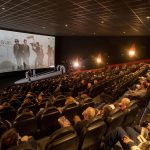
Actor brings new comedy to Santa Cruz festival
Jorge Sanz (Madrid, 1969) has arrived in Tenerife to present his latest film, 9 Lunas – a comedy starring Ángel (Zack Gómez-Rolls), a personal trainer who begins to feel unwell and, after visiting the hospital, receives an unexpected piece of news: he is pregnant. This development puts not only his identity, his dreams and his idea of masculinity to the test, but also that of his family. Sanz plays the protagonist’s father, who must likewise embark on a journey of reflection – one that, in his case, has extended well beyond the cinema. The actor is presenting the film as part of the Lo que viene festival, which is being held in Santa Cruz de Tenerife until Thursday 4 June.
More than a premiere
Does this kind of intimate festival setting feel very different from a standard premiere?
Yes, very much so. A premiere is a fairly superficial affair because you greet lots of people, but you don’t really connect with anyone in depth. At a festival like this, we come to talk about our film but also about cinema in general. The atmosphere is more reflective and intimate, and it allows us to share ideas with colleagues.
Do you find you have more time for yourself here?
Yes, there’s time for everything. And what’s surprising here in the Canary Islands is just how healthy the industry is. I’ve shot two films here recently, and I think it’s fantastic that there’s a work alternative beyond the usual restaurants and hotels. The fact that there are opportunities for young people in the audiovisual sector is great news.
Does the location influence the work?
Enormously. Not just because of the landscapes we can enjoy, but also the crew. In the Canary Islands there are highly skilled, well-trained professionals. On top of that, you have the quality of light, the distances, the pace of life – everything makes filming easier. It’s a very comfortable place to work.
A story about evolving society
Tell us about the film’s story. It tackles the subject of a trans man’s pregnancy, doesn’t it?
The story revolves around the nine months of a trans man’s pregnancy and shows how his family faces this unusual situation with empathy, listening and kindness. It touches on something that not so long ago would have caused social conflict, but which is now understood differently. It’s a film about how society has evolved.
And your character, the father, is someone trying to come to terms with that change?
Exactly. He’s someone who grew up in a more macho society and suddenly finds himself faced with a different reality. He doesn’t understand a lot of what’s happening, but he wants to learn. He represents all those people who are trying to adapt to the changing times.
Is the film a call for self-reflection?
Of course. The film invites you to ask yourself what you would do in that situation. I’ve known for a long time that everyone has to find their own happiness. But I also have a son who’s the same age as the character, and that adds an important emotional weight.
There is a great tenderness about the character
Yes, and it’s not easy. Making a character tender without falling into something artificial is tricky, but that tenderness adds extra value to the story and connects deeply with the audience.
A good atmosphere on set
Does that connection come through in the filming itself?
Always. A good atmosphere helps everything, both on and off screen. And anyone who doesn’t want to see it or reflect on it, well, that’s their loss. Cinema is also about opening your mind. If you don’t want to learn, your world stays smaller.
But does a film always have to have a message?
Not necessarily. Sometimes yes, but cinema is also about entertainment, emotion and romance. Not everything has to be combative. In this case there is reflection, but there’s also emotion. It’s a very moving film. I’ve seen it twice and both times it affected me. If you have a family or children, it hits you especially hard.
Cinema in the age of streaming
Do you think this film needs to be seen on the big screen?
Yes and no. Some films are better enjoyed on the big screen – that’s still special. But streaming platforms allow many films to find an audience they wouldn’t have had before. Everything helps.
Looking back, does every role and experience contribute to where you are today?
Everything. I’ve got here thanks to everything I’ve experienced. I’ve had a wonderful life and I’m still enjoying it.
Do you prefer theatre or film?
Each has its own appeal. Theatre allows me to be more involved in the projects. In film and television it’s harder to choose so much because ultimately you do what comes your way and try to add your own vision.
Do you have a favourite genre?
More than genre, I’m interested in the project. I really like comedy, but I also value things like the filming location or the crew. I’ve never been very rigid in my choices.
Spanish cinema is in good health
Do you think Spanish cinema is going through a good moment?
Yes, I think so. Lots of films are being made, and of high quality. It’s a very healthy industry, even if it sometimes seems otherwise.
Finally, why should people come and see 9 Lunas?
Because it’s a beautiful, tender and optimistic film. It will make you feel and think, and I’m sure you’ll ask yourself what you would do in that situation.
What’s happening in the Canaries – straight to your phone
News, weather alerts and practical updates – direct from the islands, in English. We live here and know what’s going on – before the international media catch up. Everything lands on our WhatsApp channel – no middlemen, no algorithm. Curated for families, expats and travelers.

Tenerife stages Spain’s biggest volcanic eruption drill

Sonora Festival 2026 draws 16,000 to Las Palmas

Two men injured in fall from wall in Playa de Troya
Tenerife-forged bell rings again in tiny Rioja village

Canarian journalists to discuss a world in conflict at Las Palmas theatre
Festival del Sur returns to Agüimes with theatre from three continents
Man, 24, seriously hurt in buggy crash on Gran Canaria track

Woman, 81, rescued from sea at Las Vistas beach in Adeje

Tenerife to receive ES-Alert volcano drill messages