
Successful evacuation of Hondius passengers in Tenerife
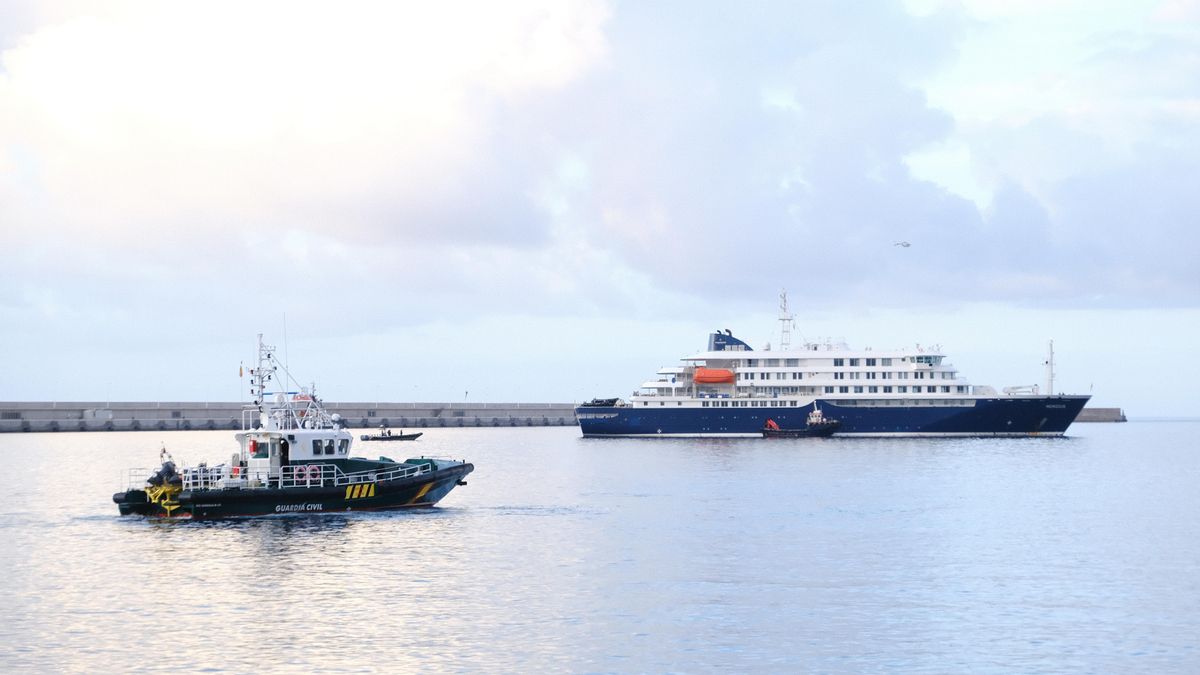
The evacuation of passengers from the MV Hondius, where a hantavirus outbreak was declared at the end of April resulting in at least eight infections and three deaths, has been successfully completed this Sunday as planned. The operation, coordinated by the World Health Organisation (WHO) and Spanish authorities from the port of Granadilla de Abona in Tenerife, has seen some passengers and crew already back in their home countries, Health Minister Mónica García confirmed in a press conference. She stressed that the Canary Islands Government had been invited to participate in the operation but did not attend.
Operation ran with “complete normality”
The minister detailed that the operation had proceeded “with complete normality and total safety, despite the adversities,” alongside Interior Minister Fernando Grande-Marlaska, Territorial Policy Minister Ángel Víctor Torres, and WHO Director-General Tedros Adhanom. She also took the opportunity to announce late this afternoon that both the woman from Alicante and the woman from Barcelona, who had been kept isolated as contacts of one of those infected, had tested negative on their PCR tests.
Disembarkation and flights: 94 passengers from 19 countries
By 8.30pm local time, a total of 94 people from 19 nationalities had been disembarked. The minister specified that seven of the flights carried eight passengers each, while one flight, organised by the Netherlands, carried passengers of 11 different nationalities. The operation began around 6.00am Canary Islands time when the affected vessel, carrying 147 people, docked at the Tenerife port having arrived from Cape Verde. Disembarkation began at around 9.45am, with the 14 Spanish passengers leaving the Hondius first, in staggered groups. From that moment, a full-day operation commenced, drawing hundreds of journalists from around the world to the port of Granadilla; murmurs could be heard in English, German, and Japanese.
Spanish passengers flown to Madrid for quarantine
Although the media could not see the door through which passengers exited, drones operated by the Civil Guard captured footage of the first Spanish passengers disembarking. Shortly after 11.30am, the first plane took off from Tenerife South Airport—an Air Force Airbus carrying the 14 Spanish passengers. They were transported directly to the runway in Military Emergency Unit (UME) buses and from there to the Torrejón de Ardoz airbase in Madrid, where they will serve their quarantine at the Gómez Ulla Hospital and undergo PCR tests for the virus.
French passenger develops symptoms mid-flight
Following this first group, passengers of other nationalities disembarked, with their aircraft already prepared at the Tenerife airport. This was one of the conditions set for the operation: no one was to leave the ship until each country’s aircraft was fully ready to depart for their respective destinations. The second group to disembark from the Hondius were French passengers, who flew as planned. However, during the journey to France, one person developed symptoms compatible with hantavirus, according to French Prime Minister Sébastien Lecornu. In response, Health Minister García stated that “this is something that can be expected at any time; some passengers may develop symptoms,” and clarified that “what needs to be done is to follow the protocols.” She added that French health authorities would continue to implement their own procedures.
Netherlands, UK, Turkey and Ireland next
Next came passengers from the Netherlands and the United Kingdom. By the afternoon, the minister indicated that preparations were complete to disembark passengers from Turkey and Ireland. As for the ship, which continues its journey to the Netherlands, it will refuel from 7.00am on Monday for a few hours, followed by more supplies. Two flights were scheduled for later in the day: one to Australia carrying six people, and one to the Netherlands with an expected 18 passengers, meaning 34 passengers would remain for the final journeys. Late in the evening, passengers for flights to the United States and Australia still awaited disembarkation. The Australia flight was the only one confirmed 24 hours earlier to depart from Tenerife South on Monday at around 7.00pm, at which point the ship would be ready to set sail for the Netherlands.
Canary Islands president refuses to authorise docking
It was the delay to this final destination that sparked the anger of Canary Islands President Fernando Clavijo (CC), who stated late on Saturday night that he would not authorise the docking of the Hondius with hantavirus on board, despite the fact that the regional government does not have jurisdiction over the port as it is of national interest. “If the State wants to impose it, as it has done so far, let it impose it, but we are not going to authorise it,” the Canarian president said in a statement shortly after 11pm. The regional president demanded that the Spanish government transfer passengers whose flights were delayed onto aircraft from other countries so they could leave Tenerife as soon as possible. Clavijo, accompanied by the President of the Tenerife Cabildo and the Mayor of Granadilla de Abona, also lamented that the three ministers who arrived on the island spoke to the media before meeting with him.
Ministers: Canary Islands government was invited but did not attend
However, in the press conference, the ministers clarified that the Canary Islands Government “had been invited to the operation deployed at the port of Granadilla and did not attend.”
Pope and PM praise Canary Islands hospitality
Pope Leo XIV thanked the people of the Canary Islands this Sunday for their characteristic welcome in allowing the MV Hondius to arrive. “I want to thank the welcome that characterises the people of the Canary Islands for allowing the arrival of the Hondius,” the pontiff said in Spanish after praying the Regina Coeli, the Sunday prayer that replaces the Angelus during Eastertide. Meanwhile, Spanish Prime Minister Pedro Sánchez used his intervention this Sunday at a rally in La Línea de la Concepción (Cádiz), alongside the PSOE candidate for the Presidency of the Andalusian Regional Government, María Jesús Montero, to thank the people of the Canary Islands for their solidarity with the passengers of the MV Hondius, and defended the central government’s handling of the crisis. Sánchez stressed that “politics serves to provide solutions, above all, to the majority of ordinary people,” and pointed to the operation deployed to deal with the Hondius health emergency as an example, which “Spain has taken on first-hand.”
What’s happening in the Canaries – straight to your phone
News, weather alerts and practical updates – direct from the islands, in English. We live here and know what’s going on – before the international media catch up. Everything lands on our WhatsApp channel – no middlemen, no algorithm. Curated for families, expats and travelers.

Rain alert declared for El Hierro as La Palma stays on pre-alert

Wednesday: showers and unstable air across the Islands

Tuesday: heavy showers and storms in El Hierro

El Hierro issued yellow warning for heavy rain

Monday: autumn showers and a cooler feel

Sunday: scattered clouds and showers on the islands

Saturday: cooler air and clearing Saharan dust

Canary Islands weather: rain and storms on the way

Friday: summer heat before an autumnal weekend
