
Fuerteventura is the second-largest of Spain’s Canary Islands, sitting approximately 100 kilometers off the coast of North Africa. Defined by over 150 kilometers of natural white and golden sand beaches, the island features a low, desert-like terrain shaped by constant ocean winds and ancient volcanic erosion rather than dense pine forests or steep high-altitude peaks.
Travelers planning Fuerteventura holidays generally fall into three distinct groups: watersports enthusiasts seeking consistent trade winds, families looking for shallow protected bays, and road trippers searching for open landscapes. For visitors evaluating top things to do in Fuerteventura, open space and ocean access take priority over dense greenery or mountain hiking.
Understanding the geographical layout before booking accommodation is essential. The island extends roughly 100 kilometers from north to south, divided between four main resort areas: the northern town of Corralejo, Caleta de Fuste in the central region, and Costa Calma and Morro Jable in the far south. Each area offers a distinct microclimate, beach type, and access level to major attractions.
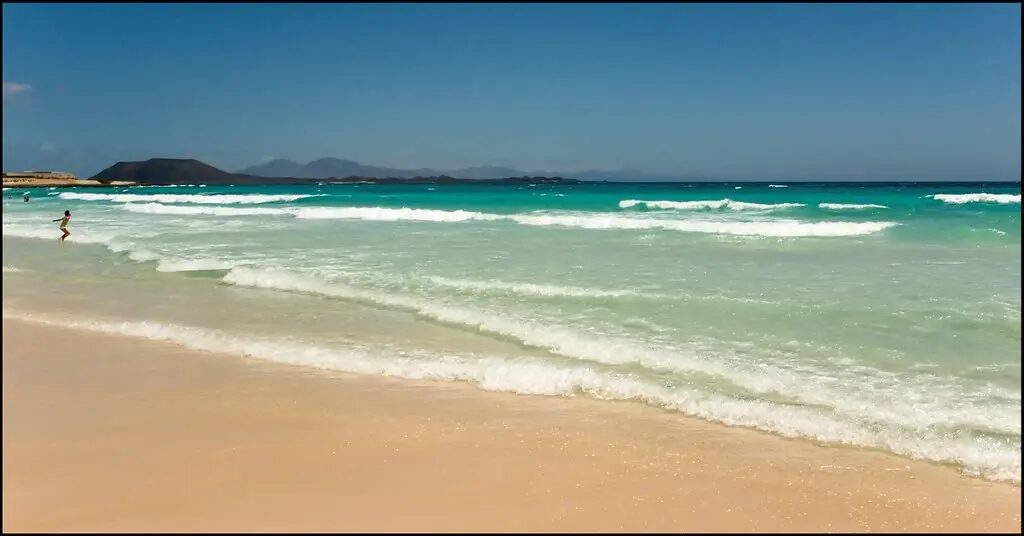
When to Visit
Selecting the best period for your trip depends largely on your wind tolerance and planned activities. The island records more than 3,000 hours of annual sunshine and under 150 millimeters of rainfall per year, making it reliable for sun-seekers throughout the year. However, seasonal shifts in trade winds alter conditions considerably.
The strongest trade winds (Alisios) blow during the summer months, from May through September. During this period, over 80 percent of days register wind speeds between 18 and 35 knots (Beaufort scale 4 to 6). Summer is ideal for windsurfing and kitesurfing, though casual beachgoers often require stone wind shelters (corralitos) for comfort. Summer air temperatures average between 27°C and 31°C during the day, while sea temperatures reach their peak of 22°C to 23°C between August and October.
Autumn, particularly October and November, provides the calmest conditions for relaxed Fuerteventura holidays. Wind speeds drop significantly while ocean waters remain warm at 22°C, making autumn optimal for general sightseeing and swimming. Winter brings mild daytime highs of 20°C to 21°C, dipping to 14°C or 15°C overnight. Sea temperatures reach their annual low of 18°C to 19°C in February and March, making thin wetsuits recommended for extended water sessions.
Both winter and mid-summer occasionally see calima events, where easterly winds carry Saharan dust across the water. These events raise temperatures by 5°C to 10°C, obscure visibility, and reduce humidity for two to five days. Accommodation prices peak twice a year: during Christmas and New Year through January, and during European summer school holidays in July and August.
Weather Overview
Because the terrain is relatively flat, ocean winds move across the land without mountain obstruction, keeping humidity low and skies generally clear. Microclimates develop mainly between exposed northern coastlines and sheltered southern bays. To analyze seasonal shifts and Fuerteventura weather patterns, examine our comprehensive island weather guide.
Local conditions differ notably across resort towns. For detailed Fuerteventura weather updates, northern coastal patterns are detailed on our Corralejo weather page. Central regions experience milder winds, as documented in our Caleta de Fuste weather analysis. In the south, trade winds intensify near the peninsula neck, outlined in our Costa Calma weather overview, while sheltered southern valleys enjoy higher temperatures, covered in our Morro Jable weather breakdown.
Best Beaches in Fuerteventura
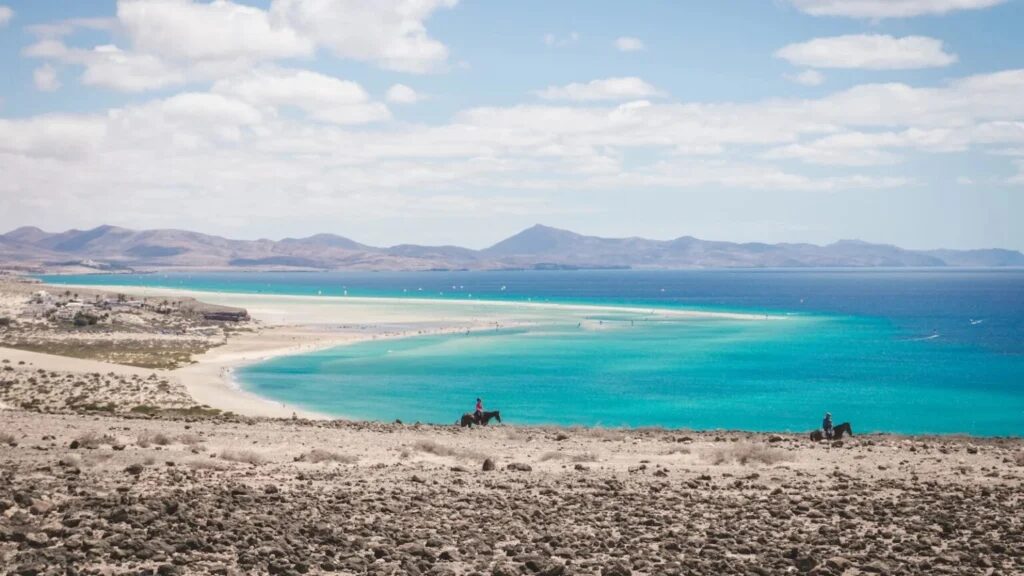
The island perimeter features some of the longest sand stretches in the Canary archipelago, ranging from vast sand dune reserves to isolated Atlantic bays. For a complete comparison of coastal spots, view our full guide to the best beaches in Fuerteventura.
In the north, expansive golden dunes border open waters; inspect specific locations through our overview of Corralejo beaches. Along the southern peninsula, tidal changes form a famous shallow lagoon, described in our guide to Playa de Sotavento. On the wild southwest coast, steep mountain ridges frame Cofete Beach. The main southern tourist area provides miles of golden coastline, covered in our guide to Playa de Jandia. Meanwhile, natural reef barriers on the northwest shore create quiet swimming pools at Playa de la Concha in El Cotillo. Selecting top beaches across the region depends on whether you seek water sports, family protection, or wilderness.
Things to Do
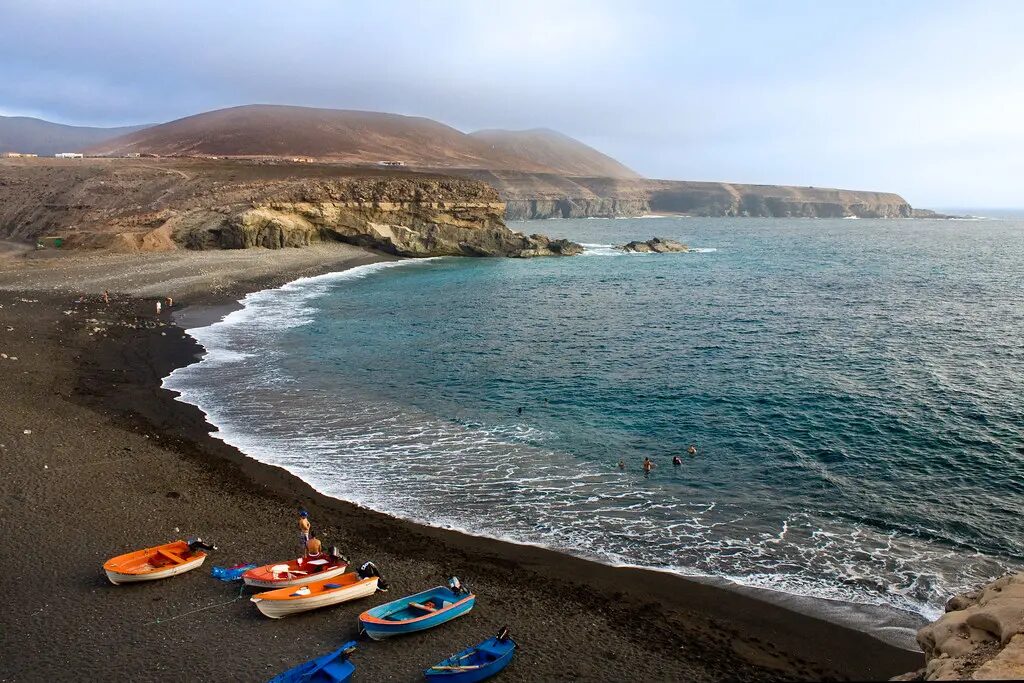
Exploring the island spans natural reserves, historic interior towns, and world-class watersports spots. When reviewing top things to do in Fuerteventura, the Parque Natural de Corralejo stands out in the north, protecting rolling sand dune fields traversed by the FV-1a road. Visitors can park in designated gravel laybys along the road. Driving off-road or parking directly on sand dunes is strictly illegal under environmental regulations, carrying heavy fines. The speed limit along the FV-1a through the natural park is strictly capped at 50 km/h.
On the isolated southwest coast, Cofete stretches along 12 kilometers of wild ocean shoreline backed by the Jandía mountain ridge. Reaching Cofete requires driving an 18-kilometer unpaved dirt track over the mountain pass from Puerto de la Cruz. Standard rental car contracts on the island explicitly void collision damage waivers (CDW) and insurance on unpaved roads, leaving drivers fully responsible for repair costs and towing charges ranging from €300 to €800. Cofete has no lifeguards, strong ocean undertows, patchy mobile coverage, and only one local eatery, Restaurante Cofete (Casa Pepe).
Watersports are concentrated at two primary hubs. Sotavento in the south features a 4-kilometer long, 200-meter wide tidal lagoon that fills to a depth of 1 to 3 meters during full and new moon phases (roughly two weeks per month). The René Egli Center holds the exclusive license for teaching windsurfing and kitesurfing within the lagoon. Near the northern dunes, Flag Beach (Playa del Bajo Negro) hosts the VDWS-certified Flag Beach Watersports Center, operating since 1999 with cross-shore trade winds and support boats.
Cultural heritage sites center on Betancuria, founded in 1404 as the island original capital. Set in a protected valley to deter pirate raids, the town features historic manor houses, the Santa María church, and the nearby Mirador de Guise y Ayose viewpoint with 4.5-meter bronze statues of ancient native kings. Nearby in Antigua (Calle Virgen de Antigua, km 20), the Museo del Queso Majorero details the history of Majorero goat cheese (D.O.P. Majorero) alongside a restored windmill and cactus garden. As of July 2026, admission is €4.00 for adults and €2.50 for children aged 3 to 11, open daily from 10:00 to 18:00 (May to October) or 09:30 to 17:30 (November to April).
Other major day-trip sights include the natural lava lagoons of El Cotillo, the dark volcanic sea caves at Ajuy, and Oasis Wildlife park in La Lajita.
Getting to the Island and Getting Around
The local airport (FUE) is situated on the eastern coast, 5 kilometers south of Puerto del Rosario and 10 minutes by car from Caleta de Fuste. Public bus transport across the island is operated exclusively by Tiadhe.
Travelers relying on public transit should note that no direct bus connects the airport to northern resort areas. As of July 2026, reaching the main northern resort town by bus requires taking Tiadhe Line 03 from the airport to the main bus station in Puerto del Rosario (€1.45 fare), then transferring to Line 06 to the northern port (€3.40 fare). The total journey takes approximately 60 minutes and costs €4.85. Fares are paid in cash to the driver upon boarding. Passengers can purchase a non-resident Bono Card directly on any bus for €2.00 to receive a 5 percent discount on all trips. Line 10 connects Puerto del Rosario and the airport to Costa Calma and Morro Jable roughly four times per day.
Ferry connections operate daily across the 13-kilometer strait from the main northern port to Playa Blanca in Lanzarote, with combined sailings exceeding 20 departures per day. Fred. Olsen Express runs high-speed fast ferries (such as the Bocayna Express) taking 25 minutes, with single adult tickets starting between €17 and €35. Naviera Armas operates regular car ferries taking 35 minutes, with single fares from €17 to €30. Líneas Romero operates passenger catamarans taking 30 minutes, with single tickets from €17 to €22.
Car rental remains the most effective option for island exploration. Local Canarian agencies like CICAR, TopCar, and Cabrera Medina offer transparent pricing with full insurance coverage and no deposit. However, standard rental agreements void all insurance on unpaved dirt roads. To visit Cofete safely without risking uninsured vehicle damage, take Tiadhe Line 111, an all-terrain 4×4 Unimog bus departing Morro Jable Bus Station daily at 10:00 and 14:00 (returning at 12:45 and 16:45) for €8.70 per single ticket.
Island News, Updated Daily
Our local research team tracks daily updates across the archipelago, bringing practical reports on flight schedules, weather shifts, public transit modifications, and local island regulations. Stay informed on recent developments by following our dedicated island news portal.
We also run dedicated resort news pages: Corralejo.
Select your base according to travel priorities: northern resort towns suit watersports and dining, Caleta de Fuste in the center serves families with shallow protected bays, while Morro Jable in the south offers expansive golden sand beaches. The northern hub lies 40 kilometers from the airport, whereas Caleta de Fuste sits just 10 minutes away by road. Choose Caleta de Fuste if you want an easy central hub for driving across the island without long daily commutes.
Yes, trade winds blow consistently across the island, peaking between May and September with winds reaching 18 to 35 knots daily. Autumn months like October and November experience significantly calmer conditions with warm ocean waters. Pack a light windbreaker jacket even during summer evenings, as coastal ocean breezes drop perceived temperatures quickly.
4 to 5 days is the minimum time needed to explore the main sights across both northern and southern ends of the island. A full 7-day stay allows enough time to visit Cofete, Betancuria, and sand dune parks without rushing daily drives. Base yourself in Caleta de Fuste for shorter stays to reduce transit times between northern and southern attractions.
Yes, renting a car is strongly recommended if you plan to visit remote beaches, interior mountain villages, or natural parks outside major resort hubs. Public buses operate reliably between main towns like Puerto del Rosario and regional ports, but rural bus routes run infrequently. Book with local Canarian rental companies like CICAR for full insurance coverage, but keep vehicles on paved asphalt roads.
Choose Lanzarote for dramatic volcanic lava fields, Timanfaya National Park, and unique architectural sites designed by César Manrique. Select this island if your primary goal is expansive sand beaches, turquoise lagoon watersports, and wide open coastal landscapes. Take the 25-minute Fred. Olsen ferry from the northern port to Playa Blanca to visit both islands during a single holiday.
Latest from Fuerteventura

Calima pre-alert declared across all Canary Islands

Tuesday: calima and cloud as temperatures dip

Cruise to Canaries cancelled after collision in port

Civil Guard warns of digital skimming threat to online shoppers

Tourism overcrowding and its impact on Canary Islands healthcare

Monday: calima and 34C heat across the Islands

Canary Islands weather: Calima, storms and 34°C heat

The wild canary that gave its name to the Canary Islands

Sunday: calima and 30°C as alisio winds strengthen
