Hotel prices climb again in the Canary Islands
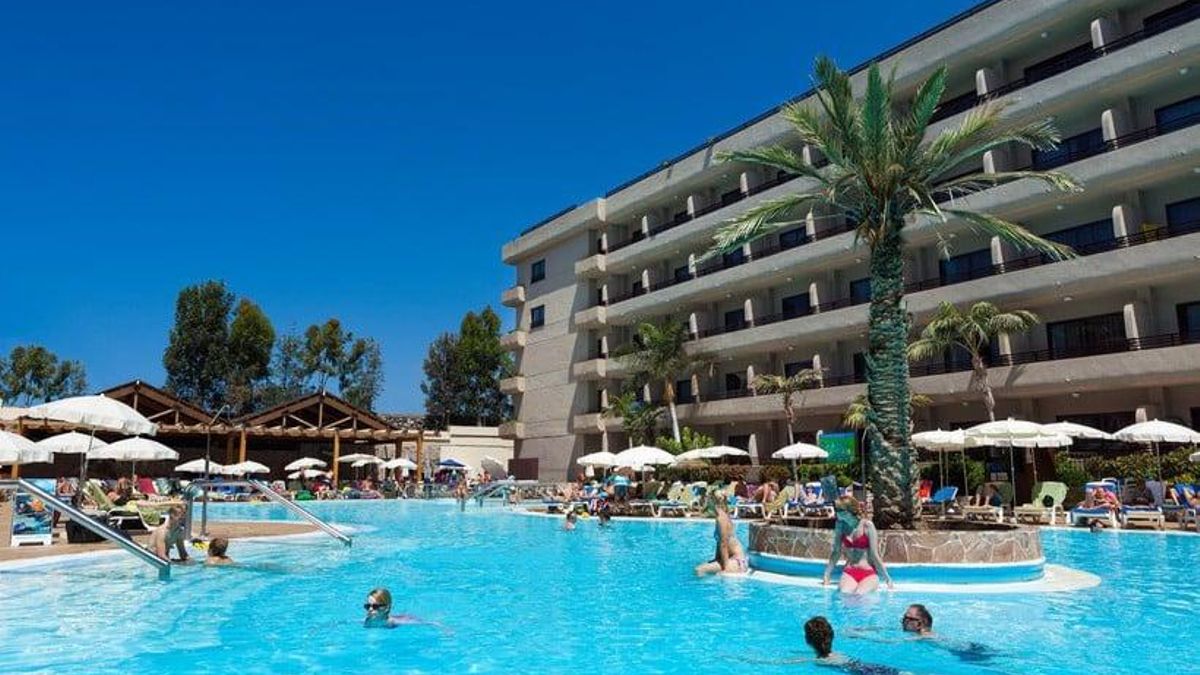
Hotel prices in the Canary Islands have risen once again, marking the fifth consecutive increase so far this year (January to May) across the autonomous community. Staying in an island hotel – the majority of which are for tourist use and during a month of transition towards the low season (summer) – cost 3.9% more in May 2026 compared to the same month in 2025, according to the year-on-year figure. This is according to the National Institute of Statistics (INE) in its Hotel Tourism Trends report for May 2026, published this Tuesday.
Above the rate of inflation
The average increase in the Hotel Price Index (HPI) in the Canary Islands last May, always measured annually, stood at 3.9%, compared to a 5.02% rise in the same indicator nationally. Among the autonomous communities and cities, the sharpest increase was recorded in the Balearic Islands, with an 8.9% year-on-year rise in May 2026. The most significant decrease, meanwhile, was in the autonomous city of Melilla, with a fall of 1.2%.
Although the rate of increase in the islands has moderated compared to the national trend, it is worth noting that the Canary Islands’ HPI figure is 0.7 percentage points above the general inflation threshold, or the annual Consumer Price Index (CPI), for the Canary Islands in its most recent calculation for the same month of May. At that time, the annual CPI (the sum of monthly values over the last 12 months, from June 2025 to May 2026) stood at 3.2%, after rising 0.2 percentage points relative to the annual figure for April 2026.
Average daily rate and revenue per room
If the economic analysis relating to hotel income and profitability in the archipelago is broken down according to the average revenue per occupied room per night – known as the ADR – the figures, again according to the INE, show that the average rate reached €126.10 per night, a 4.44% increase compared to the same month last year. However, the revenue per available room per night (all rooms suitable for booking in a hotel, known as RevPAR) in Canary Islands hotels fell to an average absolute value of €92.83, a 3.66% year-on-year increase.
This average income is always lower because it is more heavily dependent on occupancy levels, which are lower in the Canary Islands in May, particularly after the end of the high tourist season following Easter – this year at the beginning of April 2026 – and during the two months before summer.
How the Canary Islands compare to the rest of Spain
The Canary Islands’ ADR figure is higher, in both absolute and relative terms, than the national average of €123.74 per occupied room per night with a 4.2% year-on-year increase (compared to the islands’ 4.44%). By contrast, the RevPAR component – at €87.99 per night per available room as the average across Spanish hotels – rose 5.81% year-on-year, as occupancy improved nationwide in May, a figure higher than the Canary Islands’ 3.66% increase.
Overnight stays in hotel establishments increased by 2.5% in May compared to the same month in 2025, surpassing 36.3 million. Overnight stays by Spanish residents fell by 0.2%, while those by non-residents rose by 3.7%. During the first five months of 2026, overnight stays grew by 2.6% compared to the same period last year, a year-on-year figure. Overnight stays by Spanish residents recorded a 1.2% increase, while those by non-residents reached 3.4% more in the same January to May period.
Top destinations and source markets
Andalusia, Catalonia and the Valencian Community were the top destinations for Spanish residents last May, accounting for 20.4%, 14.9% and 12.2% of all overnight stays recorded in the country respectively. The main destinations for non-residents were the Balearic Islands (at the start of their peak season), the Canary Islands and Catalonia, with 30.6%, 18% and 17.9% of the Spanish total. By tourist area, the island of Mallorca recorded the highest number of overnight stays, with more than 6.5 million last May. Meanwhile, the tourist hotspots with the most overnight stays were Barcelona, Madrid and Calvià.
Visitors from the United Kingdom and Germany, the main source markets for tourists, accounted for 27.9% and 17.4% of all non-resident overnight stays in May. Overnight stays by visitors from France, the United States and the Netherlands (the next largest source markets) represented 8.6%, 5.2% and 4.7% of the total respectively.
Occupancy rates
In May 2026, 61.5% of available places in Spanish hotels were occupied, 2.1% fewer than in May 2025, while the weekend occupancy rate rose by 1.7% to 67.9%. By autonomous community, the Balearic Islands had the highest occupancy rate in May (73.5%). By tourist area, Palma-Calvià achieved the highest occupancy rates both overall and at weekends, at 76.1% and 79.4% respectively. The tourist hotspot with the highest occupancy rate was Sóller (83.4%) in Mallorca, while Zarautz recorded the highest weekend occupancy (89.4%).
What’s happening in the Canaries – straight to your phone
News, weather alerts and practical updates – direct from the islands, in English. We live here and know what’s going on – before the international media catch up. Everything lands on our WhatsApp channel – no middlemen, no algorithm. Curated for families, expats and travelers.

Tenerife faces huge tourism expansion despite moratorium calls

El Bejeque in Las Canteras adds sea to its fire

Siam Park Gran Canaria must build its own desalination plant
Fuerteventura’s biggest resort to open on 1 November
Gran Canaria to teach tourism history in schools
Canary Islands see 0.3% rise in foreign tourists in August

Row over 368-bed hotel project in La Gomera

Spanish astronaut trains in Lanzarote for Moon mission

Tivoli La Caleta hosts first red tuna Kaitai in Canarias