La Palma’s coastal treasure hidden beneath a volcanic cliff
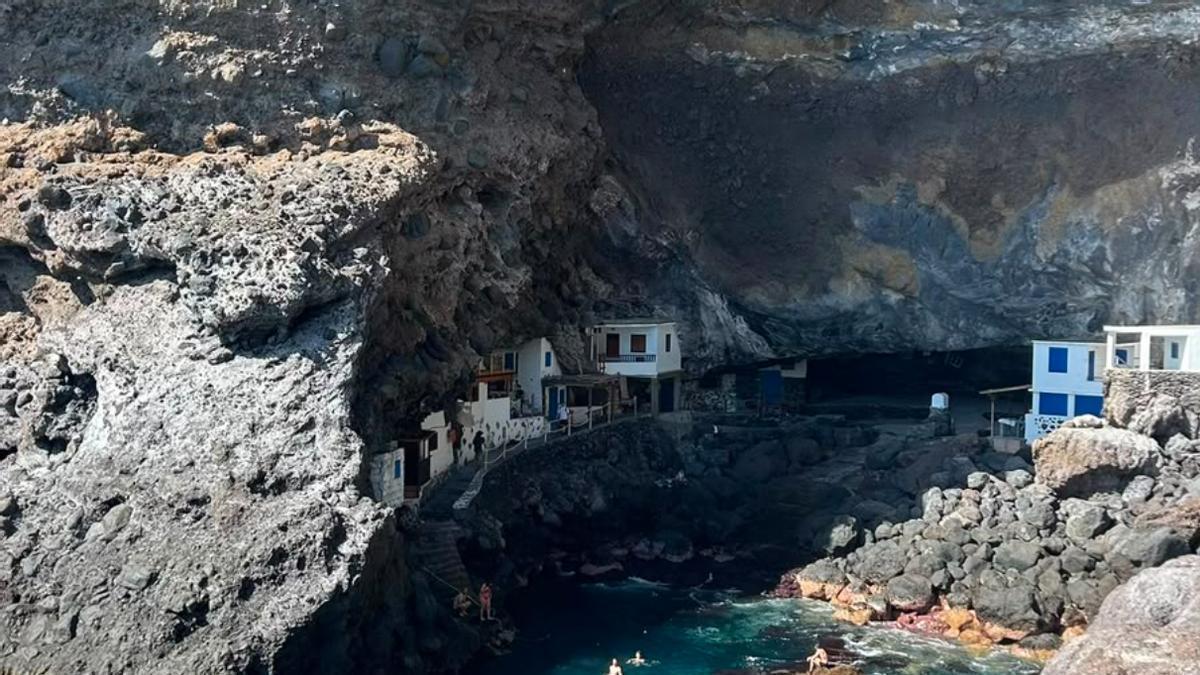
A small coastal hamlet in the municipality of Tijarafe hides one of the most surprising corners of La Palma. Dozens of white-and-blue houses – the classic style of old fishing settlements – sit protected beneath a gigantic volcanic cliff, while the ocean forms part of the landscape itself, blending with the village in a way that is hard to find anywhere else in the Canary Islands. There are no big hotels, no promenades, no long sandy beaches. The real attraction lies in a spot where nature and architecture have coexisted for generations, creating a scene that seems frozen in time.
A community that has kept its traditions alive
Beneath that enormous wall of volcanic rock, several homes are still in use today – many as second homes or summer houses for local families from La Palma, who keep this unique place alive, generation after generation. One of the sights that most surprises visitors is watching residents carrying down cool boxes, water containers and other supplies to their houses – an image that perfectly reflects the isolation and authenticity of the spot. The white-and-blue façades contrast sharply with the dark cliff, producing a picture that stays with anyone who visits. Beyond its spectacular scenery, Porís de Candelaria also has a deep fishing tradition, making a trip here a chance to experience one of the island’s most characterful locations.
The adventure of getting there
Reaching Porís de Candelaria is an adventure in itself. The road descends the mountainside via a narrow, steep route that requires careful driving, leading to a small car park. From there, you continue on foot for about 30 to 45 minutes, depending on your pace, along a challenging path with considerable changes in elevation until you reach the village. The effort is well worth it, though. When the huge cliff suddenly appears before your eyes, you feel as though you have discovered a hidden place that has remained virtually untouched by time.
A cliff that mirrors the shape of La Palma
If there is one detail that really makes Porís de Candelaria unique, it is the shape of the enormous cliff that shelters the village. Those who look closely will notice that the large natural cavity above the houses outlines – almost perfectly – the silhouette of La Palma. It is a curiosity that many visitors miss on their first trip, but it has become one of the most photographed features of the place. From certain spots in the village, this characteristic profile, which recalls the island’s outline, is easy to make out, making the spot even more special – a place that already seems to belong to another world.
Natural pools and direct access to the Atlantic
Inside the village lies one of its great attractions. Seawater flows directly in between the rocks, forming a natural pool where you can swim when conditions allow. This natural blowhole makes Porís de Candelaria even more special, offering the chance to enjoy the Atlantic beneath the shelter of the great cliff. For those who prefer open sea, metal steps set into the rock just a few metres away provide direct access to the ocean – a popular option on calm days. The constant sound of the waves, the complete absence of traffic, and the tranquillity of the surroundings make the experience entirely different from any other corner of the archipelago.
A place where time seems to stand still
Porís de Candelaria is one of those places where the clock seems to tick more slowly. Its small houses, the silence, the power of the ocean, and the shelter of the immense cliff create an atmosphere hard to find anywhere else in the Canaries. Visitors tend to agree on the same feeling: it looks like a place frozen in time, where nature still sets the pace of the day, and where the greatest luxury is simply to sit at the door of one of the houses and watch the sea. It is no wonder many consider it one of La Palma’s best-kept secrets, and one of those spots capable of surprising even those who think they know every landscape in the archipelago.
What’s happening in the Canaries – straight to your phone
News, weather alerts and practical updates – direct from the islands, in English. We live here and know what’s going on – before the international media catch up. Everything lands on our WhatsApp channel – no middlemen, no algorithm. Curated for families, expats and travelers.

Tenerife faces huge tourism expansion despite moratorium calls

El Bejeque in Las Canteras adds sea to its fire

Siam Park Gran Canaria must build its own desalination plant

Fuerteventura’s biggest resort to open on 1 November
Gran Canaria to teach tourism history in schools
Canary Islands see 0.3% rise in foreign tourists in August

Row over 368-bed hotel project in La Gomera
Spanish astronaut trains in Lanzarote for Moon mission

Tivoli La Caleta hosts first red tuna Kaitai in Canarias