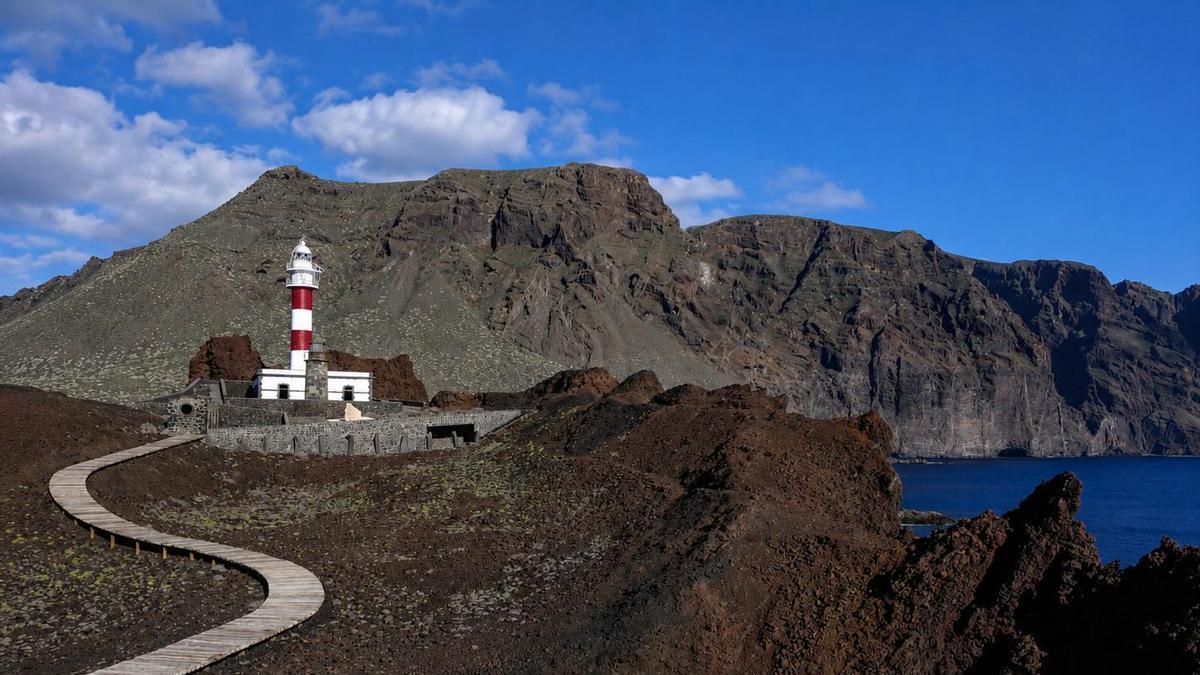
A turning point on the road
Punta de Teno is not the place it was ten years ago – it is better. The introduction of access restrictions to one of Tenerife’s pristine natural paradises halted the degradation, daily overcrowding, and relentless tourist pressure that had been building for years. The new system saw the launch of Titsa bus route 369, which began operating in January 2017. Figures from the Cabildo de Tenerife (the island council), starting from 2019, show just over one million visitors have passed through the regulated entry point in Buenavista del Norte.
The collapse that changed everything
The sinkhole that opened up on the TF-445 road at around 5pm on 12 July 2016 was the moment everything changed. It was the clearest possible evidence that a fragile environment was on the verge of collapse due to unrestricted car access. Since the regulation came in, parking on the roadside verges has been banned, and surveillance is carried out by Gesplan agents. Safety nets have also been installed along the dizzying cliffs to prevent rocks falling onto the road, which had long posed a danger to visitors. Today, visiting Punta de Teno is far safer, and travel is only possible by bus or taxi at any time of year. Parking is limited to vehicles authorised by Buenavista del Norte town hall, with one and a half kilometres of wooden and metal barriers designed specifically to stop private cars encroaching on the verges and highly sensitive natural areas.
Night closures and new facilities
One of the most recent milestones in access control has been the introduction of night-time closures, a measure implemented prominently over the last year to prevent drinking parties (botellón), illegal camping, and unauthorised overnight stays in camper vans. Meanwhile, work has been carried out on the final stretch of the road to create turning areas and regulated car parks, now complemented by safe pedestrian walkways and a bus stop with a shelter.
Visitor numbers continue to rise
Despite the restrictions, Punta de Teno has not been abandoned. Visitor numbers have grown steadily since the system was introduced, although the Covid-19 pandemic and several weather alerts causing closures have also played a part. Between 2022 and 2025, footfall increased by 137 per cent, rising from 91,117 to 215,997 people, according to data from Titsa.
A new future for the old lighthouse
The future of this natural space lies in the renovation and refurbishment of the old Punta de Teno lighthouse, which is being converted into a visitor centre. The Cabildo de Tenerife, which manages the site, aims for it to be more than just another tourist attraction; it is intended as a management tool. Its facilities will allow real-time monitoring of the area, ensuring all activities are in line with the conservation objectives of the Teno Rural Park. In addition, the centre will provide exhibition space to help visitors connect with the natural processes and cultural heritage of the area.
Pioneering model for the Canary Islands
Blanca Pérez (Coalición Canaria), the Cabildo’s councillor for Natural Environment, acknowledges that the road collapse was “a critical moment, but it also presented an opportunity to regulate access and prevent overcrowding in a unique place. It was a pioneering experiment in the Canary Islands for controlled access, putting Timanfaya in Lanzarote to one side.” The regulation has shown that “restricting private vehicles and replacing them with a bus-based access model improves the visitor experience, enhances enjoyment of the environment, and preserves the landscape and nature,” she says.
Trapped in paradise
The TF-445 gave way at kilometre four, creating a deep turning point not just in the road but in how Punta de Teno would be visited. The hole, measuring eight metres long and four metres wide, left more than 100 people stranded who had decided to drive out to the tip of Buenavista that July afternoon. A safety protocol was activated to evacuate those trapped in paradise. A sea evacuation was considered, but sea conditions made it impossible. Instead, an operation was mounted using helicopters to lift people off the headland. The Army and the Civil Guard provided the necessary resources to collect them and fly them to the marina at Garachico.
Controversy and public meetings
Punta de Teno was the first natural space in Tenerife to have its access regulated. This pioneering status did not come without controversy, and the measure was not well received by several sectors of the population in Buenavista del Norte. The Cabildo launched a consultation process, holding public meetings in the now-vanished local cinema, with the aim of gauging residents’ views. Tension surfaced repeatedly during those gatherings, which were attended by island councillors from the coalition between CC and the PSOE, along with the then president, Carlos Alonso (CC). The people of Buenavista were not happy with the regulatory decision, which initially only applied at weekends and on public holidays.
The first day of regulation
Saturday 14 January 2017 saw the start of access restrictions to one of Buenavista del Norte’s natural treasures. The Punta de Teno Nautical Club – made up of sea enthusiasts and boat owners who kept their vessels in the area – was the main opponent of the new rules. On 19 March 2017, they took to the streets to protest against the measure adopted by the Cabildo with the consent of Buenavista del Norte town hall, at the time led by mayor Eva García (PSOE), who remains in office today.
‘It was traumatic’
García describes the day the Punta de Teno road collapsed as “traumatic. It was very intense. I was just arriving home when someone who was at Las Arenas beach called me to say they were watching the road crumble. I looked out of the window, because my house faces that area, and I saw the dust from the landslide,” she recalls. The mayor was completely in the dark as to whether anyone had been injured. “Fortunately, there were no casualties, but there was only a very thin layer of tarmac left and it could have given way at any moment,” she adds. Beyond that tense moment, she believes that “sometimes situations help you make practical decisions. It was drastic and generated a lot of controversy, but a month after the road reopened, people were coming to tell me that at Punta de Teno you couldn’t hear a thing. Being able to enjoy the surroundings made them realise the difference.”
Surf, a dog, and a helicopter ride
Alejandro Díaz, a resident of Garachico, was surfing at Castañeda (the northern part of Punta de Teno) when he saw a helicopter land on a nearby embankment. He got out of the water and got dressed. His dog, Rufo, was with him. “They gathered us all in one spot and told us the road had given way,” he says. “I never felt scared, but I did feel uncertain. I went out on one of the last helicopter trips because I was with the dog, who was more nervous. But apart from that, everything went well,” he recalls, adding that he was grateful for the attention on arrival in Garachico and for the night-time helicopter flight looking out over the Isla Baja area.
What’s happening in the Canaries – straight to your phone
News, weather alerts and practical updates – direct from the islands, in English. We live here and know what’s going on – before the international media catch up. Everything lands on our WhatsApp channel – no middlemen, no algorithm. Curated for families, expats and travelers.

Tenerife faces huge tourism expansion despite moratorium calls
El Bejeque in Las Canteras adds sea to its fire

Siam Park Gran Canaria must build its own desalination plant
Fuerteventura’s biggest resort to open on 1 November
Gran Canaria to teach tourism history in schools
Canary Islands see 0.3% rise in foreign tourists in August

Row over 368-bed hotel project in La Gomera
Spanish astronaut trains in Lanzarote for Moon mission

Tivoli La Caleta hosts first red tuna Kaitai in Canarias