Sleeping at over 3,200 metres is possible again in Tenerife
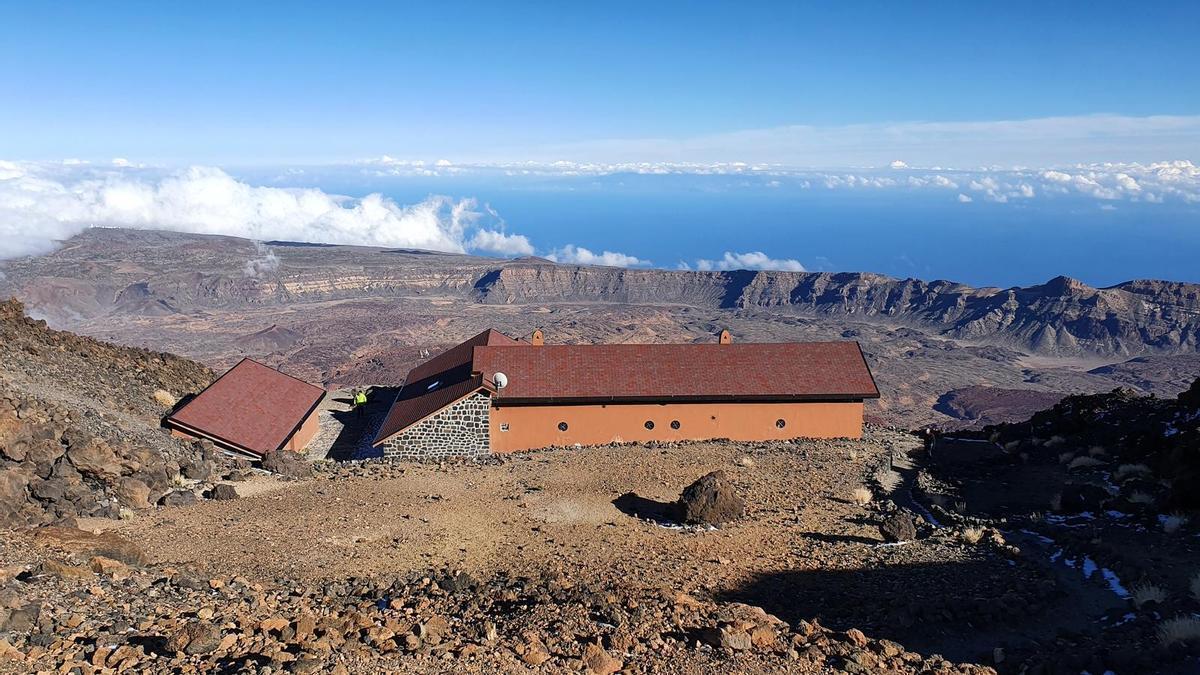
The Altavista Refuge will reopen its doors on 20 July 2026, having remained closed since November 2019. Situated at 3,260 metres in the heart of Teide National Park, this historic mountain lodge will resume operations following the completion of renovation works on the infrastructure. The project has modernised the facilities, enhanced safety, and reduced the environmental footprint of a building located in one of the Canary Islands’ most sensitive natural spaces.
Back to the summit: a night near the peak
The reopening will allow hikers and mountaineers to once again spend the night close to the summit of Mount Teide and continue their ascent in the early hours. The refuge will offer 49 guest beds, plus four spaces reserved for emergencies. Bookings must be made online and in advance through the official platform managed by the operator. Each person may stay for a maximum of one night.
Price structure: who pays what
The cost of a stay depends on the guest’s place of residence and whether they hold a mountaineering federation licence. The general rate for non-residents will be 71 euros per person per night. Residents of Tenerife can benefit from a subsidised price of 29 euros, while non-resident mountaineers with a federation licence will pay 56.80 euros. The announced prices are as follows:
- Residents of Tenerife: 29 euros
- Federated mountaineers (non-residents): 56.80 euros
- General rate (non-residents): 71 euros
With the resident subsidy, the Cabildo of Tenerife aims to make this facility, closely tied to the island’s mountaineering history, more accessible to the local population. Stays are limited to a single night. This measure, combined with advance booking and the limited number of places, is designed to manage use of the refuge and prevent excessive pressure on the Teide National Park environment.
How to book and what to know before you go
Spaces must be reserved in advance via the website of the company managing the refuge. Given the limited capacity and the traditional popularity of the experience of sleeping on Teide, booking well in advance is recommended, particularly during peak demand months. Before confirming a reservation, users should check the access conditions, check-in and check-out times, included services, and the facility’s operating rules.
Safety first at extreme altitude
The refurbished Altavista Refuge will have 49 beds for guests, plus four emergency beds and spaces for staff running the facility. The building’s location demands special safety conditions. At over 3,200 metres, temperatures can drop below zero, winds can reach great intensity, and the weather can change rapidly. The lack of oxygen, the physical effort of the ascent, and exposure to the cold make Altavista more than just accommodation. The refuge is also a strategic support point for those traversing the upper reaches of Teide. Facilities will include a medical room and means to provide basic first aid, as well as coordination with the 112 emergency service. The management contract covers accommodation, guest care, cleaning, maintenance, provisioning, the booking system, and the provision of basic medical services.
A green makeover: solar power and sustainability
The reopening follows a comprehensive renovation driven by the Cabildo of Tenerife, with an investment of nearly 1.9 million euros. The works have refurbished the bedrooms and common areas, improved insulation and ventilation, and adapted the building to current standards for safety, energy efficiency, and environmental protection. One of the most significant changes is in the electricity supply system. The refuge now incorporates a high-efficiency solar photovoltaic installation with a capacity of 59.5 kilowatts peak, along with batteries to store the energy produced. The generated electricity will power the heating, lighting, climate control, and other equipment needed for the daily operation of the building, even during periods of lower solar radiation. The aim is to reduce the use of fossil fuels in a location where transporting supplies is particularly challenging. Previously, some of the fuel and necessary materials had to be transported by helicopter, with the operational difficulties and environmental impact of flying over a protected area. The new energy model will reduce these journeys and move the refuge towards greater self-sufficiency. The renovation also includes a wastewater treatment system, designed to reduce the human footprint on the Teide environment.
A history written in the stars
The history of Altavista dates back to the 19th century and is linked both to mountaineering and to the early astronomical studies carried out on the peaks of Tenerife. In 1856, the Scottish astronomer Charles Piazzi Smyth set up a camp in this area to observe the sky from the heights of Teide. That expedition demonstrated the advantages of placing scientific instruments above the densest layers of the atmosphere and is considered a forerunner of modern high-altitude astronomy. Decades later, the British photographer and philanthropist George Graham Toler promoted and financed the construction of a permanent refuge. The first masonry building was erected at the end of the 19th century and began serving travellers, scientists, and mountaineers.
What’s happening in the Canaries – straight to your phone
News, weather alerts and practical updates – direct from the islands, in English. We live here and know what’s going on – before the international media catch up. Everything lands on our WhatsApp channel – no middlemen, no algorithm. Curated for families, expats and travelers.

Tenerife faces huge tourism expansion despite moratorium calls
El Bejeque in Las Canteras adds sea to its fire

Siam Park Gran Canaria must build its own desalination plant
Fuerteventura’s biggest resort to open on 1 November
Gran Canaria to teach tourism history in schools
Canary Islands see 0.3% rise in foreign tourists in August

Row over 368-bed hotel project in La Gomera
Spanish astronaut trains in Lanzarote for Moon mission

Tivoli La Caleta hosts first red tuna Kaitai in Canarias